
Perseid Meteor Shower
The anticipated Perseid meteor shower is coinciding with today’s solar eclipse. This annual event is already underway and peaks from Wednesday night into Thursday morning. In areas where the eclipse happens around sunset, meteors may be visible during totality. Under ideal conditions, the Perseids can produce up to 100 meteors per hour. These meteors often include fireballs, which are bright enough to leave glowing trails.
Virtual Viewing of the Eclipse
If you’re not in the path of totality or weather conditions are unfavorable, you can view the solar eclipse online. NASA will start a livestream at 1:15 p.m. ET. The European Space Agency will also stream it on YouTube beginning at 1:30 p.m. ET (7:30 p.m. CEST).
Understanding Solar Eclipses
A solar eclipse occurs when the sun, moon, and Earth align, allowing the moon to block the sun’s light. During a total solar eclipse, the moon entirely covers the sun, causing the sky to darken significantly. This allows the sun’s normally hidden outer atmosphere to be visible. In a partial eclipse, the moon only blocks part of the sun. An annular solar eclipse happens when the moon is farthest from Earth, creating a ring-like appearance as the moon doesn’t fully cover the sun.
Preparations in Villalibado, Spain
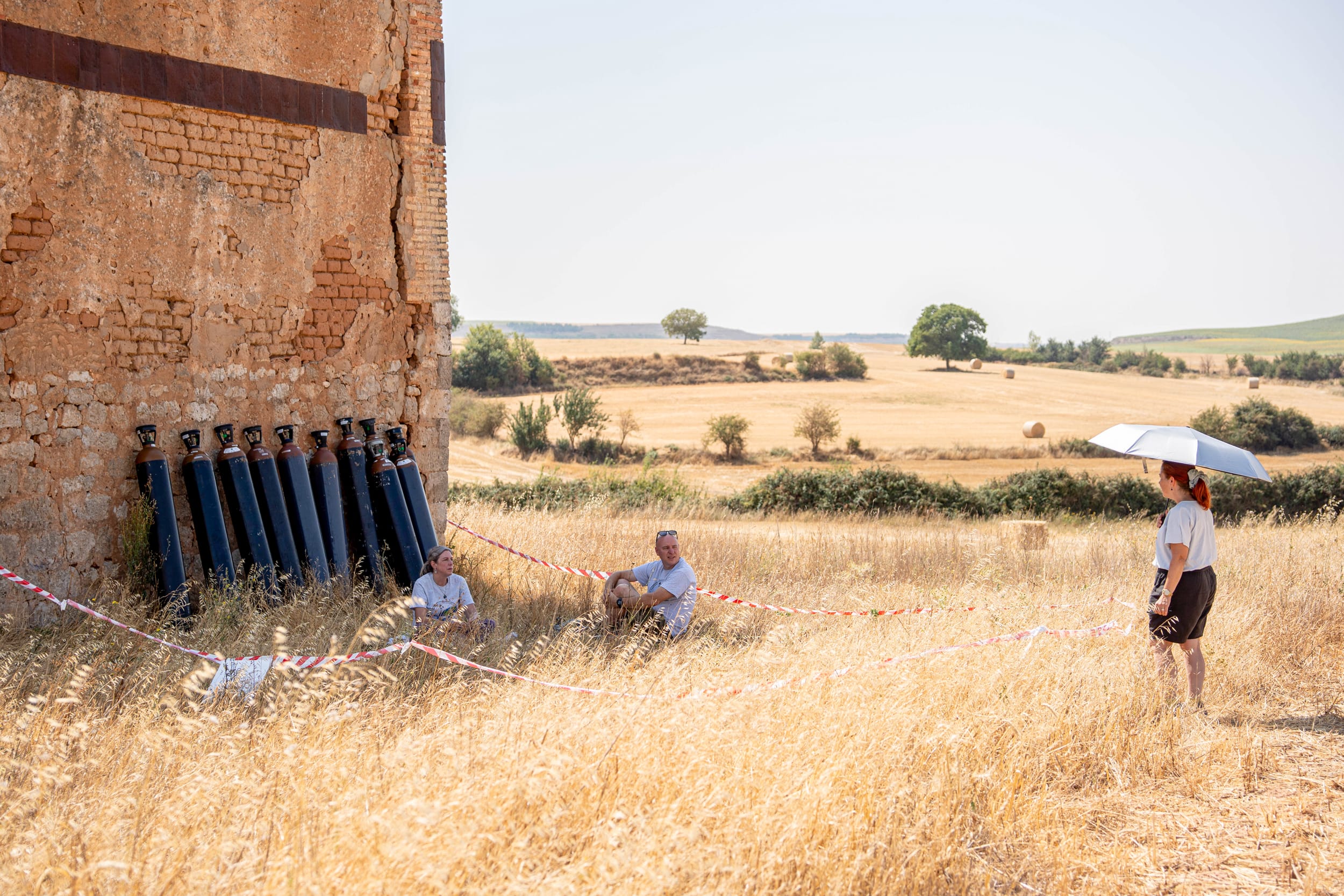
In Villalibado, Spain, NASA is preparing to broadcast the eclipse. Photos show staff managing helium cylinders and visitors setting up telescopes.
Total Eclipse Craziness in Europe
Spain expects 450,000 tourists searching for the best view of the total solar eclipse, the first visible from mainland Europe since 1999. The path of totality will pass over Greenland, parts of Iceland, and then northern Spain. Spain anticipates significant economic gains, with an estimated 347 million euros ($400 million) in revenue from eclipse tourism.
Anticipation for the Total Solar Eclipse
A total solar eclipse will affect millions in Spain, parts of Portugal, Greenland, Iceland, and northern Russia. It follows a path through the Arctic and southern Europe. The last mainland Europe solar eclipse occurred in 1999. Depending on weather, most of Europe, Canada, northwestern Africa, and over 20 northern U.S. states will experience a partial eclipse.