
Archaeological Find in Scotland
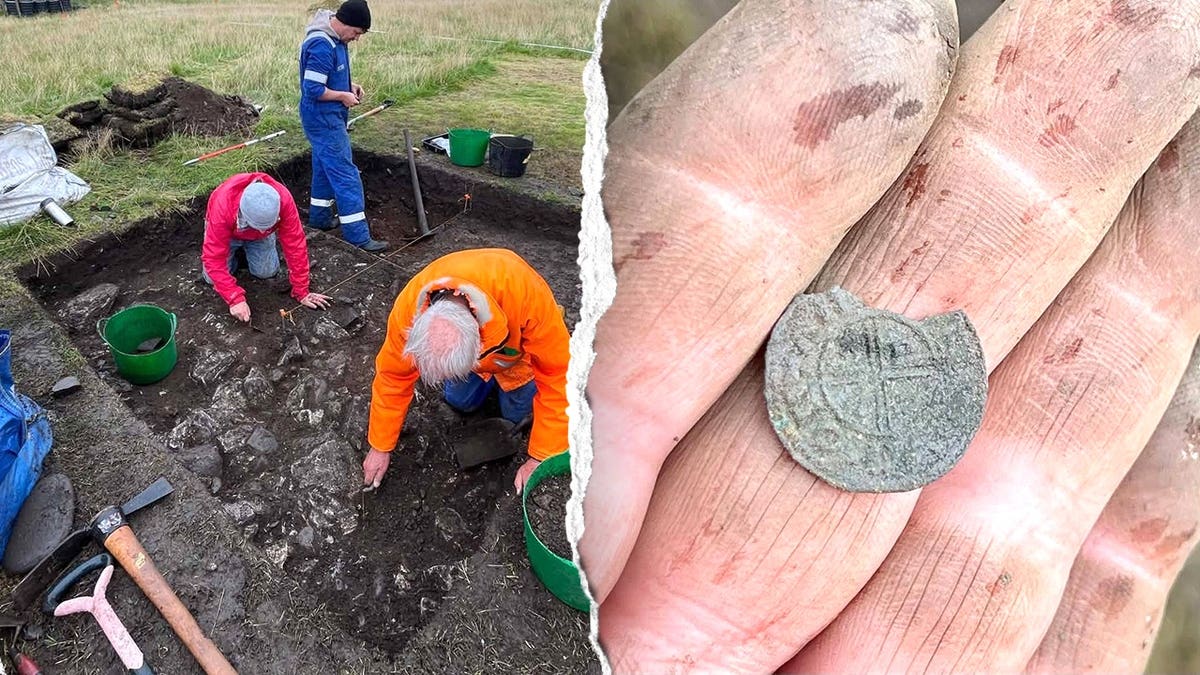
Recent excavation efforts in Nesting, a coastal area in Scotland’s eastern Shetland Islands, have led to the discovery of an Anglo-Saxon coin. This coin, minted during the reign of a king nicknamed “the Unready,” dates back to about 1,000 years ago. The archaeological activity was initially undertaken to assess prehistoric constructs endangered by coastal erosion.
Coin Details and Historical Context
The artifact, displaying a thick, greenish-brown patina, retains visible remnants of its original markings. The coin was produced between 991 and 997 A.D. and features King Ethelred the Unready, who managed the English throne from 978 to 1013 A.D. Despite his efforts, Ethelred could not prevent Viking invasions and was ousted by the Danish king Swein Forkbeard. He regained the throne in 1014 until his demise in 1016, marking his tenure as the longest for an Anglo-Saxon monarch.
Elinor Graham, an archaeologist from the University of Aberdeen, joined the excavation while on vacation. She expressed her excitement about discovering such a rare artifact and highlighted its sharp engravings.
Implications and Potential Museum Display
The coin could hold clues concerning ancient trade pathways between Viking-led Shetland and Anglo-Saxon regions in England. Another possibility could be its acquisition during a Norse assault.
Previously, an Anglo-Saxon coin emerged at Old Scatness, a site in southern Shetland. This latest finding marks the furthest north discovery of such coins. It underscores Shetland’s potential historical links to Anglo-Saxon trade or as a target during Norse raids.
Scotland’s Treasure Trove Unit will decide if the artifact joins a museum collection. Graham hopes to see it integrated into Shetland Museum and Archives, suggesting Nesting may have been a cosmopolitan community with Anglo-Saxon trading connections.
The archaeological focus concentrated initially on exploring prehistoric structures at risk from coastal erosion. Surviving coins and other historical objects in the United Kingdom provide greater understanding of the area’s vast history, spanning the Bronze Age to the Viking Norse period.
Recent discoveries include a Roman coin unearthed in England and Scotland’s oldest known minted coin, highlighting the rich archaeological tapestry across the region.