
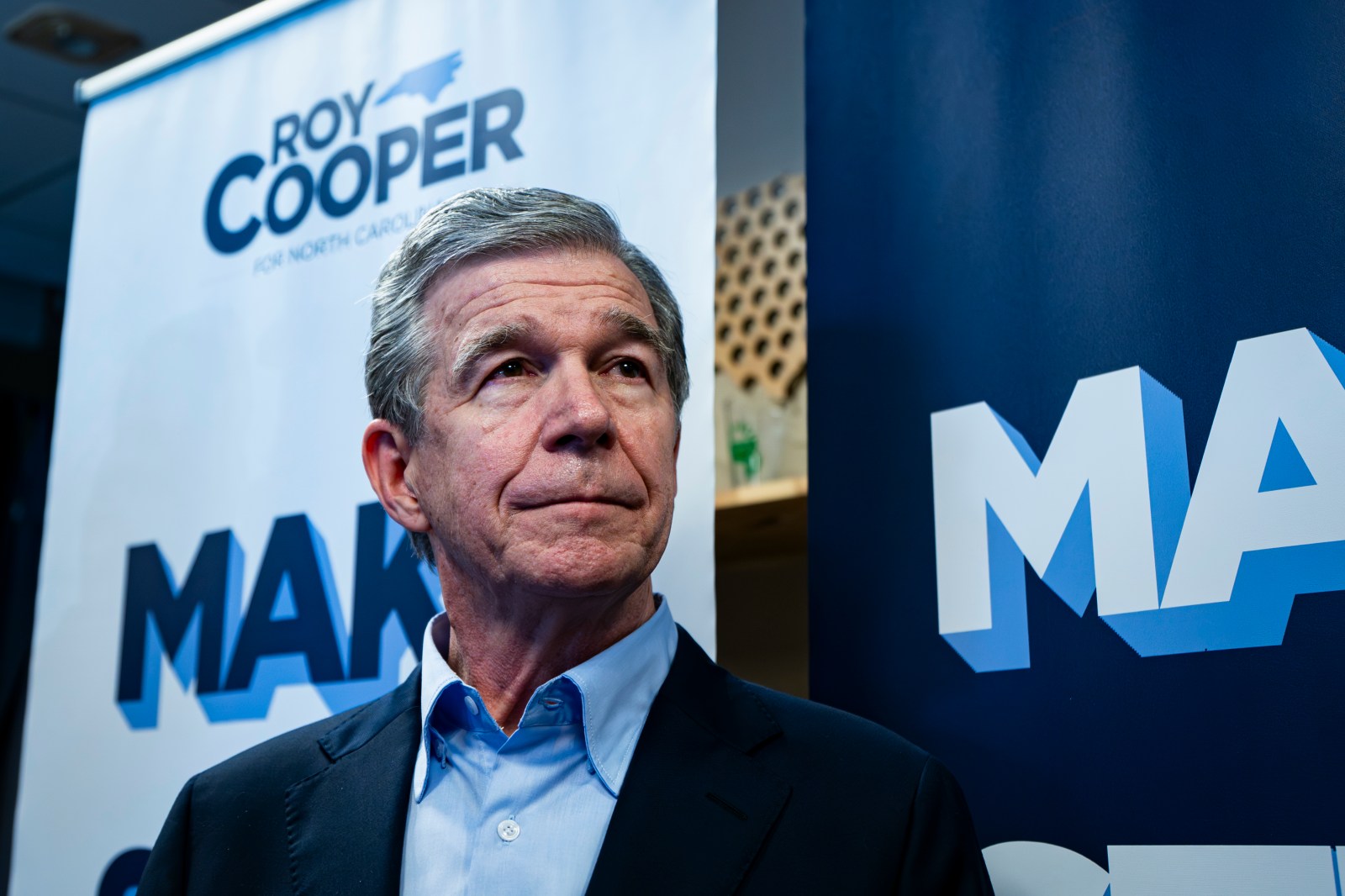
Former Governor Roy Cooper, representing the Democratic Party, has taken a significant lead against ex-Republican National Committee Chair Michael Whatley in North Carolina’s U.S. Senate race. The latest poll results show a double-digit difference in favor of Cooper. The North Carolina seat, currently held by retiring Republican Senator Thom Tillis, is seen as a prime target for Democrats seeking to flip a Senate seat in the 2026 midterm elections.
The state showed a narrow preference for President Donald Trump in the 2024 elections. North Carolina remains a battleground, with voters almost evenly split between the Democratic and Republican parties. Democrats have not secured a Senate seat in the state since 2008. However, they have high hopes given the favorable national environment and Cooper’s robust popularity.
Newsweek reached out for comments from both the Cooper and Whatley campaigns via email.
Catawba College Polling Data
The most recent poll by Catawba College reveals Cooper leading by 14 percentage points, with 48% of respondents in his favor compared to Whatley’s 34%. About 15% remain undecided. These findings mirror the results from the same poll conducted in March. Michael Bitzer, Catawba College’s Center for North Carolina Politics & Public Service director, attributes Cooper’s lead to strong support from independent voters.
Cooper attracts a significant portion of voters who disapprove of the president, forming a majority among likely voters thus far.
Conducted between June 1 and June 10, this poll surveyed 1,000 voters with a margin of error of plus or minus 3.83 percentage points.
Overview of Other Polls
Additional surveys echo Cooper’s lead. A Harper Polling/Carolina Journal poll indicates Cooper leading by over 11 points, getting support from 49.8% of respondents, whereas Whatley garnered 38.7%. This poll involved 600 likely voters with a margin of error of plus or minus 4 points, conducted on May 10 and May 11.
Another poll by High Point University/YouGov highlights Cooper’s 8-point lead, with 50% of participants supporting him and 42% backing Whatley. This survey questioned 703 individuals, conducted from March 26 to April 6, with a margin of error of plus or minus 4.3 percentage points.
A Quantus Insights poll suggests a narrower race, showing Cooper with 49% support and Whatley with 44%. This poll surveyed 987 likely voters on March 31 and April 1, reflecting a margin of error of plus or minus 3.5 percentage points.
Prediction Markets
Prediction markets, such as Kalshi and Polymarket, project favorable odds for Cooper, providing him with an 85% chance of victory on Kalshi and 86% on Polymarket. These markets aggregate real-money wagers into probability estimates influenced by variables including polling results and candidate developments.
While prediction markets offer current sentiment insight, they don’t guarantee future accuracy.
Democratic Challenges in North Carolina
Democrats have seen competitive success in state gubernatorial elections but face challenges in federal elections. The last Senate win was by Senator Kay Hagan in 2008, coinciding with Barack Obama’s presidential victory in the state.
Recent Senate races, such as Democrat Cheri Beasley’s 2022 attempt and Tillis’s narrow win against Democrat Cal Cunningham in 2020, illustrate ongoing challenges. Despite these hurdles, Democrats maintain control over the governor’s office; current Governor Josh Stein succeeded Cooper, winning by nearly 15 points.
Democrats have made gains in suburban areas around Charlotte and Raleigh but struggle in rural sectors that were more competitive during Obama’s 2008 win. Trump won the state narrowly in all three of his presidential runs.
Strategic Importance for Democrats
North Carolina is crucial for Democrats facing a challenging Senate map. The Republican Party currently holds a 53-47 majority. Democrats need to flip four seats to regain Senate control. Along with North Carolina, Democrats eye Maine as another target seat due to its Democratic-leaning nature.
Defensive strategies focus on Trump-won states like Georgia and Michigan; however, flipping seats in conservative states like Alaska, Iowa, Ohio, and Texas is also considered.
Future Expectations
Polls will be monitored as indicators of voter inclinations in this pivotal state. Forecasting organizations like Cook Political Report and Sabato’s Crystal Ball lean toward Democrats having an advantage in North Carolina, although the race remains competitive.