
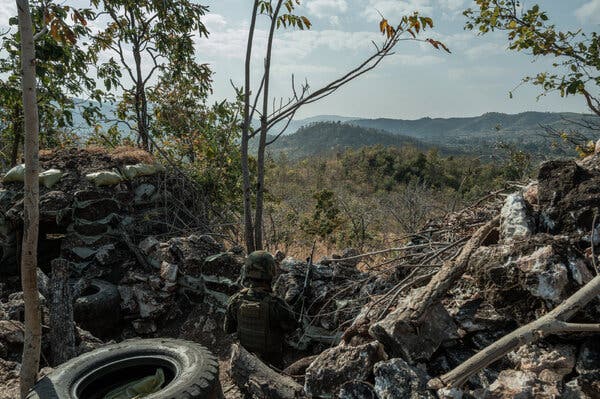
Five years ago, Myanmar’s political landscape shifted dramatically following a coup that initiated a civil war with widespread impacts. Although this conflict hasn’t received as much global attention as others, such as those in the Middle East and Ukraine, its consequences have been significant.
The war began in 2021 when Myanmar’s then-army chief, U Min Aung Hlaing, overthrew the elected government. This launched a brutal conflict between the military and numerous rebel groups, all aiming to dismantle the military-installed government.
In April 2026, Min Aung Hlaing navigated his way into the presidency through an orchestrated election. The transition was part of an effort to portray Myanmar as open for business despite the ongoing conflict. Human rights organizations report the country experienced its highest civilian death toll since the coup at this time.
“Myanmar’s civil war has become one of the most severe globally, surpassed only by conflicts in Palestinian territories.” — A.C.L.E.D.
According to A.C.L.E.D., Myanmar ranks as one of the world’s most volatile conflict zones, with more than 90,000 casualties since the civil war’s beginning. The fragmented nature of this conflict involves over 1,200 armed groups, making it the most divided war worldwide. Rebel militias govern over half of the country, but military strikes have recently intensified, jeopardizing the rebels’ control.
A concerning humanitarian crisis has emerged, with nearly 4 million individuals displaced. The United Nations estimates a quarter of the population faces severe hunger. The conflict has forced many to seek work abroad due to military conscription threats and high unemployment.
Regrettably, Myanmar holds the dubious distinction of being the most land mine-contaminated nation, leading to numerous civilian casualties. The indiscriminate placement of land mines in civilian areas remains widely condemned as a war crime.
Since recent elections, the Myanmar military has intensified its operations against rebel forces. This has included destroying villages and bombarding resistance areas, such as the extensive bombing campaign in March that comprised 240 attacks and resulted in at least 400 deaths.
The military has acquired advanced weaponry including fighter jets, helicopters, drones, and more, primarily sourced from Russia and China. Rebel groups struggle to obtain arms, and any hope for Western support dwindled long ago.
Hannah Beech has reported on Asia for over 25 years, delivering investigative stories on regional affairs.