
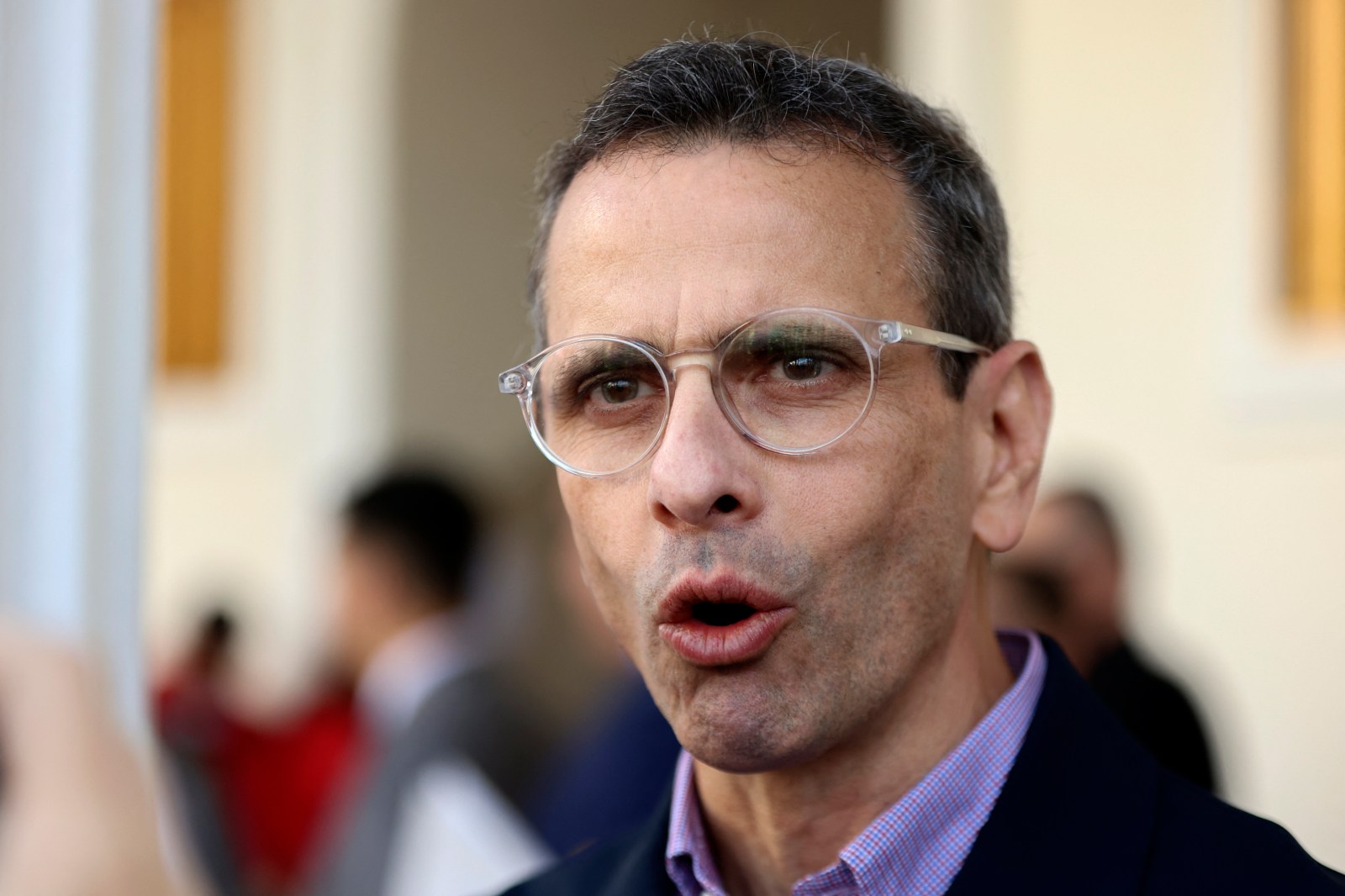
Henrique Capriles has run for the Venezuelan presidency twice and came close to defeating Chavismo at the polls. Six months into a U.S.-engineered power transition in Caracas, he views Washington differently than others. While U.S. President Donald Trump’s tone toward interim President Delcy Rodríguez swung from threats to praise, Capriles has learned not to take Trump’s statements as definitive.
Capriles noted, “I’m not swayed by President Trump’s statements.” He cited instances where Trump’s comments shifted shortly after being made. For example, after the January 3 operation capturing President Nicolas Maduro, Trump warned Rodríguez of serious consequences if she failed to cooperate. Later, Trump praised her and the interim government, citing the increased Venezuelan oil reaching U.S. refineries as evidence of success.
Capriles views Trump’s comments as not reflecting a broader policy shift and has grown used to Trump’s unpredictable messaging. Before the January raid, Trump and Maduro spoke despite rising tensions. Capriles explained that Venezuelans credit Trump for removing Maduro, referring to the dispute over the 2024 election, where Maduro claimed a victory that observers contested.
A Gamble That Paid Off
Operation Absolute Resolve on January 3 saw U.S. Special Forces capture Maduro and his wife, Cilia Flores, after months of military pressure. Venezuelan officials reported 83 deaths and over 112 injuries. Maduro was taken to New York, where he pleaded not guilty to charges of narco-terrorism. Capriles suggests the operation wouldn’t have happened if Maduro respected the 2024 election results.
Reflecting on the event, Capriles commented on Washington’s military action to remove Maduro. “I never imagined it would happen this way,” he said, acknowledging that Trump’s gamble succeeded. Following the operation, Trump announced the U.S. would oversee Venezuela until safe transition, with Rodríguez sworn in as interim president. Secretary of State Marco Rubio outlined a three-phase plan: stabilization, economic recovery, and political transition.
The Sovereignty Question
U.S. involvement in Venezuela’s transition has faced criticism. Colombian President Gustavo Petro viewed it as an assault on Latin America’s sovereignty. A New York Times investigation dubbed Rubio as “viceroy” and highlighted his influence over Venezuelan affairs. However, Capriles dismissed these accusations, arguing that Venezuelan sovereignty had often been a tool for those in power, not the people.
Capriles does not see the situation as a loss of self-determination but rather a necessary phase. “I believe our relationship with the United States is as two countries,” he stated. The U.S.’s economic interest, exemplified by a reported revenue of $13 billion from Venezuelan oil sales, has added scrutiny. However, Capriles emphasizes that democracy and voting are crucial in Venezuela, regardless of economic interests.
The Three-Phase Plan
Marco Rubio announced transition talks would begin on August 1 under a three-phase framework: stabilization, recovery, and transition. These talks have exposed opposition rifts, with figures like María Corina Machado refusing to join. Capriles emphasized the need for inclusive discourse in any transition.
Despite disagreements, Capriles believes the current political process is driven by necessity and the desire to avoid returning to past governance. Capriles also highlighted Rodríguez as a placeholder, not an elected leader, amid internal tensions between Chávez loyalists and the Maduro-aligned Rodríguez family.
An Earthquake Complicates Recovery
Venezuela faced unexpected challenges with twin earthquakes in June, killing over 5,000 and causing significant homelessness. This disaster disrupted emerging economic hopes post-Maduro’s removal. Capriles noted the setback but also saw a unifying spirit among ordinary Venezuelans beyond politics.
Capriles stressed the importance of justice and strong institutions to prevent repeating past mistakes. “Justice is not revenge,” he said, advocating for a fair legal system to uphold accountability.