
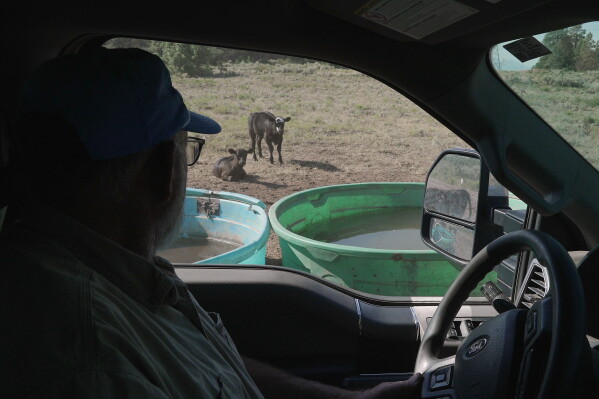
MONTROSE, Colo. (AP) — The challenge of transporting water across the rugged terrain of the U.S. Rockies has become an essential yet exhausting task for many ranchers. Scott Snyder of Mex and Sons Ranch near Montrose, Colorado, experienced this firsthand while taking multiple trips to ensure his 800 cow-calf pairs had sufficient water.
Historically, ranchers in the Upper Colorado River Basin rely on snowmelt to fill stock ponds and provide water for livestock throughout the summer months. This year, however, marked the worst snowpack on record due to climate changes, significantly impacting ranchers like Snyder. A recent study revealed that human-induced climate change increased the likelihood of such snow droughts.
The Snyders and other ranchers have adapted in various ways, including reducing herd sizes, purchasing additional hay, and relocating cattle. The added task of hauling drinking water increases the burden on ranchers already striving to maintain family traditions in the industry.
“If Mother Nature doesn’t want to help out here, we’re probably in a lot of trouble,” said Snyder.
The effort to secure water resources often involves navigating logistical obstacles, as highlighted by Mark Ragsdale, a state water commissioner and fellow rancher. Despite challenges, Ragsdale remains fortunate to have a functioning solar-powered well and nearby herd.
A recent monsoonal rain signaled a potential shift, yet recovery from the drought would require a decade of above-normal precipitation, according to Ragsdale.
Adrienne Marshall, assistant professor of geology at the Colorado School of Mines, emphasized the severity of this year’s snow drought, suggesting that the probability of such extreme conditions occurring again soon is low. Nevertheless, frequent lesser droughts could build up, exacerbating conditions over time.
Lance and Zandon Bray have expanded their water truck fleet to manage the impacts of ongoing droughts. The economic burden of such measures is partially alleviated by U.S. Department of Agriculture reimbursements for transporting water and feed. However, the emotional strain of the drought remains significant.
The Brays, who restarted their cattle operation after their father sold the herd in 2018, aim to operate sustainably despite limited resources. The psychological toll of dealing with insufficient moisture weighs heavily on ranchers, as described by Zandon Bray.
In New Mexico and Utah, ranchers encounter unique trials, such as Stanford Salazar experiencing vehicle damage due to water tank transportation, and Jeff Christensen pursuing expensive well-drilling projects to replenish water resources.
The Associated Press acknowledges the support of the Walton Family Foundation in covering water and environmental policy. Despite these challenges, the commitment to preserving ranching traditions remains steadfast among those in the Rockies.