
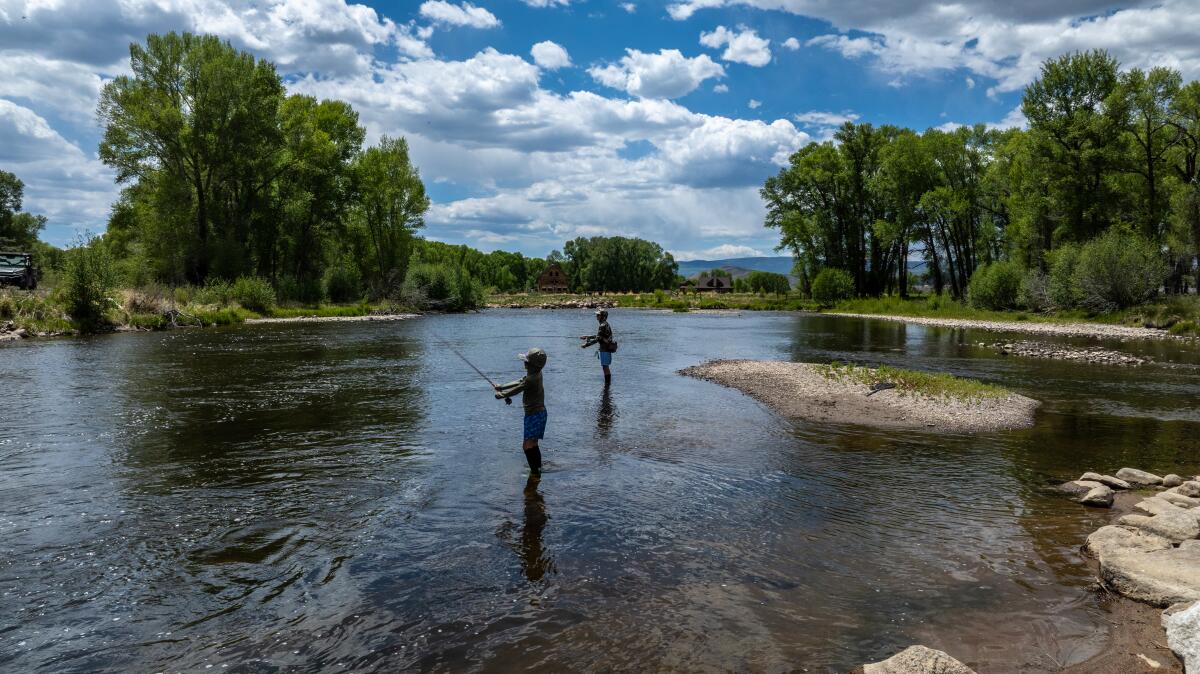
The Colorado River, known for sculpting the Grand Canyon and flowing through the Hoover Dam, faces an escalating crisis. The river, which serves as a crucial water source for millions in California and six other states, has significantly decreased in size since 2000. This reduction is due to a severe drought in the western U.S., said to be the worst in 1,200 years, exacerbated by climate change.
Recently, Ian James, a water and climate change journalist, along with photographer Robert Gauthier, visited the Rocky Mountains to observe the river’s origin. Surprisingly, they found minimal snow and parched earth, which long-time ranchers described as ‘terrifying.’
“James shared insights on the worsening river conditions in a recent discussion. His exploration underscores the urgent water management issues now faced by states relying on the Colorado River,”
he stated.
California’s dependence on the Colorado River is significant. It provides nearly a quarter of Southern California’s water, reaching the region via the 242-mile Colorado River Aqueduct, which includes a 13-mile tunnel near Mt. San Jacinto. Moreover, it is the sole water source for agricultural areas like the Imperial Valley.
California consumes more Colorado River water than any other state. Despite efforts to reduce consumption, plummeting reservoir levels demand further cutbacks. In Colorado’s Uncompahgre Valley, farmers have left many fields barren, receiving only about half their usual water supply.
Impact on Agriculture and Solutions
A significant portion of the Colorado River’s water is for agriculture, particularly for crops like alfalfa. Efforts to decrease usage include improving irrigation efficiency and switching to crops needing less water. Farmers in California and Arizona have already reduced hay production for federal compensation. There are calls for the government to purchase farmland and leave it dry to save water.
Seven states are locked in negotiations over water allocations. The Trump administration is preparing to mandate cutbacks, potentially up to 40% for California, Arizona, and Nevada combined. This could ignite legal conflicts among states, especially given tensions between downstream and upstream states.
Ongoing Concerns and Future Steps
The crisis demands that users of Colorado River water heed the shortages. The flow has decreased dramatically over 25 years, with critical reservoirs like Lake Mead and Lake Powell near record lows. Scientists point out that natural drought cycles and climate change both contribute to these conditions. The original 1922 water agreement overestimated the river’s sustainable yield, clashing with today’s reality of a drying region.
The situation challenges farmers, municipalities, and policymakers to innovate and cooperate in water management strategies.