
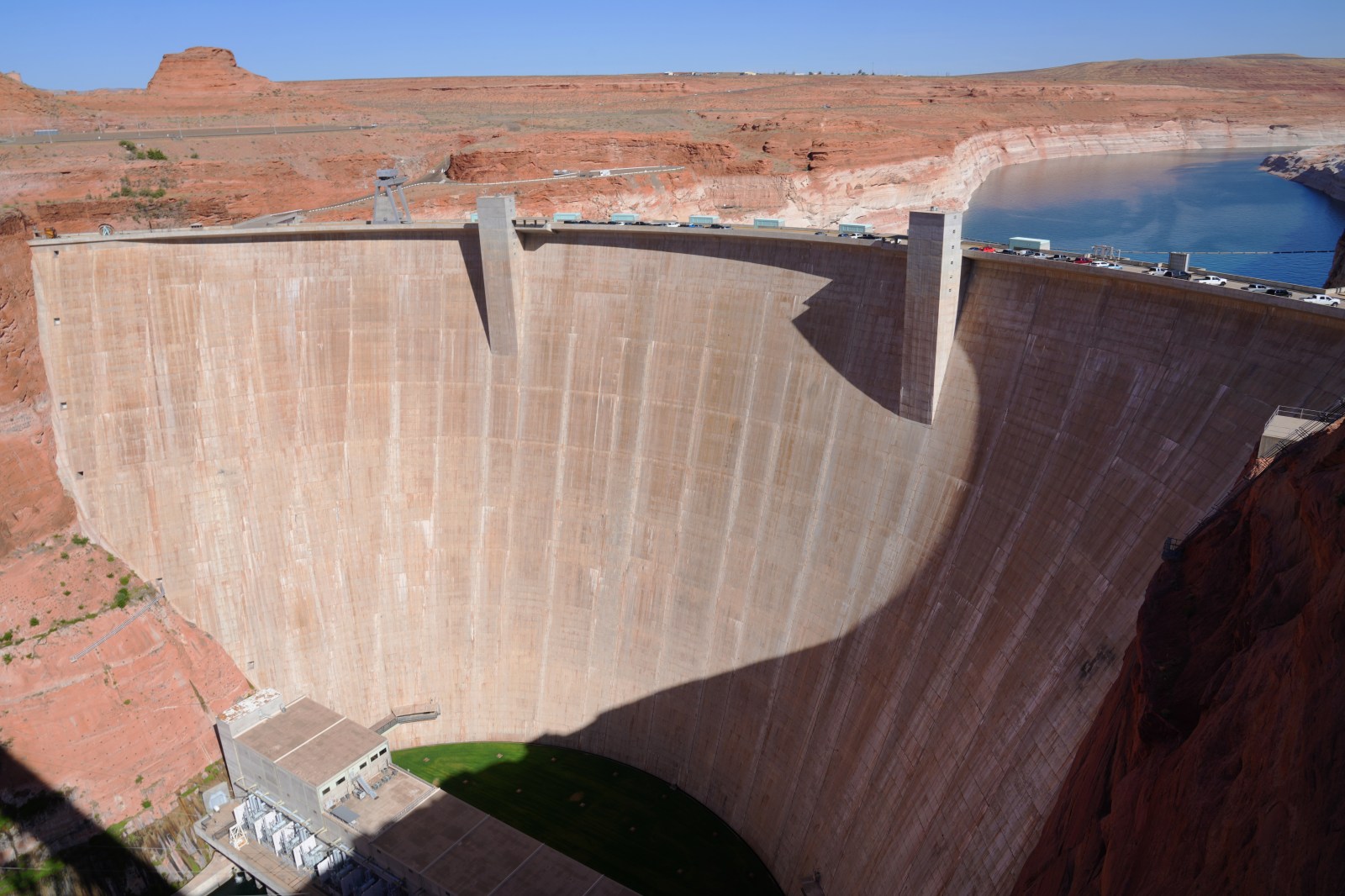
Efforts to maintain water levels at Lake Powell, a major reservoir in the U.S., have led to a radical proposal from a Colorado River advocate. The suggestion involves transferring Lake Powell’s water downstream to Lake Mead, potentially retiring Lake Powell as a primary storage site. Lake Powell and Lake Mead, the largest reservoirs in the nation, face challenges due to drought along the Colorado River. This river supplies water for 40 million people and irrigates over 5 million acres of farmland.
Changing Strategies
“If we consider why the Glen Canyon Dam was built, it becomes clear it is no longer working,” said Zanna Stutts, program director at the Glen Canyon Institute. Federal water managers have already ordered emergency actions earlier this year to support Lake Powell. They moved water from upstream Flaming Gorge and reduced releases to Lake Mead. Stutts argues these measures are temporary solutions.
“We can’t keep doing this,” stated Stutts. “We need long-term strategies considering the actual water availability of the river.”
Stutts emphasized that Glen Canyon Dam was built based on outdated expectations of Colorado River flows, which have decreased by 20% since 2000. This means the river carries less water than anticipated when the dam was constructed.
Infrastructure Limitations
The Glen Canyon Dam lacks a low-level outlet, preventing the release of around 6 million acre-feet of water below a certain elevation. Although Lake Powell is often reported as 23% full, much of this water remains inaccessible. Modifying the dam’s infrastructure is presented as a necessary consideration.
Stutts suggested transferring water from Lake Powell to Lake Mead using bypass tunnels around Glen Canyon Dam. This would create a free-flowing stretch of the Colorado River while keeping the dam as emergency storage if Lake Mead refills. Such changes would eliminate hydropower generation at the dam, although decreasing water levels have already jeopardized its power-producing capabilities.
“Without emergency actions, Glen Canyon Dam would not have produced hydropower this summer,” added Stutts. “The current approach relies on future precipitation, postponing permanent solutions.”
Consolidation Proposal
The idea of prioritizing Lake Mead and using Lake Powell as a backup is not new. The Glen Canyon Institute has promoted a “Fill Mead First” strategy to consolidate stored water in Lake Mead. This involves moving water from Lake Powell downstream in phases.
Initially, Lake Powell would be drawn down to minimum power levels, exposing parts of Glen Canyon. Further stages would lower the reservoir toward the dam’s outlet, eventually constructing tunnels around Glen Canyon Dam for free river flow. Lake Powell could then serve as backup during flood years.
Possible Weather Impacts
As of July 5, Lake Powell held 23% of its capacity and 35% of its average storage for that date, according to Bureau of Reclamation data. The forecast until early fall predicts warmer conditions in the headwaters and tributary regions supplying Lake Powell and Lake Mead. While NOAA anticipates near- to above-normal precipitation in parts of the interior West, it may not be sufficient to counteract evaporation and drought effects.