
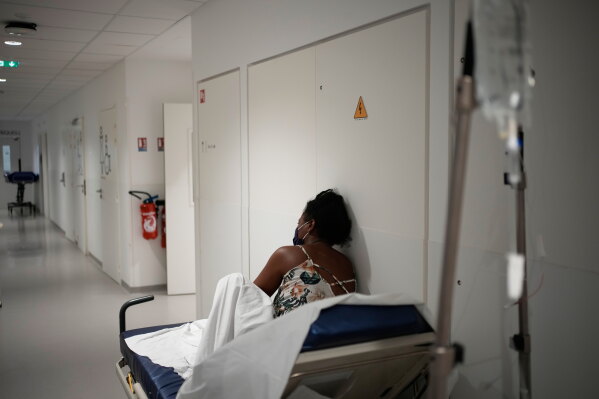
In Orsay, France, ice became a critical necessity at a hospital in the Paris region. Emergency medics urgently needed it to lower patients’ body temperatures in cold-water baths amid a severe heat wave threatening to increase the death toll. When faced with this urgent need, they turned to a fast-food restaurant and local supermarkets for supplies. The Paris-Saclay Hospital has since ordered its ice-making machine, as the staff brace for future heat waves due to climate change.
The heat wave’s strain on the healthcare system underscores a growing challenge that hospitals face. Medics are now preparing to combat future heat waves much like they do the flu season. Cédric Lussiez, the hospital’s director, shared his experience, noting that despite feeling prepared, the hospital had to operate round-the-clock, developing new approaches rapidly. This heat wave prompted efforts to address gaps in readiness at a national level in France, following the extreme temperatures that affected parts of Europe including the United Kingdom.
Prime Minister Sébastien Lecornu announced a 100-million euro initiative to upgrade cooling systems in hospitals, aiming to enhance the functionality of wards during heat waves. Additionally, the government plans to distribute 30,000 air-conditioning units to health facilities, expected to arrive soon. This preparation aims to reduce the stress on hospitals when future heat waves reoccur.
As characterized by the World Health Organization, this heat wave acted as a preparatory phase for potentially more intense future summers. With Europe warming over twice the global average, heat waves now represent regular summer challenges, and under-preparation can lead to fatal consequences.
Increase in Heat-Related Medical Emergencies
At Paris-Saclay Hospital, the emergency department, led by Dr. Nicolas Gonzales, witnessed a rapid influx of patients suffering from heat exposure starting on June 20. The surge included cases of heart attacks, dehydration, kidney failures, and similar conditions across all ages. Gonzales explained that extreme heat physically assaults the body, stopping the heart when it can no longer manage the strain.
Enhancing Hospital Heat Defenses
Paris-Saclay Hospital is equipped with air-conditioning, but older hospitals in its group relied on temporary cooling solutions. Problems included medication spoilage, tackled with electric fans and ice blocks. Student nurses helped maintain hydration among patients, crucial under high temperatures like the 33 degrees Celsius recorded in a psychiatric unit.
Lussiez is urgently improving conditions by adding cool rooms and moving departments to better-equipped facilities. He indicates that these adaptations will ensure more resilience against heat waves in the near future.