
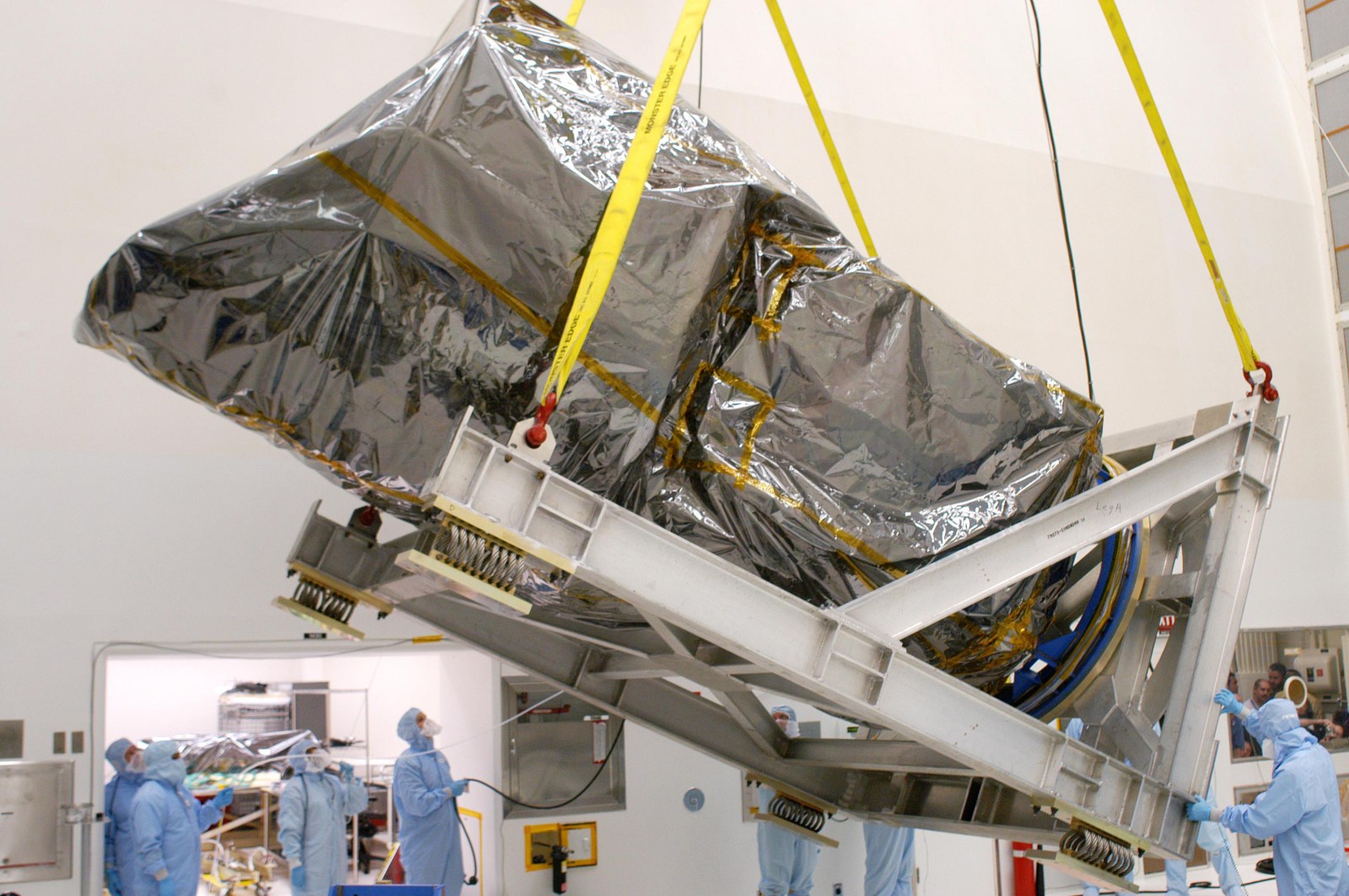
An aging NASA space telescope, known as the Swift Observatory, is anticipated to re-enter Earth’s atmosphere shortly. For over two decades, this telescope studied some of the universe’s most powerful explosions. Its impending descent raises questions about potential debris surviving and where it might land.
According to the U.S. Space Force, the Swift Observatory’s re-entry is expected around Friday, following years of orbital decay. This decay was accelerated by unusually intense solar activity. While most of the 1.5-ton spacecraft is predicted to burn up upon re-entry, NASA suggests some dense parts, such as tungsten components and sections of its mirrors, could survive and reach Earth’s surface. The surviving debris is likely to fall into the ocean, though an exact location remains uncertain.
Potential Debris Landing Zones
The possible re-entry corridor covers extensive parts of the globe. Mission officials identify areas including parts of Africa, Australia, India, Southeast Asia, Central America, and South America within the potential impact zone. The wide range signifies the challenge of predicting a satellite’s precise final path until re-entry approaches. Minor changes in atmospheric conditions can significantly affect where a spacecraft disintegrates. Consequently, officials refine re-entry forecasts in the final hours before a satellite returns to Earth. The U.S. Space Force continues to monitor Swift’s orbit as it descends.
Reasons for Swift’s Orbital Decline
The telescope’s return follows an unsuccessful attempt to salvage the mission. NASA enlisted Katalyst Space, a private company, to attempt a rescue using a robotic spacecraft named Link. The mission aimed to approach Swift and increase its orbit. Unfortunately, technical issues hindered progress, preventing the maneuver. The rescue vehicle later entered Earth’s atmosphere, leaving Swift to descend again. Influential factors included recent intense solar activity, which expanded Earth’s upper atmosphere, increasing drag on satellites in low-Earth orbit and hastening their descent. NASA officials noted these conditions sped up Swift’s re-entry timeline.
Swift Observatory’s Achievements
Launched in 2004, the Swift Observatory was designed to quickly respond to gamma-ray bursts, some of the most energetic explosions in the universe. Throughout its 22-year mission, the observatory identified more than 2,000 gamma-ray bursts and about 1,400 exploding stars. It also observed black holes, comets, and asteroids, serving as an early-warning system for larger observatories, like the Hubble and James Webb Space Telescopes. By late October, the spacecraft had descended excessively, making stable observations unattainable, leading mission controllers to shut down its systems, concluding one of NASA’s longest astrophysics missions.