
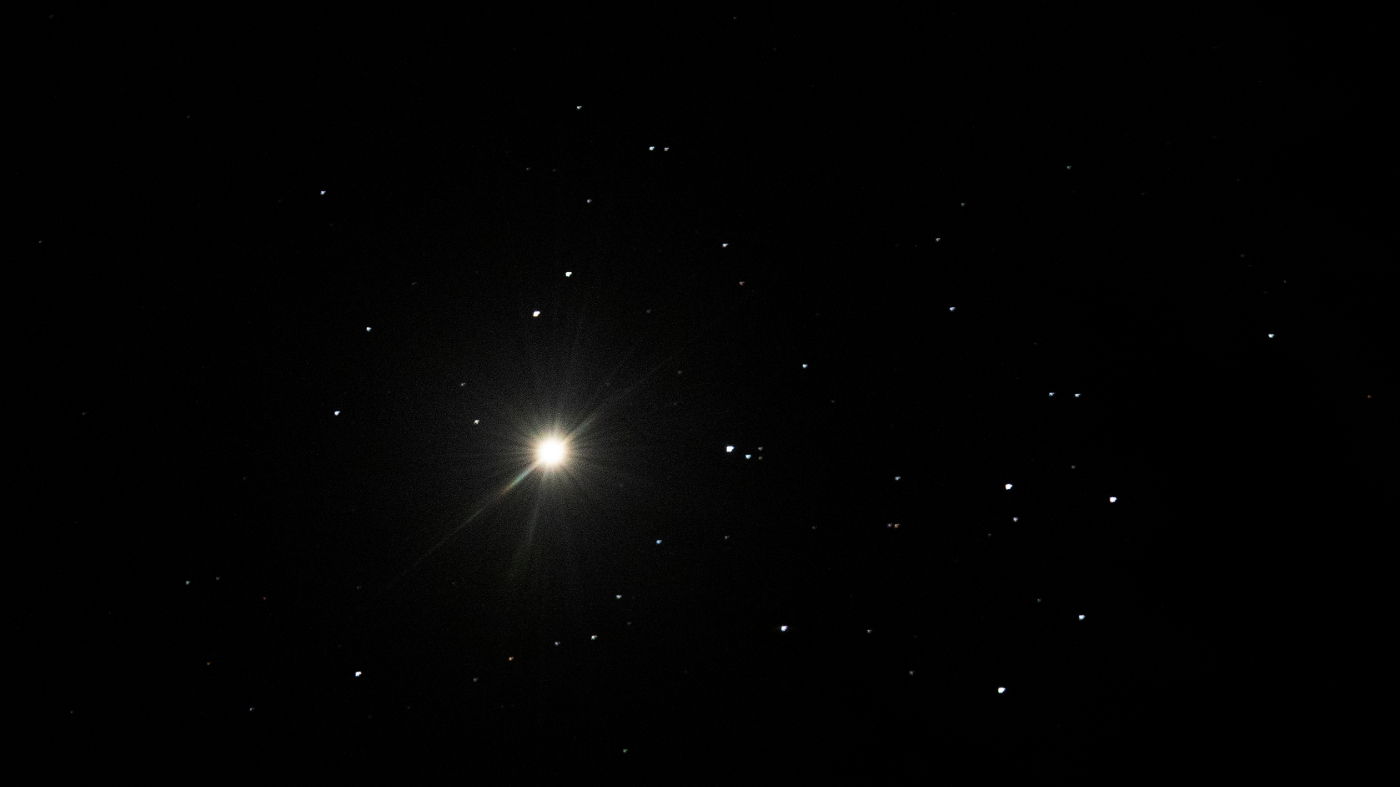
Venus, known for its bright presence in the night sky, periodically aligns closely with the Pleiades star cluster, an event visible from locations such as Olympia, Wash., on April 3, 2020. This conjunction, occurring roughly every eight years, connects a planetary marvel with what is commonly referred to as the ‘seven sisters.’
While Venus has captured the attention of astronomers and storytellers alike, its intrigue has also been woven into fictional narratives such as Apple TV’s ‘Star City,’ a spinoff from ‘For All Mankind.’ This show explores a Soviet-crewed flyby of Venus amid Cold War tensions, a mission reminiscent of actual plans considered by NASA in the 1970s.
During that era, NASA was evaluating a human mission to Venus through the Apollo Applications Program. This initiative explored various possibilities using Apollo hardware, including extended lunar visits and crewed orbiting stations. Prior to the legendary Apollo 11 moon landing, NASA had investigated concepts for missions involving long-duration spaceflight, highlighting the ambitious nature of space exploration.
The Venus flyby mission involved launching an Apollo capsule with a Saturn V rocket into Earth’s orbit. Instead of a lunar module, the Environmental Support Module was planned, containing vital equipment and provisions for the lengthy journey. The S-IVB stage of the Saturn was to propel the capsule and module towards Venus, with leftover fuel vented into space.
Innovatively, astronauts would have adapted one of the fuel tanks into living quarters, a concept termed the ‘wet workshop.’ Solar panels on the S-IVB would have supplied power. Space historian Paul Drye notes that astronauts would spend 123 days traveling to Venus, approach the planet at 6,200 kilometers, and return to Earth over another 273 days, totaling 396 days for the mission.
Near Venus, the spacecraft would conduct surface scans using radar and imaging techniques. Additionally, it would deploy an orbiter and multiple probes into Venus’s atmosphere. These included atmospheric, balloon-based meteorological, crash-landing, and soft-landing probes designed for data collection and surface analysis.
For reentry into Earth’s atmosphere, the Apollo command module’s heat shield would have been reinforced. Despite the mission’s potential, NASA’s budget cuts led to its cancellation before Apollo 11’s triumph. The Apollo Applications Program only realized Skylab, America’s first crewed space station, operational during 1973 and 1974.
Though NASA and other space agencies have deployed unmanned missions to Venus, emphasizing its hostile environment, current endeavors focus on celestial bodies like the moon and Mars. Notably, projects such as NASA’s Veritas, still in development, aim to further study Venus without crewed involvement.
With advancing technologies, the prospect of a crewed Venus flyby mission emerges, yet practical considerations and objectives continue to prioritize accessible and meaningful destinations over harsher ones. Writers like Mark R. Whittington, in works like ‘Why is It So Hard to Go Back to the Moon?’ and ‘The Moon, Mars and Beyond,’ probe the political complexities of space exploration, drawing attention to the evolving aspirations in the field.
© 2026 Nexstar Media Inc. All rights reserved. Unauthorized publication, broadcasting, or redistribution of this material is prohibited.