
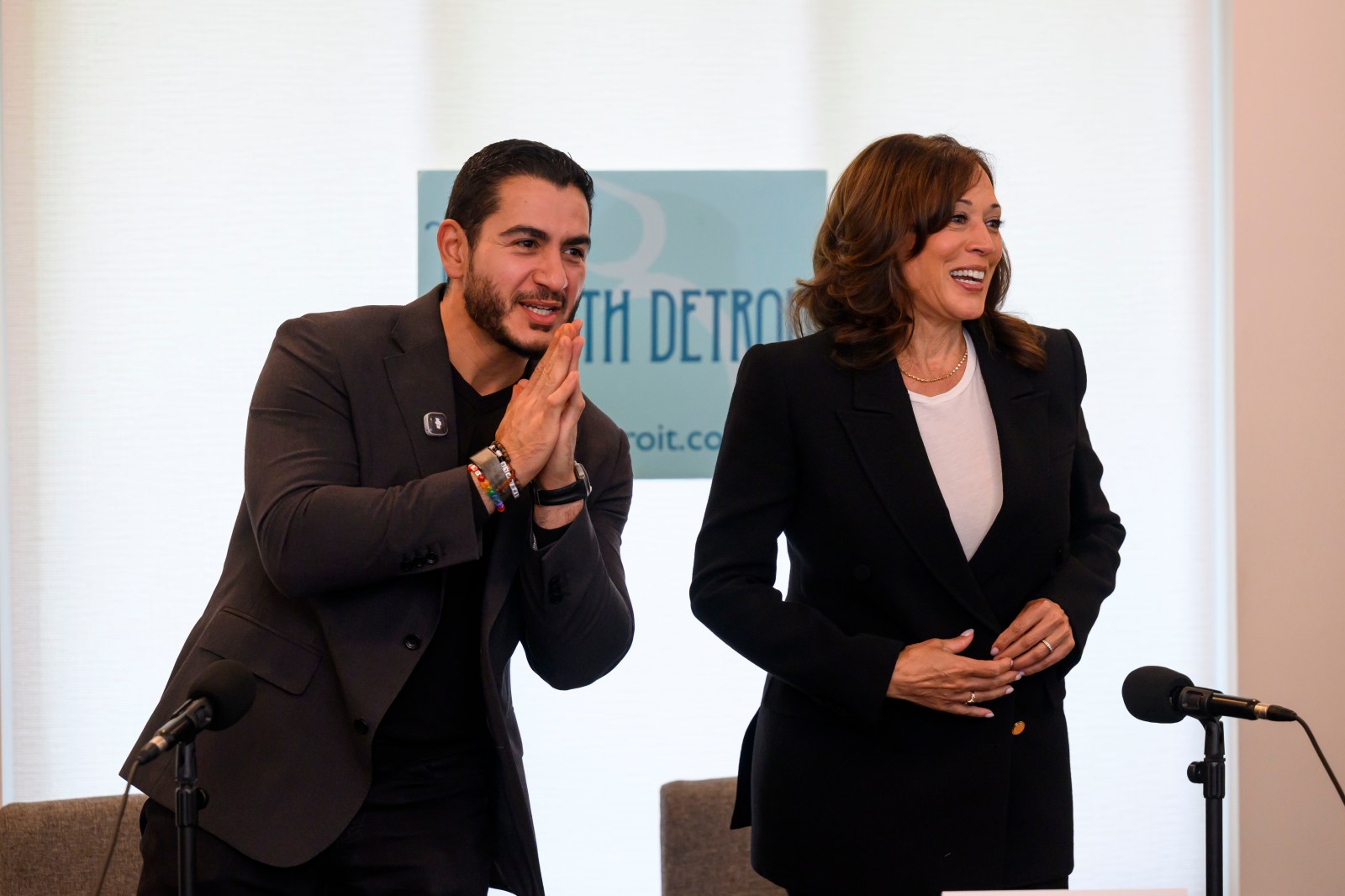
Abdul El-Sayed, a Democratic candidate for the Senate in Michigan, faces criticism over his strategy to engage Black voters shortly before the midterm elections. This scrutiny questions his ability to solidify a critical part of the Democratic coalition. The stakes in this race are significant not only for Michigan but also for the overall control of the Senate. The Democrats need to gain four seats to take control. Losing the seat vacated by Senator Gary Peters would complicate this effort.
Importance of Black Voters in Michigan
Black voters have historically supported Democrats in Michigan, contributing to key victories, especially in urban areas like Detroit, Flint, Pontiac, and Saginaw. In recent elections, small shifts in their turnout or support have had substantial impacts on statewide outcomes.
In 2016, Trump won Michigan by about 10,700 votes. Biden flipped it back in 2020 with a margin of 154,000 votes. However, in 2024, Trump reclaimed the state, defeating Kamala Harris by around 80,000 votes. Black voters comprised roughly 11% of Michigan’s electorate in 2024. Understanding their influence and ensuring robust turnout is crucial for any candidate seeking victory.
Analyzing Recent Polling Data
Current polling underscores El-Sayed’s substantial, yet not overwhelming, support among Black voters. A Data for Progress survey conducted from October 23 to 25 showed 82% of Black likely voters supporting El-Sayed. In comparison, Kamala Harris secured 87% of Black votes in 2024, and Elissa Slotkin won 85% of Black votes during her 2024 Senate race.
Historically, other prominent Democrats have achieved higher percentages among Black voters in Michigan. Biden and Peters attained 92% and 90% in 2020, respectively. Although El-Sayed’s 82% is promising, it lags slightly behind these figures.
Challenges and Campaign Strategies
El-Sayed won the Democratic primary against Haley Stevens, yet his relationship with Black voters remains a focal point. Stevens outperformed him in Black voter support and won Wayne County. Tensions persist between the two, especially regarding El-Sayed’s positions on Israel and campaign messaging.
El-Sayed has focused on issues like healthcare affordability and economic inequality. Seeking endorsements from recognized Black leaders such as Barack Obama and Kamala Harris, he concentrates efforts on places with significant Black populations.
Similarly, Republican Mike Rogers also aims to capture Black voters, addressing housing, employment, and food access themes. However, El-Sayed argues Rogers supports Trump’s agenda, which he believes does not align with the Black community’s interests.
Current Standing and Potential Impact
Three recent polls illustrate El-Sayed’s lead over Rogers, though the margins vary. A CNN/SSRS poll from October 20 to 27 shows El-Sayed with a seven-point lead. A Data for Progress survey gives him a four-point advantage, while a Marist poll narrows it to two points. Despite differing margins, these polls confirm El-Sayed maintains a lead.
For the Democrats, securing Michigan’s Senate seat is crucial. With Peters stepping down, retaining this seat is vital, given Democratic aspirations to gain control of the Senate. El-Sayed’s task involves ensuring traditional Democratic voters turn out prominently, especially in Black communities. His success in mobilizing his base could influence the Senate’s power balance significantly.