
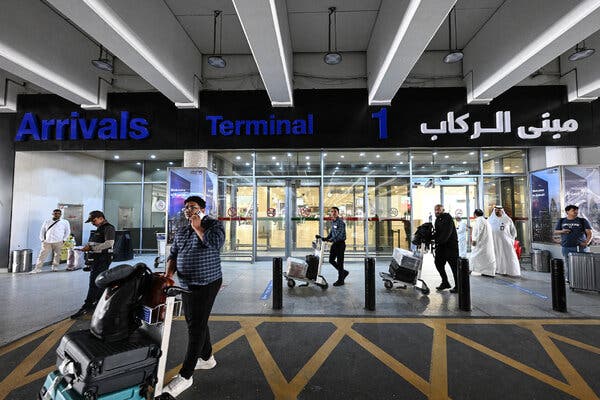
Iranian forces attacked Kuwait’s main airport, causing significant damage and casualties. Authorities reported one death and over 60 injuries, among them passengers and airport staff. This incident temporarily shut down a terminal that had just reopened. The conflict is severely affecting travel in the Middle East.
Kuwait International Airport’s Terminal 1 sustained material damage from Iranian drones, according to the Kuwaiti military. The terminal serves both military and civilian purposes, accommodating Kuwait and U.S. air forces alongside civilian travelers.
In response to the attack, Kuwaiti health officials declared the airport an emergency site. Over 25 ambulances arrived swiftly, and several emergency surgeries took place. Verified footage by The New York Times captured intense flames and smoke filling the terminal.
The assault occurred just as the busy Eid al-Adha travel period ended, prompting a swift partial reopening. Another terminal was scheduled to welcome passengers shortly thereafter.
Several airports in the region, including those with military affiliations, have come under fire. In Iraq, Erbil International Airport faced attacks in February and March. Baghdad International Airport in Iraq and Bahrain’s International Airport also suffered similar strikes.
In the U.A.E., the conflict targeted Dubai International Airport and Abu Dhabi’s Zayed International Airport. Iran’s own Mehrabad Airport experienced strikes from Israeli forces in March, highlighting widespread aviation disruption across the region.
The ongoing conflict forces airlines to alter their flight schedules, reduce routes, and raise ticket prices due to increased fuel costs. The closure of the Strait of Hormuz, a major shipping route, contributes to these price hikes.
British Airways responded by suspending flights to key locations like Dubai, Tel Aviv, Bahrain, and Amman until October 25, impacting international travel plans significantly.
Leo Sands covers breaking news for The New York Times from London.