
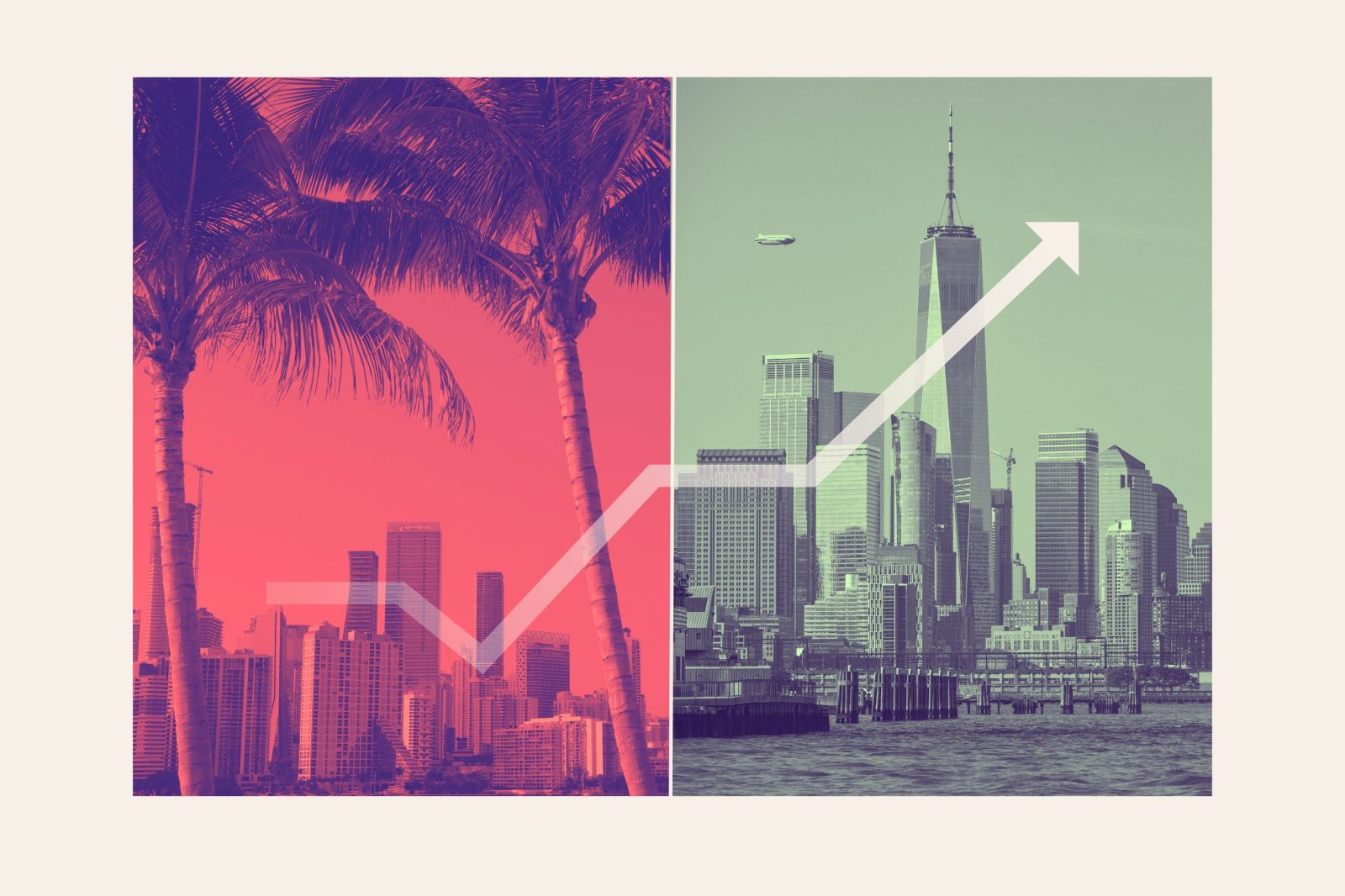
Miami has, for the first time, overtaken New York City in terms of living costs. Data from the U.S. Bureau of Economic Analysis (BEA) reveal that the cost of living in the Miami metropolitan area now ranks just below San Francisco’s, surpassing both New York City and Los Angeles in the process.
The BEA’s Regional Price Parities (RRP) report compares the price levels of metro areas with the national average. The 2024 data positions Miami-Fort Lauderdale-West Palm Beach metro with a score of 114.155 for all items. New York-Newark-Jersey City metro area follows with a score of 112.563.
The San Francisco-Oakland-Fremont metro area tops the list with a score of 115.613, and Los Angeles-Long Beach-Anaheim comes in at 113.566. These scores reflect price levels above the national average of 100.
“Everything Has Gone Up”
Despite Miami residents spending less on goods and utilities compared to New Yorkers, housing costs are significantly higher in Miami. The housing score in Miami stands at 155.551 versus New York’s 148.616.
This change affects many Miami-Dade households, where over half a million of them live paycheck-to-paycheck according to United Way data. This represents 56% of all households, which has risen by 2% from the previous year.
United Way describes these households as “ALICE”—asset-limited, income-constrained, employed individuals needing at least $47,784 annually for a single adult to get by. A family of two adults and two young children requires $114,480 annually, while the median income in the county is $76,184.
Many residents feel squeezed out of Miami due to rising costs, prompting some to leave for more affordable locales. According to a report, 10,115 residents left Miami-Dade County between 2024 and 2025, the third-largest decline among U.S. counties.
Consumer prices in Miami have jumped 36% since 2019, with home prices rising 79%. Property taxes are up 62%, reflecting high demand and the impact of severe hurricanes. Florida’s home insurance premiums, now the highest in the U.S., average $8,292 in 2025.
Building safety regulations post-Surfside collapse have also increased costs for condo owners due to rising homeowners association (HOA) fees.
Residents like Liliana and Lorenzo have expressed mounting frustration with these costs. Many who can afford it have relocated to places with fewer economic pressures.
Migration Patterns and Impact
The changes in population dynamics are notable. The University of Florida’s Shimberg Center for Housing Studies observed a decline in migration to Florida in 2025, a stark shift from the 2022 peak. High-cost urban counties like Miami-Dade have borne the brunt of this decline.
“People who lived in high-cost areas like Miami-Dade and Collier Counties and around Orlando were starting to say…that they felt like people were leaving because of the high housing costs,” said Anne Ray from the Florida Housing Data Clearinghouse.
For wealthy New Yorkers, however, Miami remains appealing. The absence of a state income tax in Florida, combined with relatively lower costs for luxury homes compared to New York, offers significant incentives.
Billionaires, attracted by Miami’s climate and lifestyle, continue to migrate south, driving a shift that might make the city increasingly inaccessible to middle-class citizens.