
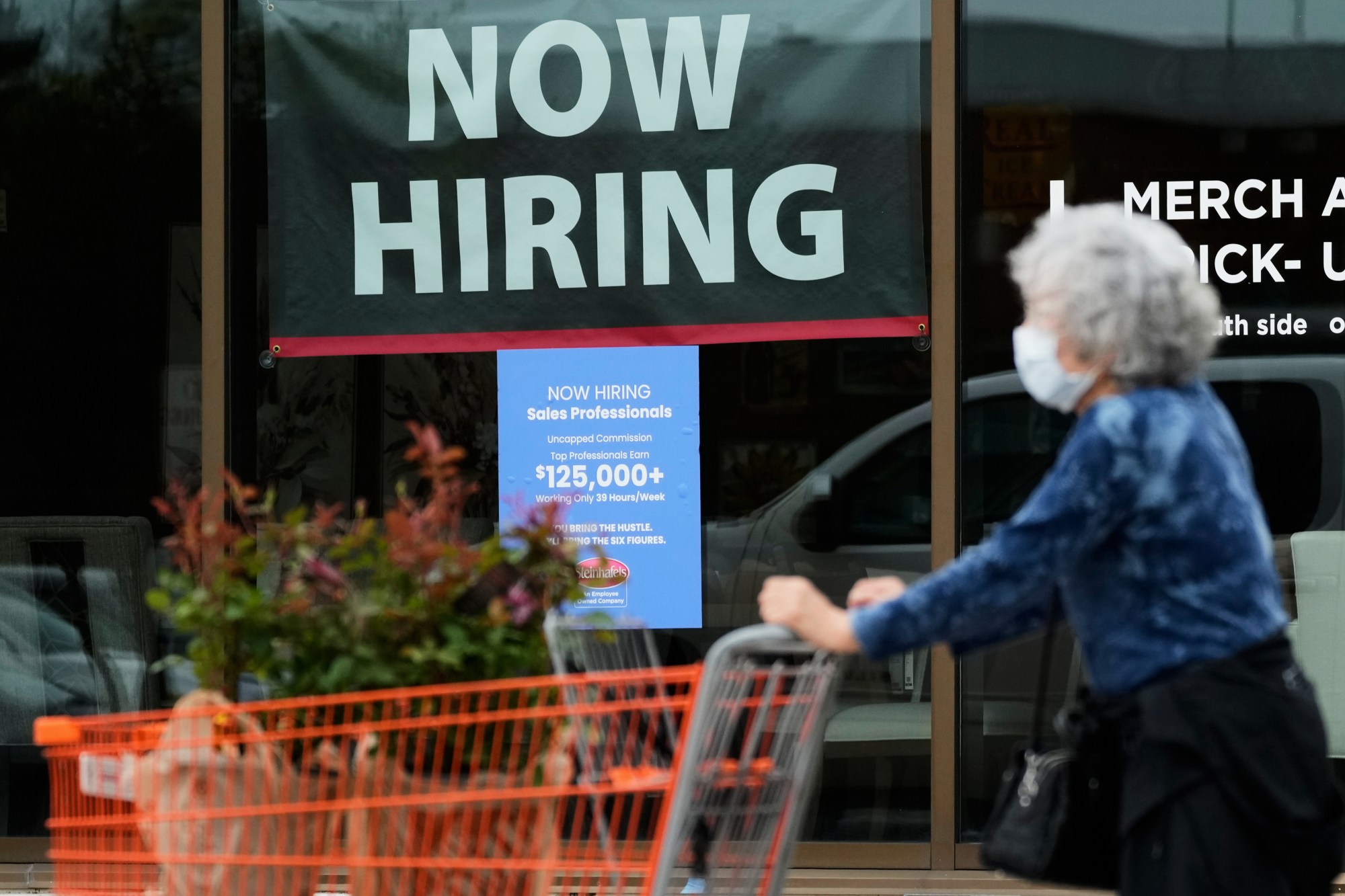
The latest data from the Labor Department reveals a decline in the number of Americans applying for unemployment benefits, underscoring ongoing job security for many workers. Last week, claims fell to 206,000 from the previous week’s revised total of 212,000. This reduction points to stable conditions within the employment sector.
The four-week average, which helps smooth out fluctuations, increased slightly to 204,000 from 199,750. These figures serve as important indicators for economists evaluating the job market’s trajectory. Historically, claims have ranged between 200,000 and 230,000 weekly over the past year.
Economist Carl Weinberg of High Frequency Economics noted the durability of the labor market amidst rising oil prices linked to the conflict with Iran and broader energy supply disruptions. Despite these challenges, Weinberg observed no significant impact on job stability.
However, the number of individuals receiving unemployment benefits as of the week ending August 8 rose to 1.8 million, a slight increase from the previous week’s 1.78 million. The unemployment rate remains low at 4.1%, partially due to economic resilience amid increased energy costs and reduced competition for jobs. This reduction in competition results from President Donald Trump’s immigration policies and the retirement of many baby boomers, with over 1.3 million people leaving the workforce within the past year.
Job seekers, whether new entrants or those seeking reemployment, encounter significant challenges. Businesses, recalling the post-COVID-19 labor shortages, are cautious in altering their staffing levels. Economists often describe the current situation as a ‘no hire, no fire’ job market.
In July, an overall reduction of 23,000 jobs was noted across diverse sectors including corporate, governmental, and nonprofit organizations. Meanwhile, this year sees an average monthly addition of 61,000 jobs, surpassing last year’s average of 9,700 monthly jobs, which was the weakest since 2002 outside of a recession.
The hiring trends are significantly lower than the average 166,000 monthly jobs created in 2023 and 2024, and even further below the 491,000 monthly jobs recorded during 2021-2022 post-pandemic hiring surge. The persisting effects of high interest rates and unpredictable trade policies from the Trump administration have been cited as hindrances to more robust hiring in 2025.