
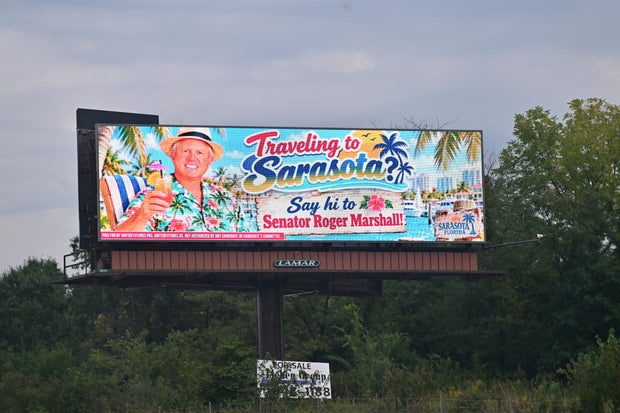
Colorful billboards have appeared in Kansas, signaling the intensifying Senate race. These billboards portray Republican Senator Roger Marshall in a Hawaiian shirt on a beach, highlighting a key criticism from Democrats: that Marshall is disconnecting from his constituents. A super PAC supporting his Democratic rival, Rev. Adam Hamilton, uses these images to underline its message.
Bob Beatty, a political science professor at Washburn University, notes favorable conditions for Hamilton’s campaign, predicting a potential win amid President Trump’s declining popularity. Hamilton, having switched from the Republican Party to the Democratic Party earlier this year, is drawing attraction from moderate Republicans. Trump’s approval ratings in Kansas have dropped to 39%, influenced by various factors affecting traditional Republican bases like farmers and ranchers.
Economic issues, such as a 79% increase in diesel prices over the last year, are worsening financial prospects for these communities. Additionally, Trump’s suspension of tariffs on Argentine beef has hurt local ranchers, resulting in significant financial losses per cattle head. Immigration policies have also stirred controversy, with unexpected ICE raids impacting local industries. Senator Marshall’s response involved distancing himself from these raids, advocating for better coordination with local law enforcement. Despite supporting Trump’s Iran strategy, he wishes for a quick end to the conflict to ease fuel prices.
Marshall seeks reelection amidst a challenging historical backdrop, as Kansas hasn’t elected a Democrat to the Senate since 1932. Yet, recent polls show Hamilton, leading the state’s largest United Methodist church, remains competitive with Marshall. The race has shifted from “Likely Republican” to “Lean Republican” in recent forecasts.
Hamilton, a political newcomer and centrist, faces criticism portrayed by Marshall as a radical. Campaign ads against Hamilton focus on attacking his religious and political stances. Meanwhile, Hamilton emphasizes Marshall’s ties to Trump to appeal to Kansas voters.
The Democratic optimism for Hamilton contrasts with historic challenges. Swapping traditional alliances in Kansas remains difficult, but recent endorsements from notable Republicans, including a former governor, boost Hamilton’s campaign.
Issues like healthcare affordability also surface in this campaign, particularly regarding Marshall’s history with medical debt collection. Reports allege that Marshall’s past actions targeted patients over unpaid bills, a claim he disputes by citing the free care his practice provided.
Hamilton aims to sway moderate Republicans, unaffiliated voters, and Kansas City area residents by focusing on Marshall’s seeming disconnection from local issues. Despite tactical and strategic shifts in the state, the upcoming election remains competitive for both camps.