
Democrats are optimistic about increasing their Senate majority in the next two years. They even consider the possibility of reaching a 60-seat supermajority. The focus now turns to the upcoming elections and their potential impact on political landscapes.
Senate 2026 Election Outlook
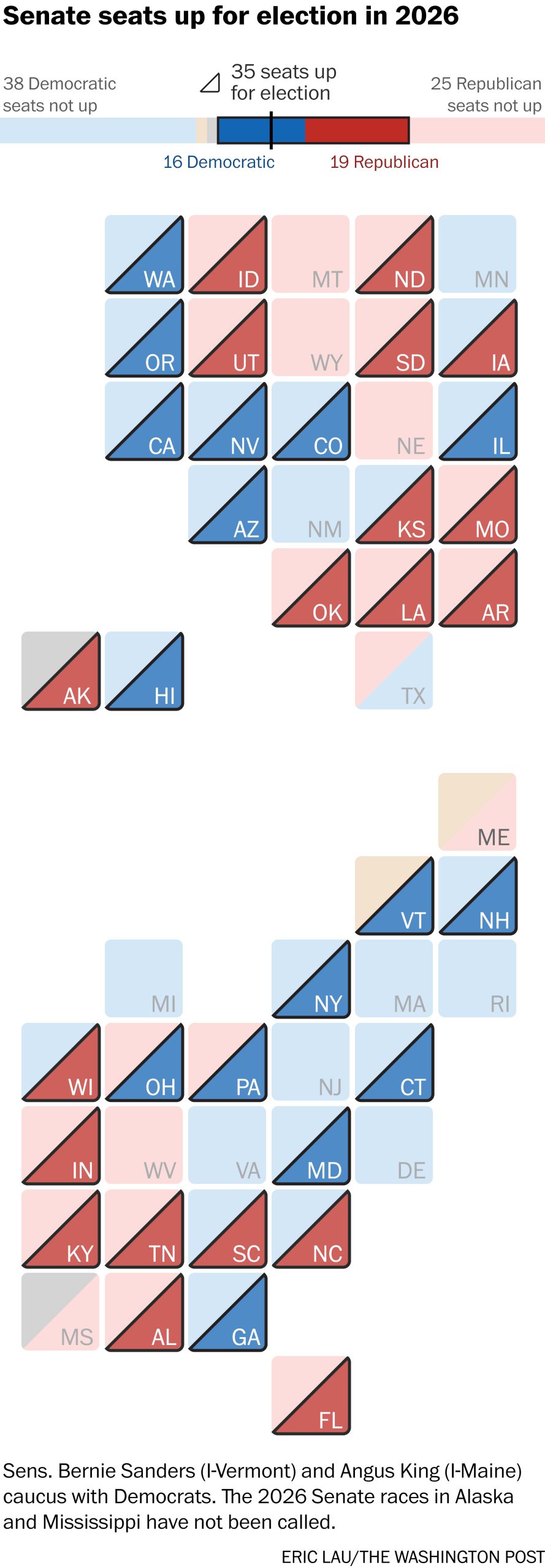
In 2026, 35 Senate seats are up for election. Out of these, 16 are currently held by Democrats, and 19 are held by Republicans. Meanwhile, 38 Democratic seats and 25 Republican seats will not face election this cycle. Key states like Alaska and Mississippi are yet to announce their results, which could influence the balance of power.
Sens. Bernie Sanders from Vermont and Angus King from Maine are Independents but caucus with the Democrats. This alignment could play a crucial role in shaping future legislative outcomes.
Looking Ahead to 2028
The 2028 Senate elections will see another set of 35 seats contested. Like in 2026, 16 Democratic seats and 19 Republican seats are up for grabs. Again, 38 Democratic seats and 25 Republican seats will remain unchanged.
Strategists from both parties will pay close attention to demographic shifts and political trends as they prepare for the elections. It’s a time for Democrats to consolidate their gains and for Republicans to strategize their comeback.
Current Senate Balance
The current projections suggest that Democrats will maintain a 54- to 56-seat majority in the upcoming session. This is contingent on how undecided races in Mississippi and Alaska are resolved. The ongoing political dynamics suggest continuing shifts in voter sentiments and party strategies.