
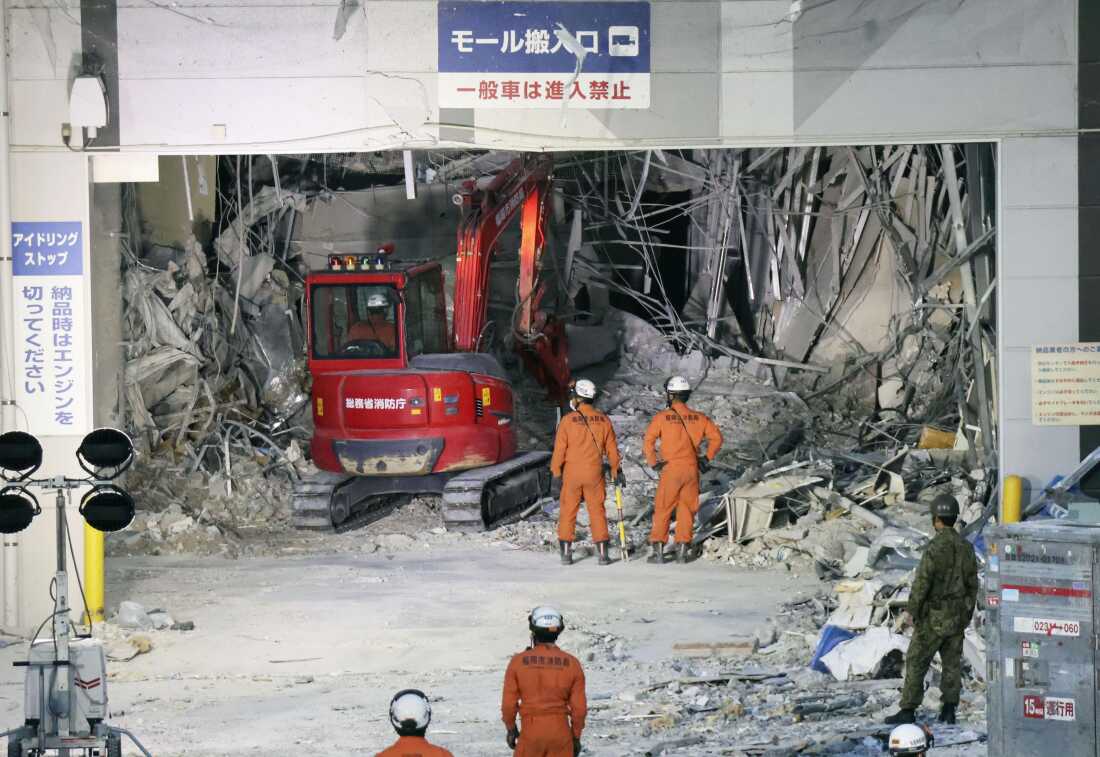
In Kashima, Kumamoto Prefecture, heavy machinery worked to clear debris at AEON Mall, damaged by an explosion after a powerful earthquake. The earthquake struck on Tuesday, July 28, 2026, affecting Japan’s southern main island of Kyushu.
As of Friday, July 31, 2026, the death toll has reached 34, according to the Kumamoto prefectural government. The earthquake not only led to an explosion at the mall but also caused a factory chimney to topple and homes to collapse.
Loss of Essential Services
Many residents are facing severe disruptions in essential services. More than 79,000 homes are without water, and electricity is cut off for over 3,500 households. In the midst of high temperatures, which are expected to reach 36°C (97°F), over 9,000 people are staying in shelters. These shelters are working on adding power sources to support air conditioning.
Search and Rescue Operations
Search efforts continue in Kumamoto, especially at the collapsed Aeon Mall in Kashima, where significant destruction occurred. The mall had thousands of people present during the quake. Approximately 3,000 shoppers were evacuated, but an explosion in another part of the mall trapped people when the second floor collapsed. Seven deaths have been confirmed, and 11 people were rescued.
Efforts at Nippon Paper Industries factory in Yatsushiro have ended. A chimney collapse there resulted in nine confirmed deaths, while 11 people were rescued. Smaller search operations ongoing in severely affected towns offer no clear count of those still missing.
Transportation Services Affected
Shinkansen bullet trains between Kumamoto and Fukuoka have resumed with limited services. Train services further south remain suspended. Local trains also face suspension due to earthquake damage, particularly in southern Kumamoto.
Impact on Communities
Hikawa, one of the worst-hit towns, reports over 800 out of 4,500 homes damaged or destroyed. Many people, fearing aftershocks or further damage, are sleeping in cars or outside their homes. Ayako Sudo, a local resident, shared her experience of sleeping in a car with her husband due to safety concerns. Such experiences echo those from 2016, when a similarly intense quake affected the region.
These ongoing challenges create a dire need for support and recovery efforts across affected areas.