
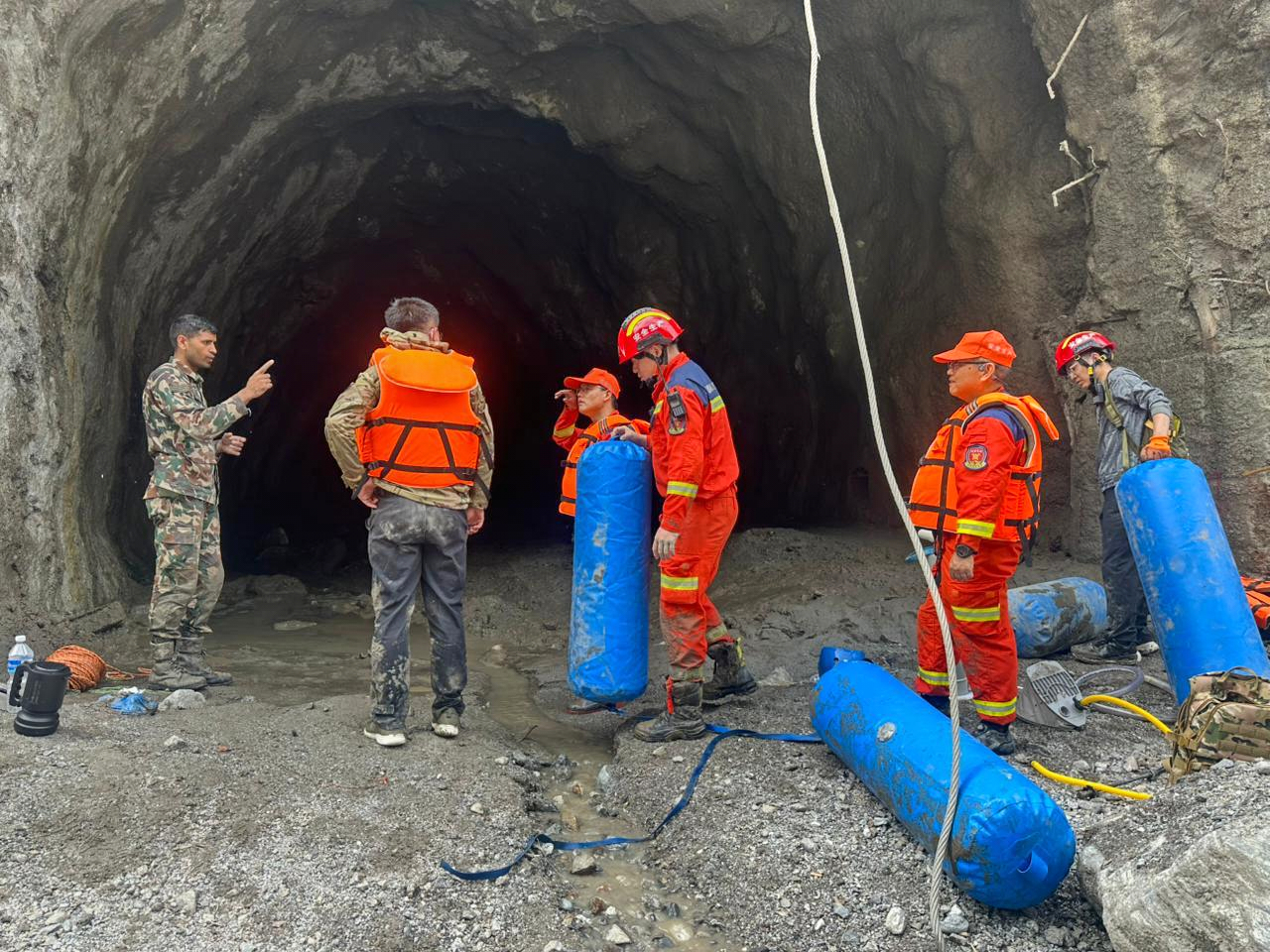
The photo from the Nepal Army shows soldiers engaged in a rescue mission at a hydropower project site in Upper Trishuli, Nepal, on Monday, August 31, 2026. This task comes in the wake of devastating floods that have claimed more than 1,000 lives and left thousands unaccounted for in Nepal and China. Filmmaker and drone expert Manish Maharjan, after crossing from China’s Tibet into Nepal days before the disaster, joins the efforts, operating thermal drones to locate missing workers and assist rescue teams.
Maharjan’s work focuses on locating around 900 workers missing after the floods hit 12 hydropower projects, where approximately 500 are believed trapped in tunnels. His drones have successfully identified people stranded on hillsides and isolated spots, even using microphone speakers and music to solicit responses from those in danger. However, tunnel searches prove challenging due to debris-filled interiors.
The disaster began on August 26 with the collapse of glacier bedrock in the Himalayan region. Satellite studies showed the event registered as a 5.2 magnitude seismic occurrence, causing massive rockfalls and glacier loss. This led to surging rivers and extensive damage to infrastructure, including hydropower stations and roadways.
Mohan Kumar Dangi, president of the Independent Power Producers’ Association, noted that some workers called for help during the disaster, yet there’s uncertainty regarding contact with trapped individuals since then. The urgency is growing, as experts highlight the importance of the initial 72 hours for survival, emphasizing the need for clean water and breathable air.
At Rasuwagadhi hydropower project, Maharjan attempted to penetrate tunnel depths with drones, finding them clogged with debris. This recurring scenario illustrates the flood’s force, and the tunnel’s complexity further limits drone navigation. Straight, unobstructed tunnels are necessary for effective drone operation, leaving bends or zigzag patterns impractical for thorough searches.