
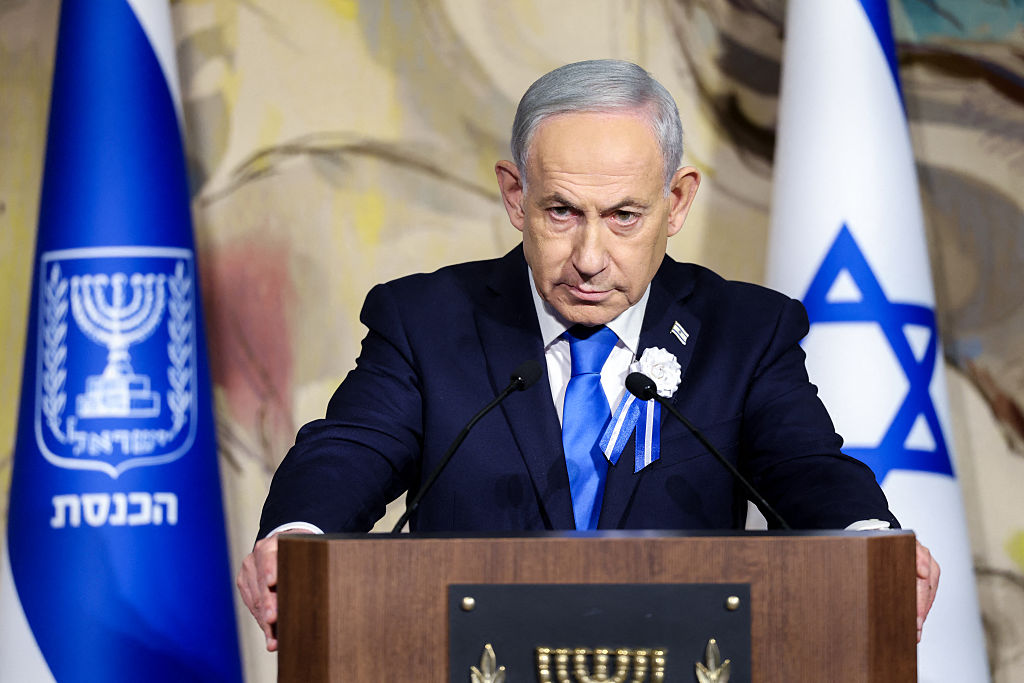
Israeli President Isaac Herzog recently assigned Gadi Eisenkot, former military chief and leader of the center-right Yashar party, the task of forming Israel’s next government. This step is part of the lengthy process to determine the next Prime Minister, which could allow Benjamin Netanyahu to remain in power for now.
Eisenkot has been given 28 days, until December 6, with a possible 14-day extension, to create a government that can win the confidence of the Knesset, Israel’s parliament. Once he forms a government, lawmakers must vote on it within seven days.
To achieve this, Eisenkot needs to unite rival political parties with differing priorities to form a majority. Joining his coalition would effectively endorse Eisenkot as the next Prime Minister. However, he faces significant challenges in gathering the required seats.
Understanding the Election Outcome
In the recent election, no party secured a majority in the 120-seat Knesset, leaving leadership undecided but keeping the process ongoing. Israeli elections occur every four years, with the latest on October 27. Voters return to Israel to cast ballots in person, as absentee voting is rarely permitted. The election was a public holiday, and about 67,000 Israelis abroad came back to vote.
Citizens vote for political parties, not candidates. Seats in the Knesset are allocated based on each party’s percentage of votes. Despite Netanyahu’s low approval ratings, his Likud party and allied far-right and ultra-Orthodox entities won 53 seats. Eisenkot’s allies, including the Yashar party, gained 48 seats. Arab-led parties hold 19 seats, a record number.
“Netanyahu’s party got the most votes,” says Steven Cook, a senior fellow at the Council on Foreign Relations, “but because the system is parliamentary and requires a majority, Netanyahu is far from establishing a government.”
Parties must now negotiate to form a coalition with at least 61 seats to win a Knesset confidence vote. Abstentions can allow for fewer seats. Both main blocs might form a majority by partnering with Arab-led parties or by merging, though this complicates Prime Ministerial roles.
Netanyahu has historically shown openness to power-sharing, previously offering such an agreement to Benny Gantz. Decisions on the new government must be made before presenting it to the Knesset. Internal bloc negotiations are also possible, but typically, parties within a bloc share similar views.
Election results influence parliamentary control temporarily. Shira Efron from Rand notes that announcements of appointments like Matan Kahana as Knesset Speaker indicate a vision for the parliament and weaken Netanyahu.
Why Eisenkot Was Chosen
The Israeli presidency is mostly ceremonial but plays a key role after elections. President Herzog consulted party leaders and chose the candidate most likely to form a coalition. Eisenkot was endorsed by 67 of 120 Knesset members, surpassing Netanyahu’s endorsements.
Herzog chose Eisenkot not as an endorsement but as the most viable option for coalition formation. Cook remarks that more Israelis voted for parties opposing Netanyahu, even if they disagree on the future direction.
Challenges to Government Formation
Even with backing from 67 members, Eisenkot faces hurdles in creating a government. Gaining support from Arab-led parties would win 19 additional seats, crucial for a majority. However, parties backing Eisenkot are divided over accepting Arab participation. Only Yair Golan of the Democrats publicly supports it, whereas others reject reliance on Arab parties.
Cook notes Arab-led parties might offer “outside” support, voting with Eisenkot without joining the coalition, though such arrangements are historically unstable.
An alternative could involve ultra-Orthodox parties, but disputes such as compulsory military service for yeshiva students present obstacles.
Netanyahu’s Prospects
While Eisenkot attempts coalition-building, Netanyahu stays as caretaker Prime Minister, able to seek support for his government. Should Eisenkot fail to form a government, Herzog might appoint another, possibly Netanyahu, who would then have a 28-day limit.
If attempts continually fail, early elections will ensue, with Netanyahu continuing as interim leader. This potential deadlock is reminiscent of Israel’s political struggles from 2019 to 2022, marked by multiple elections.
A new election might not benefit opposition efforts, potentially frustrating voters. Netanyahu’s path to staying in power involves persuading right-wing members of Eisenkot’s bloc, such as Bennett and Lieberman, to support him over Arab partnerships.
The outcome seems reliant on the willingness of these leaders to compromise, which will crucially influence Israel’s political future.