
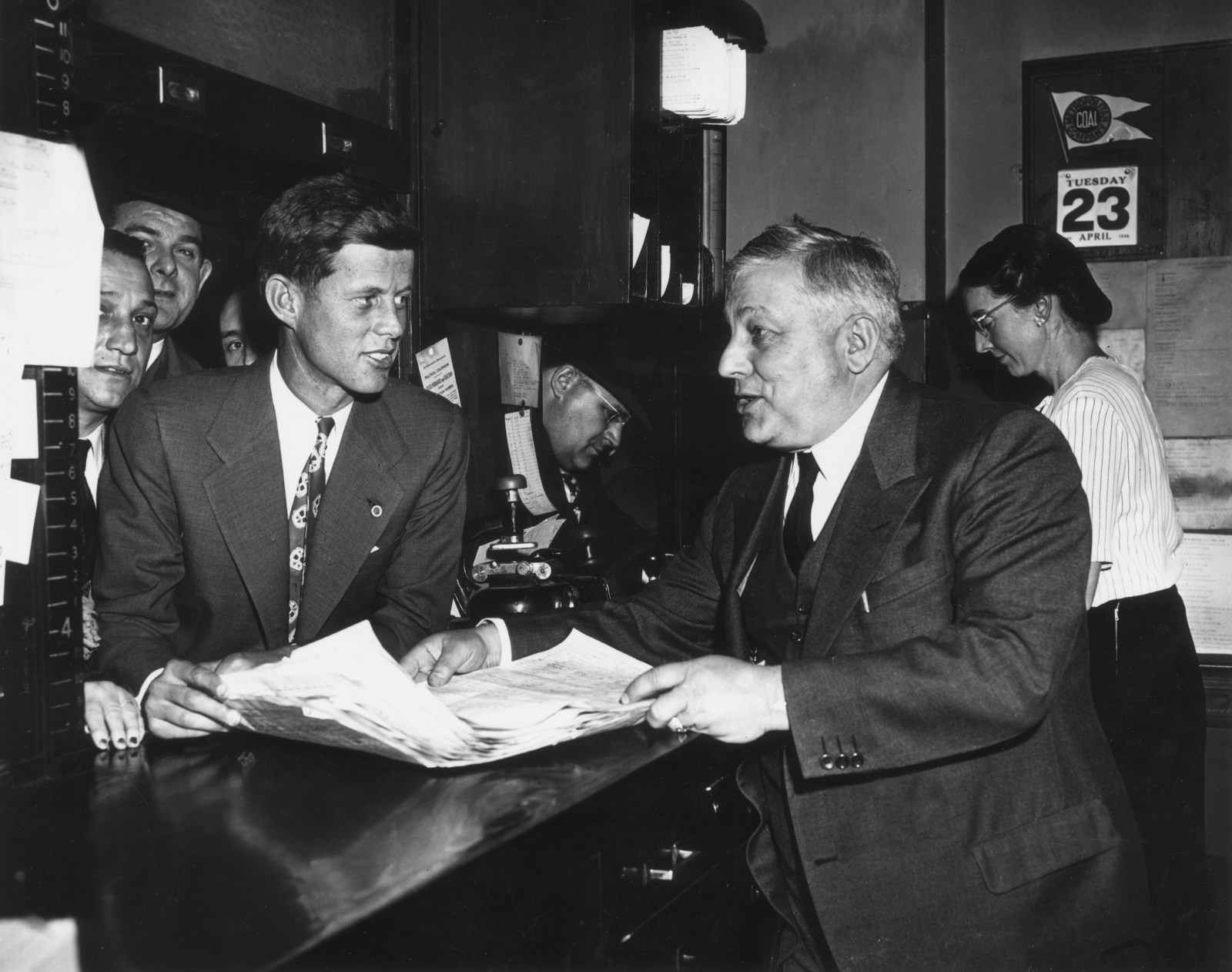
The controversy surrounding Alaska’s U.S. Senate race involves two candidates named Dan Sullivan. This situation parallels John F. Kennedy’s first congressional campaign in 1946, when two men named Joe Russo competed against him in the Democratic primary.
Legal Battle in Alaska
The Trump administration has sued to block the certification of Alaska’s Senate election. They argue that voters could confuse the incumbent Republican, Dan Sullivan, with challenger Daniel J. Sullivan Jr. Alaskan officials are asking a federal judge to dismiss this lawsuit. The outcome of the November 3 contest could impact Senate control.
Historical Context: Kennedy’s Campaign
Eighty years ago, Kennedy faced a similar issue in Massachusetts. Among his opponents was Joseph Russo, a city councilor and prominent figure in Boston politics. Another opponent, also named Joe Russo, was a young janitor.
The Two Joe Russos
In 1946, Kennedy ran for Massachusetts’ 11th Congressional District. The district covered several areas, including Boston’s West End and East Boston. Kennedy, a Navy veteran from a wealthy family, was new to politics. Joseph Russo, an Italian immigrant and city councilor with a strong following, questioned Kennedy’s qualifications. Russo criticized Kennedy’s wealth and privilege in an advertisement.
Complicating matters, another Joe Russo appeared on the ballot. This Russo was paid by Kennedy campaign manager Joseph Kane to run. Allegations arose of political maneuvering to dilute support for the city councilor. Accounts suggest Joseph Kennedy Sr. approved this tactic, although JFK’s knowledge remains unclear.
There’s no doubt in my mind that Joe Kennedy and the people around him put one of those Joseph Russos in the fight,” said Mark Dalton in a PBS documentary.
Election Outcome
The second Russo admitted he was encouraged to run in exchange for favors. Despite the confusion, Kennedy won by a large margin. He went on to win the general election, launch his congressional career, and later become president. Joseph Russo continued in public service and did not harbor resentment toward Kennedy.
Current Dispute in Alaska
Alaska’s case involves Republican Senator Dan Sullivan and his challenger, Daniel J. Sullivan Jr., a retired teacher. Republicans accuse the latter of attempting to siphon votes, but he denies these claims. The Alaska Supreme Court ensured Daniel J. Sullivan Jr. remained on the ballot. Election officials distinguish candidates by listing the incumbent’s party affiliation.
The Justice Department filed a lawsuit seeking to stop certification if the incumbent loses. The issue lies in whether federal intervention is justified in such cases. Alaskan officials urge dismissal, citing the lack of legal basis for federal involvement.
The parallels between Kennedy’s campaign and the Alaska dispute highlight name confusion in elections. They underscore the difference between political maneuvering allegations and legal candidacy standards.