
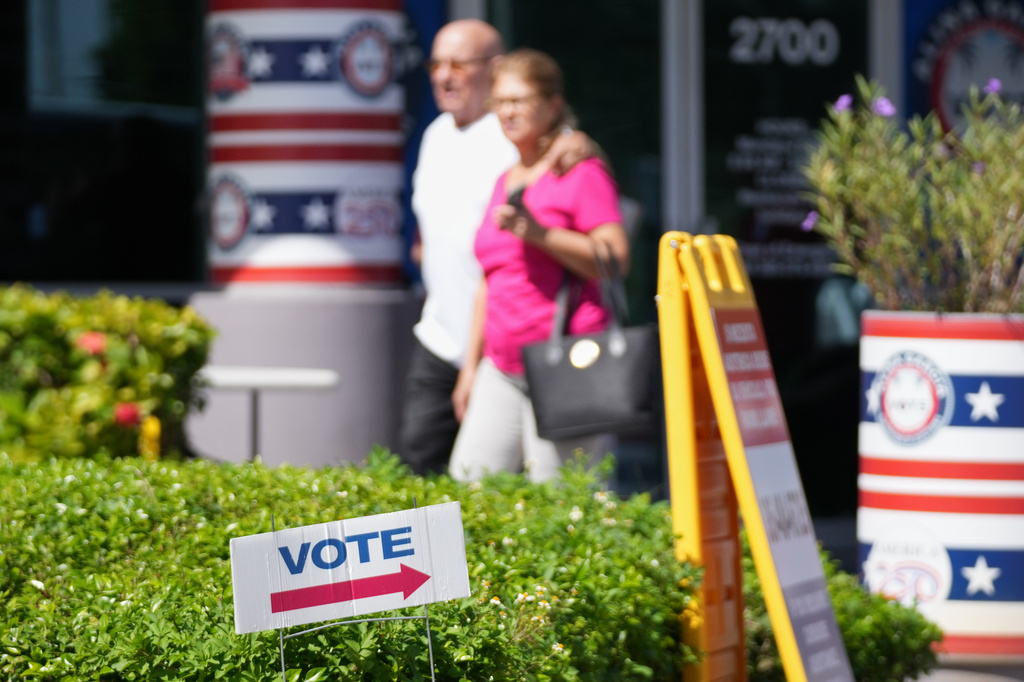
Early voting for the 2026 midterm elections took place on Tuesday, October 27, 2026, in Doral, Florida. As voter behaviors and polling data become focal points, the conversation around the effectiveness of polling averages is worth exploring.
Polling averages have provided an unprecedented level of detail about election dynamics, yet they fall short in explaining the motivations behind voter preferences. For instance, a significant portion of Maine voters, despite disapproving of former President Trump, may support Sen. Susan Collins, highlighting the complexities in voter behavior. In past elections, although President Biden won Maine by a 9-point margin, Collins had a similar victory margin—a testament to her strong voter appeal.
The poll data suggest that while Collins enjoys support, the reasoning behind voter decisions remains unclear. A poll conducted in September showed Collins with a narrow lead which was within the margin of error. Despite these mixed signals, her effectiveness and perceived moderation in comparison to her Democratic opponent, Troy Jackson, play crucial roles in her continued support.
Analysis reveals that while the majority of Collins’s supporters are not sending a message about Trump, interesting dynamics are at play. About a third of Collins’s supporters disapprove of Trump, yet only half prefer a senator supportive of Trump. This disconnect is partly because many view Collins as more capable, while Jackson is perceived by a sizable number of voters as too liberal.
Beyond individual races, broader issues such as opposition to data centers have gained traction among voters. Numerous polls reflect a national sentiment against building data centers near residential areas, driven by concerns over energy costs. While data centers are often opposed, there’s a notable portion of the populace willing to accept them if developers offset the associated grid costs.
The role of artificial intelligence in synthesizing polling data presents both opportunities and challenges. AI can efficiently aggregate findings from various polls, offering insights into converging and diverging perspectives. However, AI’s limitations necessitate careful human oversight to avoid errors in data interpretation.
Transparency and rigor in polling practices remain critical. There must be clear disclosure of the methodologies and participant demographics to ensure accurate reporting. When AI identifies noteworthy data, journalists must be able to verify the specifics before drawing conclusions.
The future of electoral analysis hinges on digging deeper than surface averages. By leveraging available tools and methodologies, there’s potential to uncover insights into voter preferences and behaviors. The exploration of these dynamics must be rooted in comprehensive data analysis and thoughtful inquiry.
Jon Cohen, the founder of TrueDot, advocates for these advancements. His work emphasizes the importance of surpassing traditional polling practices to better understand the electorate.