
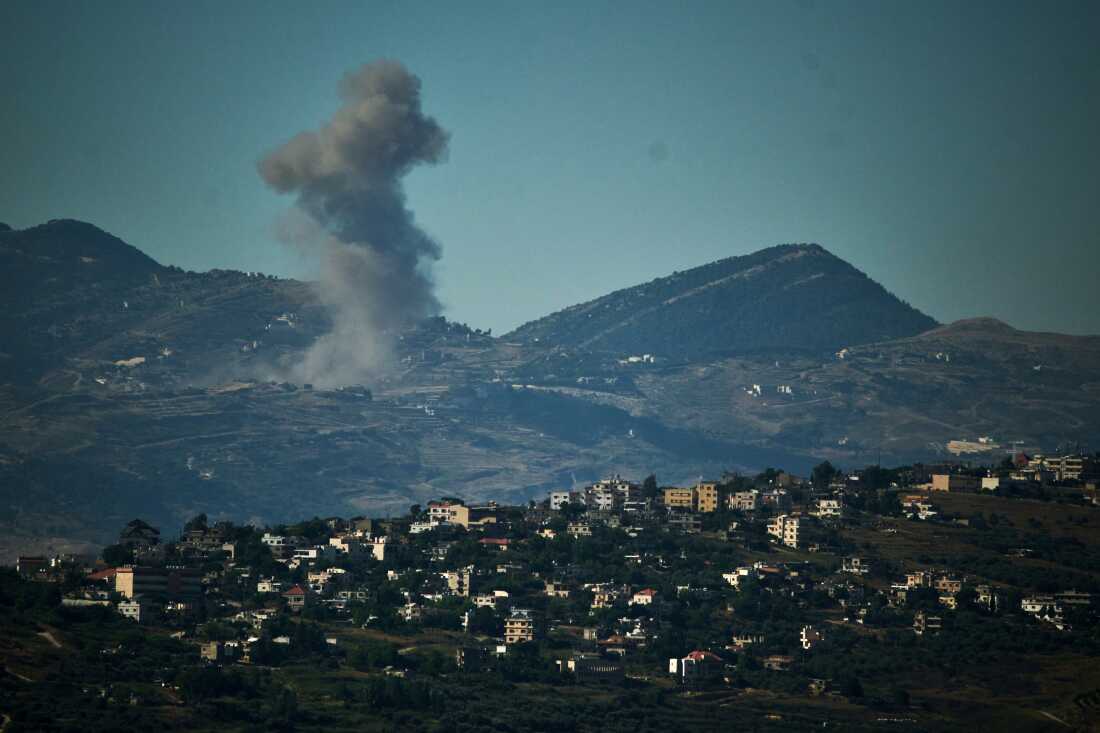
Smoke ascended in the aftermath of an Israeli military strike in southern Lebanon, visible from northern Israel on Friday, June 19, 2026. Despite reports of a ceasefire agreement, Israeli attacks on Saturday killed seven people, including two children. The continued hostilities threaten an interim deal between the United States and Iran aimed at ending the ongoing Middle East conflict.
The Lebanese National News Agency reported that attacks hit Nabatiyeh and nearby areas. Seven people remain trapped under debris. Mediators are working to cease fighting between Israel and Hezbollah, a militant Lebanese group. Recent exchanges have resulted in 47 deaths in Lebanon and four among Israeli soldiers.
An Israeli military official disclosed that over 50 projectiles were launched by Hezbollah at Israeli forces, which prompted retaliatory action. The official shared information on the condition of anonymity. Meanwhile, Israeli ambassador to Washington, Yechiel Leiter, reaffirmed Israel’s commitment to a ceasefire, conditional on Hezbollah’s cessation of hostilities. Hezbollah indicated willingness to abide by such an agreement but stopped short of confirming its enactment.
The U.S.-Iran Agreement at Stake
The conflict between Hezbollah and Israel escalated shortly after U.S. and Israeli strikes on Iran in late February, leading to Hezbollah targeting northern Israel. This wider conflict concerns the ongoing negotiations between the U.S. and Iran, which recently resulted in a reopening of the Strait of Hormuz to stabilise global oil supplies.
The U.S.-Iran interim agreement intends to revive discussions on Iran’s nuclear pursuits. Neither Israel nor Hezbollah are involved in the deal, which calls for halting military actions in Lebanon and respecting its sovereignty. Continued fighting jeopardizes the accord, delaying scheduled talks in Geneva without a rescheduled date. Israeli Prime Minister Benjamin Netanyahu has pledged to maintain a military presence until the threat is neutralized; however, Hezbollah demands a full withdrawal from Lebanon.
Clashes Near the Israel-Lebanon Border
Saturday saw low-flying Israeli jets over Tyre, where attacks claimed four family members’ lives in Barish. Additional casualties occurred in Arab Salim, Doueir, and Kfar Rumman villages. Netanyahu’s office withheld comments on ceasefire attempts, though he declared on social media that Israeli forces targeted 150 Hezbollah sites, resulting in numerous militant deaths.
Postponed Diplomatic Engagements
Amid increased tensions, planned travel to Switzerland by Iranian and U.S. officials was postponed. Iranian Foreign Ministry spokesperson Esmail Baghaei confirmed ongoing negotiations with Pakistan’s involvement. Although an interim agreement had been digitally confirmed, in-person meetings were considered non-urgent, though expected in the days ahead.
Challenges in the Nuclear Discussions
The upcoming talks in Switzerland were designed to focus on Iran’s asserted peaceful nuclear program. The International Atomic Energy Agency has indicated that Iran’s stockpile could facilitate creating atomic weapons, posing a challenge in negotiations. The 2015 nuclear deal, rescinded by former U.S. President Trump, required extensive negotiation—more than 18 months.
The present interim agreement allots 60 days for renewed talks, with potential extensions. Should Iran agree, substantial benefits await, including the gradual lifting of sanctions and a substantial reconstruction fund. Initial concessions have been granted, allowing Iran to freely sell oil following the U.S. blockade’s removal and unfreezing of assets, although the latter’s timing remains uncertain.