
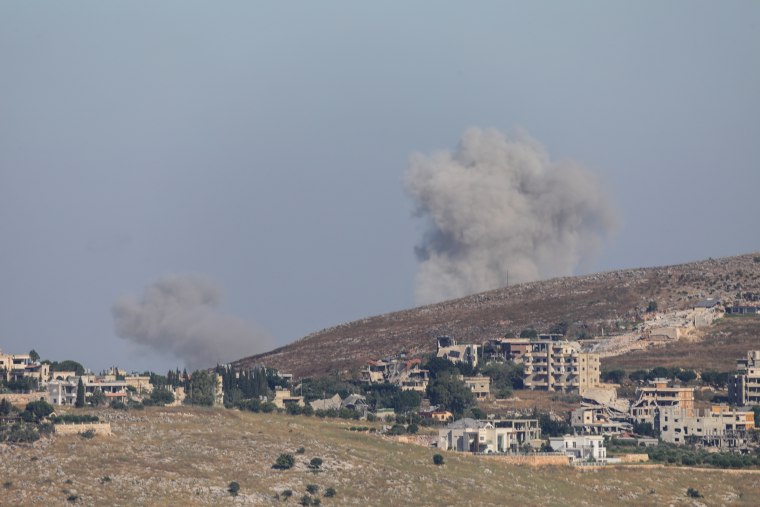
Early Saturday morning, Israeli airstrikes in southern Lebanon resulted in the deaths of at least 16 individuals, including two children. This was confirmed by Lebanese civil defense and local media. The strikes unfolded a day after the U.S. announced a new ceasefire agreement between Israel and Hezbollah, reportedly initiated following a request from President Donald Trump.
Various towns in southern Lebanon experienced these assaults. Lebanese news agency NNA reported, citing an airstrike in Arabsalim that led to three fatalities. Additionally, a drone strike in Deir al-Zahrani reportedly caused another fatality. In total, at least seven individuals remain trapped beneath the rubble. A soldier also lost his life between Kfar Rumman and Nabatieh, as stated by the Lebanese army.
The Israel Defense Forces (IDF) issued a statement claiming that Hezbollah violated the ceasefire by firing over 50 projectiles at IDF soldiers operating in southern Lebanon overnight. In retaliation, Israel targeted sites allegedly associated with Hezbollah. The statement emphasized Israel’s commitment to the ceasefire agreement.
Hezbollah, a militant organization supported by Iran, asserted its adherence to the ceasefire since Friday evening, accusing Israel of fabricating reasons to justify ceasefire breaches.
These recent attacks occurred amid ongoing U.S. peace talks with Iran, highlighting the fragility of the negotiations. President Trump recently urged Israel to stop its assaults on Lebanon, and Israel’s ambassador to the U.S. indicated a cessation of offensive operations.
Smoke from Israeli airstrikes aftermath was visible in Nabatieh’s Shweikin and Ali al-Tahir hill regions on June 20.
According to Iran’s foreign ministry spokesperson Esmail Baghaei, Pakistan’s interior minister visited Tehran for discussions with Iran’s Foreign Minister. Talks involving Pakistan as a mediator continue as part of the negotiation’s next phase.
A meeting between Tehran and Washington was planned in Switzerland to start 60 days of talks on a final agreement. However, these discussions were postponed. The ongoing discussions aim to resolve unresolved issues, including Iran’s nuclear initiatives. A recent understanding between the U.S. and Iran included a ceasefire, encompassing Lebanon. Though Israel was not part of the agreement, Iran has signified that Israeli strikes would violate the terms.
U.S. intelligence predicts that Israel’s militant group attacks in Lebanon might endanger the tentative peace deal.
Smoke was observable from a series of Israeli airstrikes targeting the southern Lebanese city of Nabatieh on June 20.
Israeli actions in Lebanon persist amid growing differences between the Trump administration and Israeli Prime Minister Benjamin Netanyahu and his far-right associates. Netanyahu has criticized the deal, viewing it as disadvantaging Israel. These differences have led to calls for escalated strikes in Lebanon.
With an upcoming election in October, Netanyahu may require support from Israel’s far-right factions to maintain power. Jonathan Panikoff of the Atlantic Council observed that Netanyahu faces political challenges as Iran grows in strategic strength.
Netanyahu’s stance includes potentially occupying southern Lebanon, delaying talks and frustrating U.S. officials. Vice President J.D. Vance criticized Israeli officials for not valuing American support.
Despite tensions, steady maritime traffic persists through the Strait of Hormuz since the pact’s signing. Industry analysts signal that shipping will gradually normalize post-clearance of potential mines.
IDF spokesperson Brig. Gen. Effie Defrin affirmed Israel’s continued operations in southern Lebanon, underscoring the intent to safeguard civilians.