
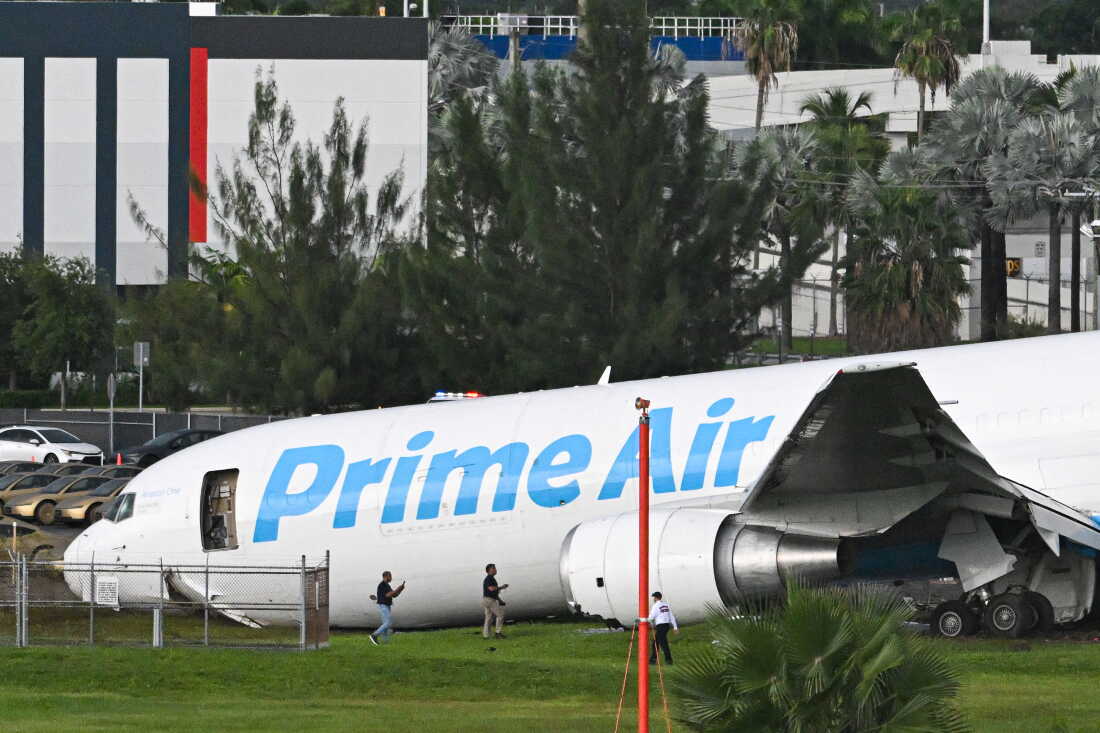
Officials are currently investigating a Prime Air cargo plane incident at Miami International Airport. On September 6, 2026, the plane overran the runway and collided with vehicles, causing a fire. The National Transportation Safety Board (NTSB) released cockpit voice recordings showing warnings in the cockpit prior to the crash.
Despite the warnings, the flight crew continued with the landing. Ross Aimer, CEO of Aero Consulting Experts and a retired airline captain, criticized the crew’s performance, stating such instability should have prompted a go-around.
The plane touched down at approximately 180 miles per hour, according to flight data. After touching down, it traveled over 1300 feet beyond the runway, crashing into two vehicles. This resulted in the deaths of five airport workers and injuries to five others.
Concerns About Safety
The Miami crash has sparked concerns about 21 Air, the lesser-known carrier operating the flight for Amazon. Some former pilots had previously warned about safety issues at the company. Aimer questioned Amazon’s decision to use smaller carriers instead of managing its own fleet.
Amazon defended its carrier model, stating it aligns with aviation industry norms. Amazon ensures that its carriers meet Federal Aviation Administration (FAA) certification standards. An Amazon spokesperson emphasized the importance of safety for its operations.
Previous Incidents
This crash adds to a history of incidents involving Amazon’s cargo planes. A 2019 crash involved an Atlas Air flight, resulting in three deaths, later attributed to pilot error. A 2024 incident with a Cargojet flight involved mechanical problems but no casualties.
Amazon is not alone in facing such challenges. A similar UPS incident in 2023 resulted in significant on-ground fatalities. The NTSB focused on a faulty engine bracket as the cause.
Pilot Experience
Amazon’s logistics operations hire nine air carriers, including major and minor companies. The Miami crash involved a 21 Air plane. This carrier employs relatively inexperienced pilots seeking to move to larger carriers. The captain and first officer involved had under 18 months of experience with the Boeing 767.
21 Air did not publicly comment but had previously claimed to prioritize operational safety. Former employees, like Karl Seuring, expressed longstanding concerns about safety culture there. A whistleblower lawsuit details such grievances.
Investigations and Cooperation
NTSB is jointly investigating with 21 Air and Amazon. Jennifer Homendy, NTSB Chair, seeks clarity on operational relations between the two companies. Both companies have committed to full cooperation in the ongoing investigation.
NPR noted Amazon’s financial relationships with them, maintaining journalistic integrity while reporting on this incident.