
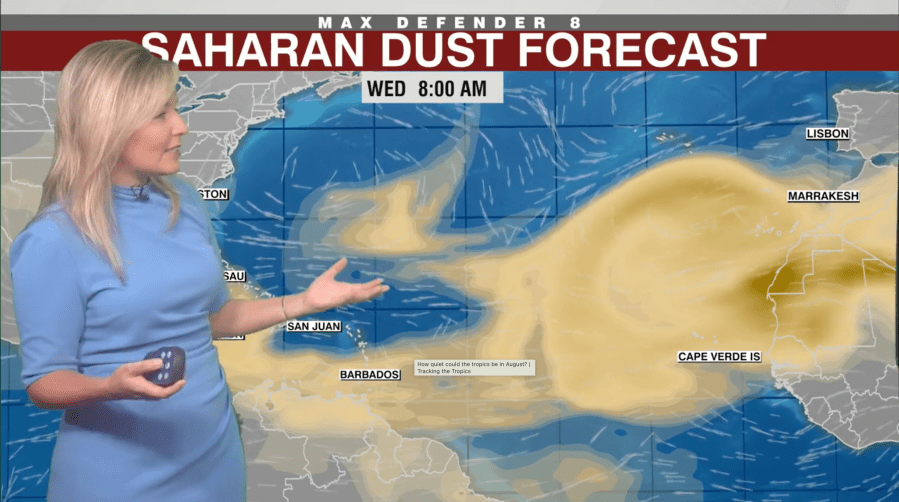
High temperatures, infrequent storms, and stunning sunsets mark the current weather pattern in the southern United States. These phenomena largely result from the Saharan Air Layer, commonly known as Saharan dust. This layer of dust travels over from Africa and reaches high altitudes in the atmosphere, affecting weather patterns across the region.
Jason Dunion, a meteorologist from the University of Miami, explains that this dense, dusty layer forms a 2.5-mile-thick atmospheric band, starting a mile above the ground. It crosses the Atlantic from Africa every three to five days during the summer. These dust clouds can cover areas as large as the entire continental United States.
The Saharan dust season typically peaks between mid-June and mid-August, and its effects are currently noticeable across the nation. The warm, dry layer of dust acts as a cap on the atmosphere, suppressing the formation of thunderstorms and hurricanes. “It makes it very hard for thunderstorms and clouds to break that really warm layer,” Dunion says, attributing the calm start to the Atlantic hurricane season to these conditions.
Meteorologist Rebecca Barry from Nexstar’s WFLA recently highlighted an unusually late-season plume of Saharan dust. She noted its size and intensity, saying, “That looks like a late-May or June plume of Saharan dust.” Such plumes are rare during the current season but continue to impede the development of tropical storms and hurricanes.
Without frequent summer storms, temperatures in the southern U.S. have been climbing. As Dunion remarks, “We don’t really get those cool afternoon thunderstorms, leading to heat indexes reaching up to 110 degrees.” This phenomenon impacts not only the South and Gulf states but also areas as far west as Arizona, as KXAN meteorologist Freddy Vela reports waves of Saharan dust moving across Texas.
Saharan dust also enhances sunrises and sunsets. As the dust moves across Florida, it scatters sunlight, causing brilliant orange hues at dusk and dawn. “To me, it’s amazing,” Dunion observes, highlighting the dust’s long journey of 3,000 to 4,000 miles across the Atlantic.