
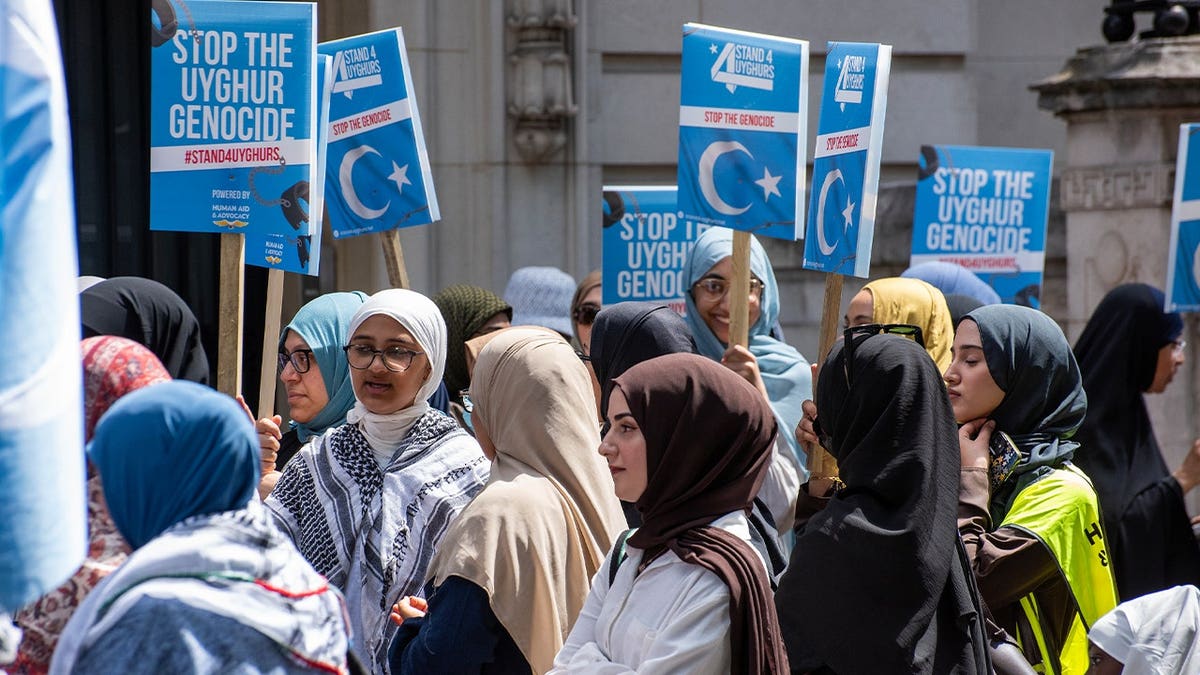
The House Select Committee on the Chinese Communist Party has requested a briefing from the Department of Homeland Security (DHS) regarding the implementation of the Uyghur Forced Labor Prevention Act (UFLPA). This act, passed in 2021, aims to block the import of goods produced with forced labor from China.
This request follows allegations of oppression and forced labor among the Uyghur ethnic minority in the Xinjiang Uyghur Autonomous Region. Human rights groups have highlighted these violations, sparking global concern.
The Uyghurs face political persecution in Xinjiang. They are coerced into abandoning their religion and cultural practices. Many are compelled to work for little or no pay and endure prolonged hours.
Representative Ro Khanna emphasized the gravity of the situation, highlighting both ethical and economic concerns. American manufacturers struggle to compete with products made through forced labor, impacting national security and economic interests.
The bipartisan letter addressed to DHS Secretary Markwayne Mullin outlines concerns regarding the UFLPA Entity List, specifically its adequacy and updates. Recently, DHS added 43 companies to this list, a move Khanna sees as progress but insufficient.
Reports indicate that products from affected regions, such as textiles, steel, and aluminum, reach U.S. markets despite the restrictions. A New York Times article suggests the involvement of forced labor in the production of popular merchandise like ‘Labubu’ dolls.
Khanna also pointed out China’s tactics to bypass import bans, such as outsourcing production. He urged the identification of supply chains at their origin to enforce effective measures.
Ultimately, addressing forced labor in China is a non-partisan issue. The unity among lawmakers, noted by the bipartisan signatories of the letter, underscores its significance.
Khanna concluded, stating that fair trade is essential. He advocated against competition with slave labor and emphasized the importance of equitable trade practices.