
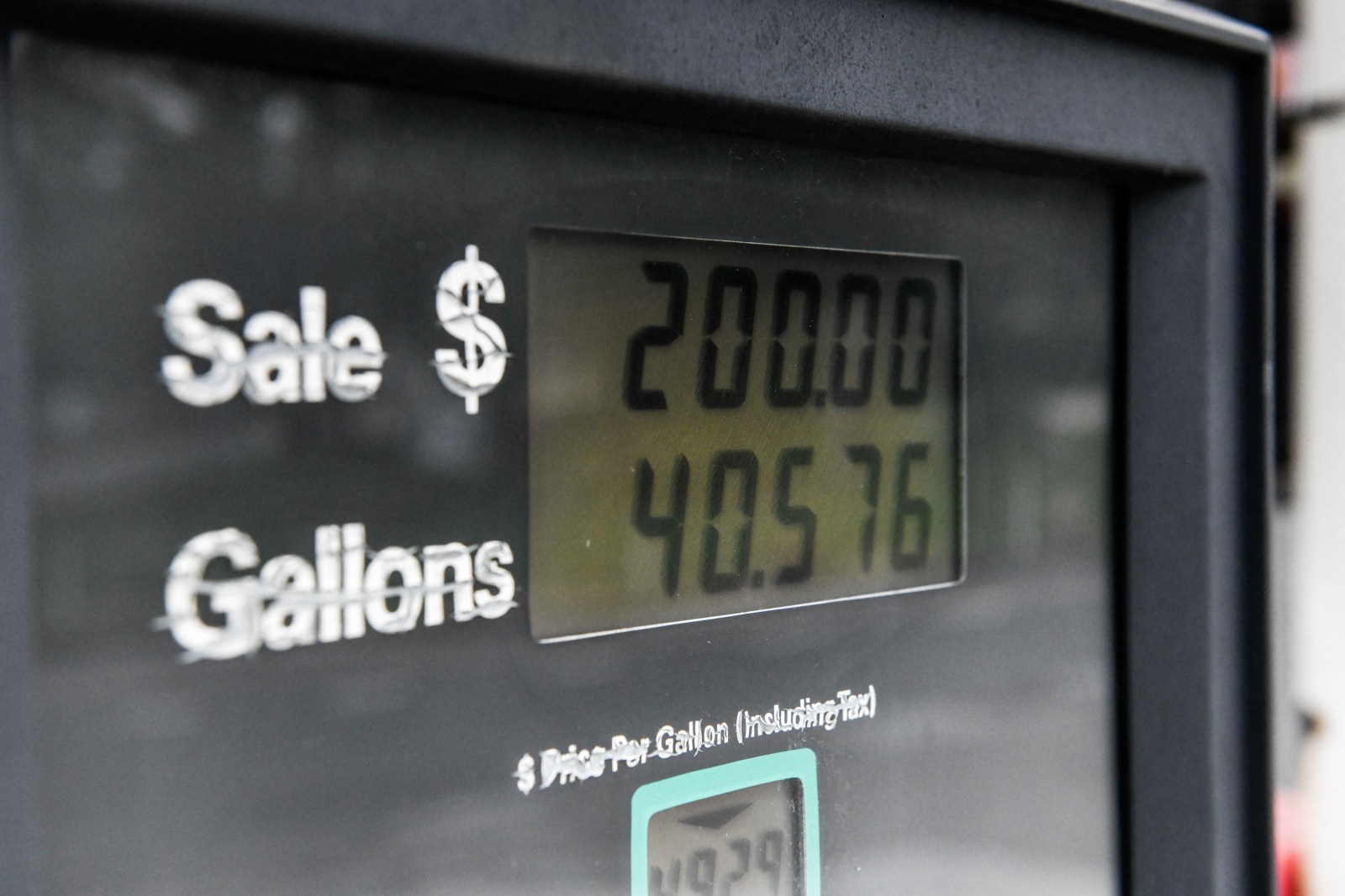
Gasoline prices have surpassed $4 per gallon in 28 states. This change comes as tensions between the U.S. and Iran rise, posing challenges for President Donald Trump as midterm elections approach in 100 days. AAA reports that 60% of American drivers will struggle financially if gas prices consistently hit this level. The $4 mark is significant for consumer sentiment, affecting the Trump administration with voters heading to the polls on November 3.
Newsweek has reached out to the White House for comment.
Battleground State Gas Prices
28 states have fuel prices above the $4 threshold. Michigan ($4.23), Maine ($4.10), and New Hampshire ($4.06) are key battleground states. AAA’s national average was $4.11 on Sunday.
Michigan’s Senate race is competitive following Democratic Senator Gary Peters’ retirement. In Maine, Troy Jackson, former state Senate President, is the Democratic nominee in a crucial Senate race. Similarly, New Hampshire faces a Senate race following Senator Jeanne Shaheen’s retirement.
In Georgia ($3.92) and Ohio ($3.89), gas prices remain below $4. Georgia’s Democratic Senator Jon Ossoff is up for reelection in a state crucial to Senate control. Democrats aim to contest Ohio, a GOP-held seat.
California has the highest average gas price ($5.64), while Indiana has the lowest ($3.51).
Reasons for Expensive Gas
The U.S. and Israel conducted airstrikes on Iran on February 28 to degrade military capabilities and hinder nuclear weapon development. Iran’s blockade of the Strait of Hormuz disrupted oil and gas transit, affecting global energy markets. Brent crude oil, a global benchmark, exceeded $100 per barrel.
Before the conflict, average gas prices were $2.98 per gallon. The $4 mark was first crossed on March 31, over a month into the conflict. Prices reached $4.56 in early May but decreased after hopes for an agreement between Iran and the U.S.
Prices dipped with the memorandum of understanding signed on June 17, then rose as Tehran resumed attacks in the Strait, leading to U.S. retaliation. Rising Houthi threats in Bab el-Mandeb Strait, another key oil route, add to tensions.
Taylor Rogers, a White House spokesperson, stated that as the U.S. military diminishes Iran’s ability to disrupt energy flow through the Strait of Hormuz, “oil and gas prices will plummet back to pre-conflict levels.”
For further information, contact Newsweek editors Daniel Orton and Tony Phillips.