
A federal judge has temporarily blocked the Trump administration from establishing a $1.776 billion settlement fund. This fund was intended for allies of the Republican president who claim they were targeted by a weaponized government. The development halts any payouts for at least two weeks.
U.S. District Judge Leonie Brinkema, based in Alexandria, Virginia, has scheduled a June 12 hearing to consider extending the order. This would prevent the government from proceeding with the ‘Anti-Weaponization Fund’ during ongoing litigation.
The Trump administration created the fund to address the lawsuit from President Donald Trump against the Internal Revenue Service, related to a leak of his tax returns. A spokesperson for the Justice Department expressed strong confidence that the fund is legally justified, citing precedents from settlements during the Obama administration.
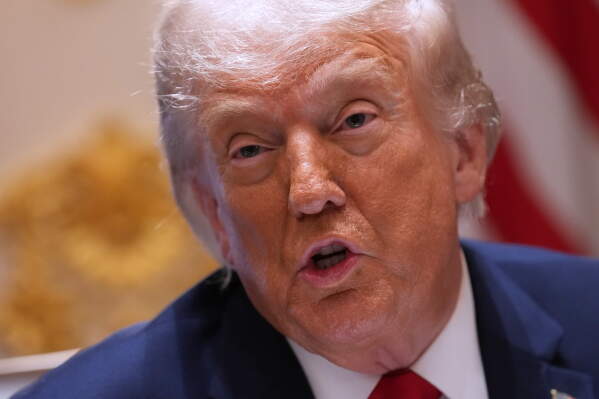
President Trump commented on this during a White House Cabinet meeting on May 27, 2026. However, the White House deferred questions to the Justice Department after the judge’s ruling.
Judge Brinkema, appointed by President Bill Clinton, ordered the administration to provide a written response within a week. This response should address the plaintiffs’ arguments to freeze the fund’s creation and halt any payouts.
The fund announcement led to significant backlash. Some Republican figures questioned acting Attorney General Todd Blanche on the eligibility criteria. There is concern that even participants in the Jan. 6 Capitol attack might seek compensation.
The Justice Department has yet to form the five-member commission responsible for defining payout criteria. Consequently, no claims or payouts have occurred.
“President Trump and his allies have long accused Democrats of using the government and the legal system as political weapons,” the plaintiffs’ attorneys wrote.
Brinkema emphasized the need to maintain the status quo and ensure no irreversible disbursements occur from the fund. Her order prevents any money transfers, claim considerations, or disbursements.
Notable plaintiffs include a fired prosecutor and a professor acquitted of assaulting federal agents at a protest. Their lawsuit claims the fund’s purpose lacks legal support and accountability.
Several lawsuits challenge the fund, including one from the group Citizens for Responsibility and Ethics in Washington. They describe the fund as an act of ‘presidential corruption’.
During a congressional hearing, Acting Attorney General Blanche did not exclude the possibility of making fund payouts to Jan. 6 rioters. Approximately 1,600 individuals faced charges related to the Capitol riot, with over 1,200 convictions and sentences before a series of pardons and sentence commutations by Trump.
Among the plaintiffs is former Assistant U.S. Attorney Andrew Floyd. Floyd prosecuted Capitol riot cases until his dismissal, which he believes was due to his involvement in Jan. 6 prosecutions.
Additionally, California State University Channel Islands professor Jonathan Caravello was acquitted after facing charges of assault for throwing a tear gas canister during a protest. This protest occurred during an immigration raid at a Camarillo, California cannabis farm in 2025.