
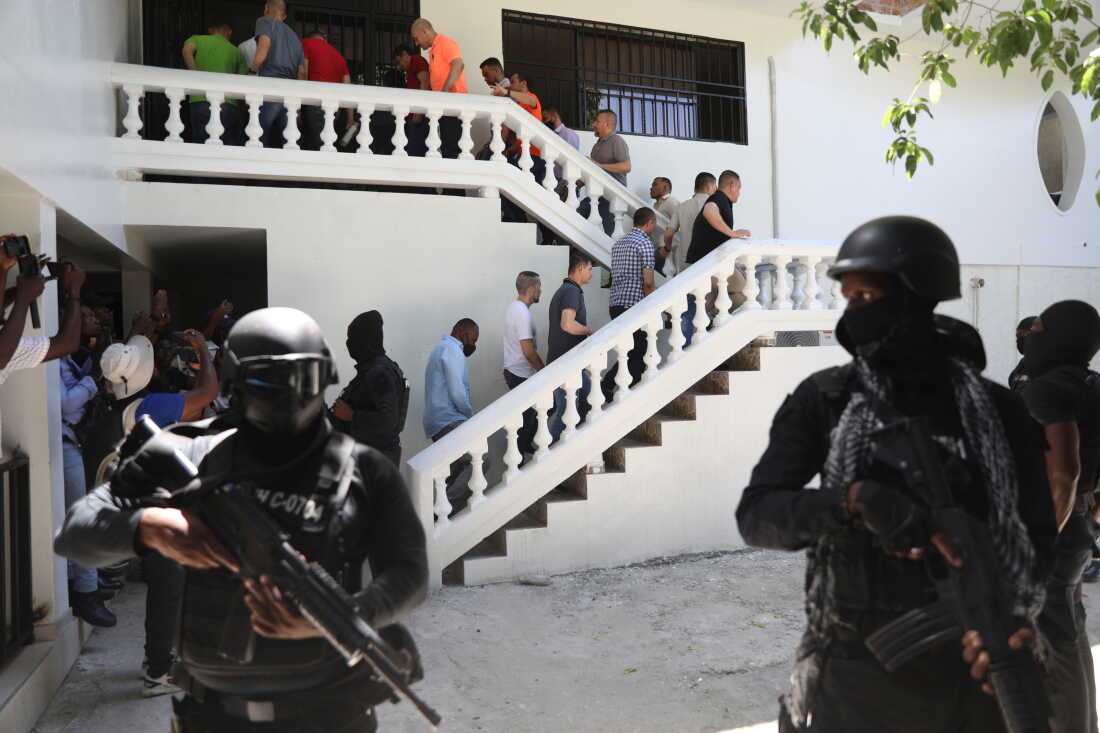
In a notable development, 18 suspects involved in the assassination of Haitian President Jovenel Moïse in July 2021 are being extradited to the United States. The extradition marks a significant step in the lengthy judicial process in Haiti. These suspects will face justice in Florida as stated by Jason Reding Quiñones, U.S. Attorney for the Southern District of Florida.
Quiñones emphasized the ongoing commitment to accountability for the assassination. “Today marks the next major phase in our pursuit of accountability for the assassination of President Jovenel Moïse,” he wrote on X. Quiñones expressed hope to apprehend all those involved, including those who financed and facilitated the crime over the five-year period since the killing. He did not identify the suspects, and a U.S. Department of Justice spokesperson did not immediately comment on the situation.
The extradited suspects include 17 Colombian soldiers and Joseph Badio, a former employee of Haiti’s Ministry of Justice and alleged key suspect. Defense attorneys in the U.S. claim Badio planned to use an arrest as a pretext to kill Moïse. Authorities previously encountered testimonies indicating the suspects thought they were part of a coup, not an assassination. The Colombian soldiers reported abuse, suggesting they were coerced into signing documents they couldn’t understand.
“We never imagined that the United States would have taken them so suddenly,” said Diana Marcela Arbeláez Llano, the wife of one of the suspects. She expressed her concerns regarding the health of the Colombians detained in Haiti.
Families were caught off guard by the extradition, with Arbeláez hoping for the suspects to have the chance to prove innocence. The Haitian judicial process had endured repeated delays due to gang violence and threats. Court resignations also obstructed progress, with judges quitting over safety concerns.
In October 2025, Haiti requested assistance from the U.S. and Canada after an appellate court ordered a third investigation into Moïse’s killing. Previous investigations were stalled due to gang control over the courthouse and judges resigning.
Meanwhile, the U.S. continues prosecuting others in the case. In May, four men were convicted in Florida for their roles in the assassination plot. At least five others have pleaded guilty, serving life sentences. The convicted include Arcángel Pretel Ortiz, Antonio Intriago, Walter Veintemilla, and James Solages, who all denied guilt initially.
Another suspect awaiting trial is Christian Sanon, alleged to be part of the conspiracy to replace Moïse. The plan involved awarding contracts for projects and security through a company named CTU. Ortiz and Intriago were principals for CTU. Veintemilla led Worldwide Capital Lending Group. Both companies operated from South Florida.
Authorities continue to seek fugitives, such as Dimitri Hérard, who escaped amid Haiti’s growing gang unrest. The U.S. determination to bring those responsible to justice remains strong.