
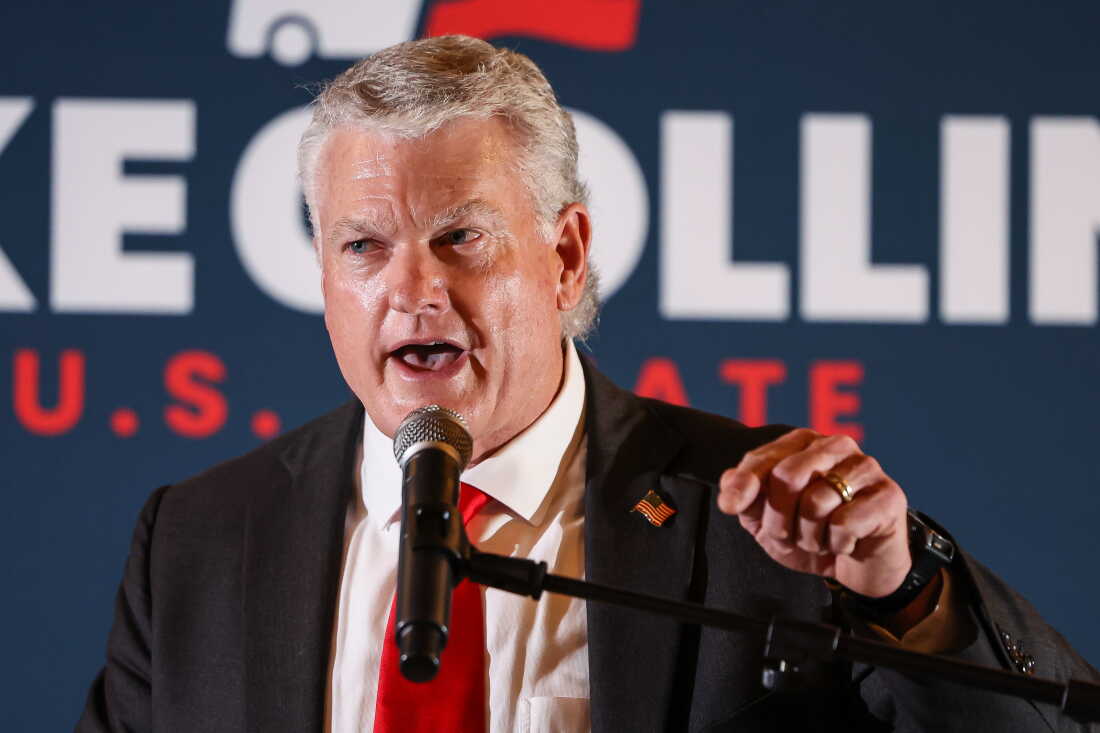
President Trump continues to discuss the 2020 election as early voting is underway for the midterms, with Republican majorities in Congress at risk. Many Republican candidates still support Trump’s claims about election integrity, though some GOP voters are ready to move forward.
Collins’ Campaign in Georgia
In Georgia, U.S. Senate nominee Mike Collins launched his first congressional campaign shortly after Trump urged Georgia’s secretary of state to find more votes after his 2020 defeat. An ad in that race falsely stated Trump won Georgia, ending with Collins shooting a long gun at a ‘voting machine’ marked bin.
Now, running for Senate, Collins maintains his stance on the 2020 election being stolen. He also supports compensating some individuals prosecuted for January 6th Capitol actions. This approach troubles some GOP voters, like Lynn from Georgia, who might vote for Democratic Senator Jon Ossoff due to Collins’ views.
Diverse Voter Opinions
While some voters like Austin Sapp back strict voter ID laws, they wish Trump would move past the 2020 election. Sapp, like many others, wants to know the current platform and future plans.
The influence of election integrity as a pivotal issue has waned significantly, with only 1% of voters in a New York Times-Siena College poll citing it as their top concern. Gabe Sterling, a Georgia secretary of state’s office official, notes that the focus on 2020 persists mainly among dedicated activists.
Impact on Candidates
In Michigan, GOP Senate nominee Mike Rogers, once critical of Trump’s 2020 actions, later embraced his claims during his unsuccessful Senate bid. Rogers did not directly acknowledge the 2020 presidential winner in an interview with the Detroit Free Press, showcasing the perceived necessity for Trump’s support.
Republican strategist Jason Roe suggests candidates echo Trump for favor rather than genuine belief. While this tactic appeals to core supporters, it might not be beneficial in competitive states.
Midterm Implications
Trump’s continued attention to the 2020 election could harm Republican efforts to maintain Congressional majorities. In Georgia and Texas, his endorsement decisions reflected loyalty to his 2020 stance over broader electoral competitiveness. This approach may alter the party’s overall effectiveness in upcoming elections.
A University of California, San Diego poll shows only 49% of Americans expect fair midterms, a drop since pre-2024. Sterling suggests Trump’s focus might preemptively blame losses on rigged systems, potentially resonating with some audiences.