
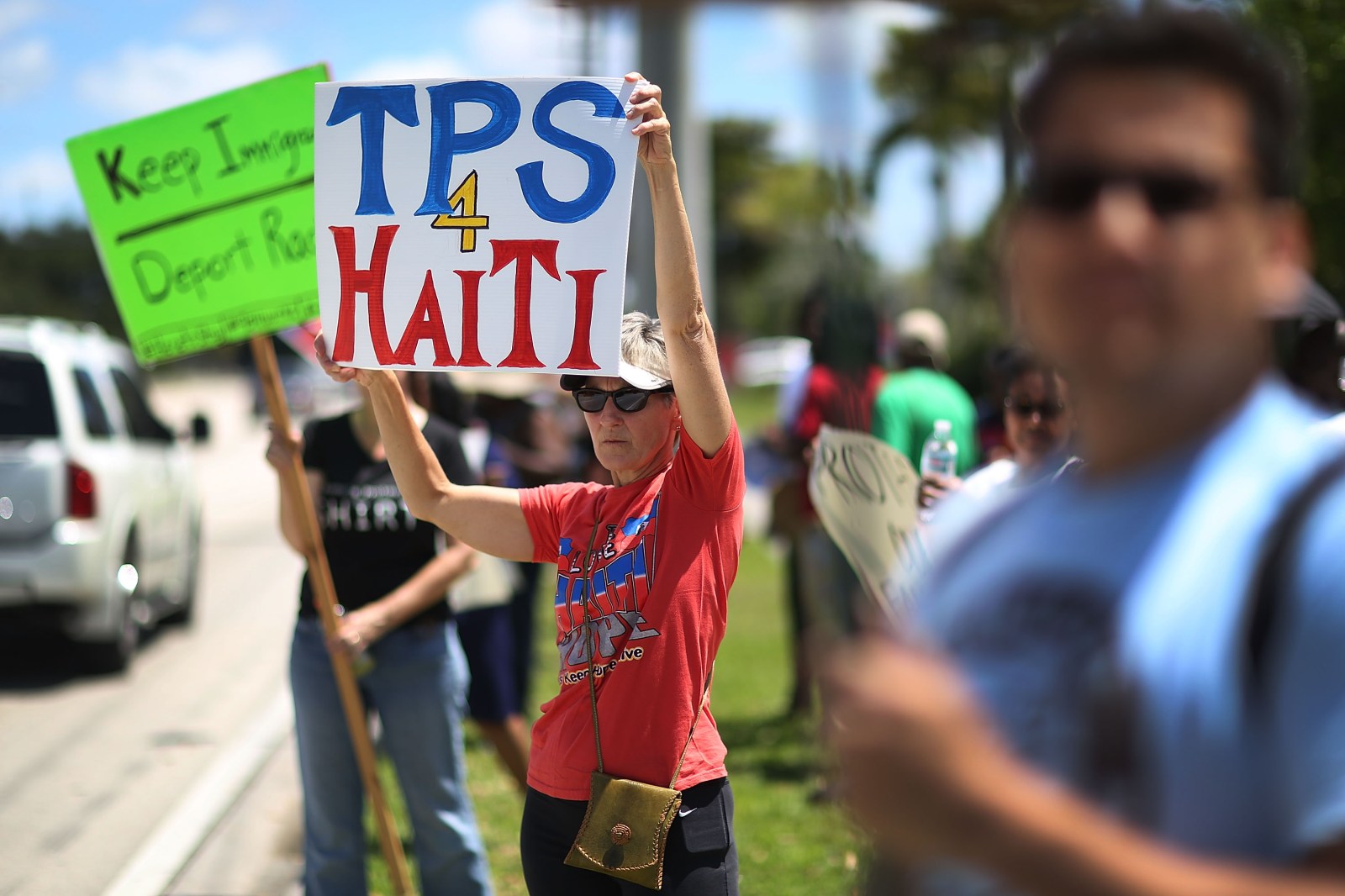
Temporary Protected Status (TPS) protections for Haitian nationals are set to expire soon, affecting hundreds of thousands of people in the United States. This change will impact work permits and deportation protections for many, especially in Florida, which has the highest number of Haitian TPS holders.
Impact on Haitian TPS Holders
Data from FWD.us, an immigrant advocacy group, highlights that Florida has approximately 158,000 Haitian TPS holders. Following Florida, New York has around 40,000, Massachusetts 19,000, New Jersey 16,000, Pennsylvania 15,000, and Ohio 14,000.
The expiration of TPS follows a Supreme Court decision favoring the Trump administration’s move to end these protections. This decision could affect more than 300,000 Haitians. Those unable to qualify for another immigration status may lose work authorization and face deportation.
The Department of Homeland Security (DHS) has maintained that TPS was meant to be temporary. U.S. Citizenship and Immigration Services stated that Haiti no longer meets the statutory conditions for TPS after a review of country conditions and consultations with government agencies.
TPS allows nationals from countries impacted by war, natural disasters, or other extraordinary circumstances to remain and work legally in the U.S. temporarily. It does not directly provide a path to permanent residency or citizenship.
Economic Impact of TPS Expiration
States with large Haitian populations may feel the economic impact most acutely. Haitian TPS holders contribute approximately $5.9 billion annually to the U.S. economy. This includes $805 million in federal and payroll taxes and $755 million in state and local taxes, according to FWD.us.
In Florida, around 93,000 Haitian TPS workers contribute approximately $2.6 billion annually. These individuals work largely in food service, agriculture, warehousing, security, and healthcare-related jobs.
In New York, an estimated 25,000 Haitian TPS workers contribute roughly $863 million annually, while Massachusetts’ 10,000 workers contribute about $481 million annually.
Advocates argue that ending TPS could have significant economic repercussions in areas reliant on Haitian workers. FWD.us estimates that Haitian TPS holders contribute about $1.5 billion annually to the Miami metropolitan economy, $1.1 billion to the New York area, with substantial contributions in Boston, Orlando, Tampa, Atlanta, and Indianapolis.
Concerns Amidst Haitian Instability
There’s increased concern about deportations due to enduring instability in Haiti. Many areas remain under the influence of armed gangs, and the U.S. State Department advises against travel to the country due to security issues.
The long-term effects of the TPS expiration will likely differ by industry. The healthcare sector may be especially affected due to Florida’s aging population and demand for healthcare workers. Agriculture, hospitality, and logistics sectors could also experience disruptions.
Economic impacts would likely concentrate in South Florida, notably Miami-Dade and Broward counties, where Haitian communities are significant to the workforce. Reduced consumer spending could affect local businesses, housing demand, and tax revenues, amplifying the broader regional economic effects.
Response and Legislative Efforts
The Trump administration has defended the decision to end TPS protections. Homeland Security General Counsel James Percival noted on social media that migrants with expiring TPS designations have the option to leave under a voluntary departure program, offering a financial incentive and free flight home.
Members of Congress are advocating for a permanent legal status path for TPS recipients. The American Dream and Promise Act, if passed, would permit eligible TPS holders and certain Dreamers to apply for lawful permanent resident status. Currently, Rep. Sylvia Garcia has initiated a discharge petition seeking a House floor vote.
Concerns are growing within Haitian communities about potential prolonged ICE detention and increased deportations, given Haiti’s ongoing instability. An increase in ICE enforcement targeting Haitian migrants is expected following TPS expiration, as reported by CBS News.
Aaron Reichlin-Melnick from the American Immigration Council criticized such targeting as discriminatory government policy. He emphasized that TPS recipients are subject to thorough vetting.
During the 2024 presidential campaign, allegations surfaced about Haitian migrants in Springfield, Ohio, which local officials debunked after investigation.
A recent DHS press release highlighted deportation activities labeled as addressing “worst” offenders, citing a removal flight carrying over 100 people with criminal records.
A legislative attempt in April extended TPS for Haitians by three years in the House but did not pass the Senate. This effort marks a significant moment in ongoing immigration policy discussions and reflects the complexities involved in addressing TPS status on both economic and humanitarian grounds.