
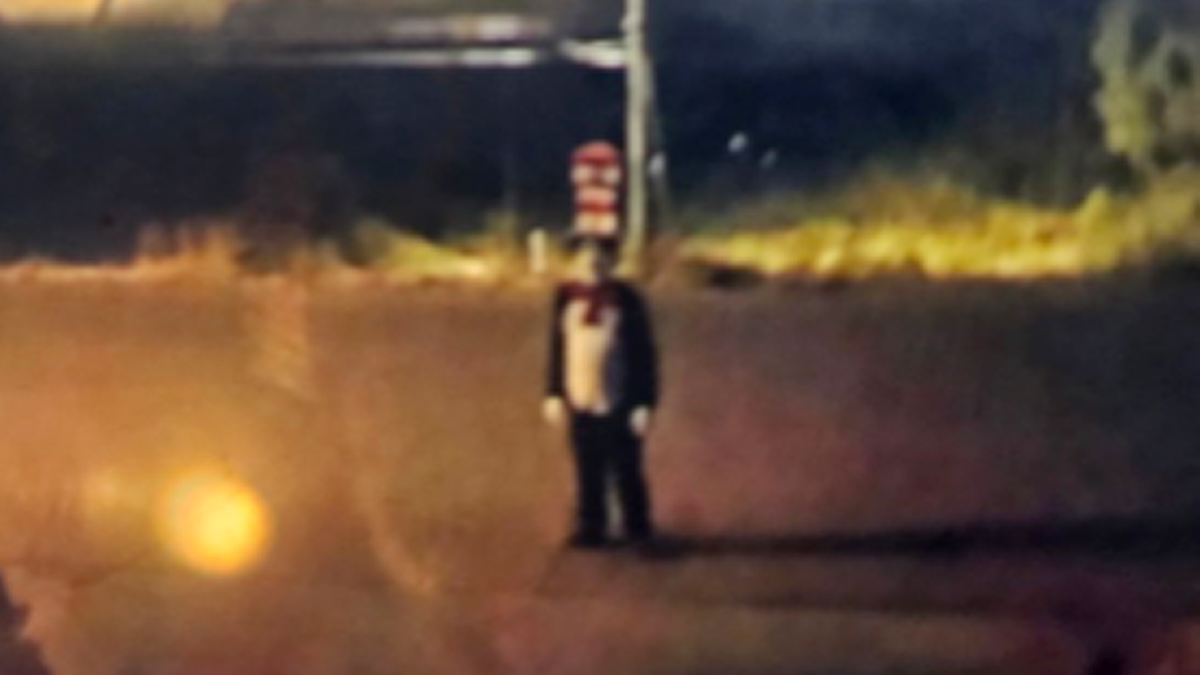
A puzzling trend involving the character from Dr. Seuss’ Cat in the Hat has sparked alarms across communities. Police in West Kelowna, British Columbia, are investigating an incident where a person dressed as the iconic figure allegedly chased a teenage girl. The troubling incident occurred at about 9 p.m. when the girl was walking in her neighborhood.
Though the teen managed to escape safely, local authorities remain eager to identify the person behind the costume. Cpl. Devon Gerrits of the Royal Canadian Mounted Police emphasized, “Regardless of whether the individual intended the behavior as a joke, following a young person and causing them to fear for their safety is extremely concerning.” She stressed that what may be perceived as a prank has potential legal ramifications.
A grainy photo shows a person wearing the Cat in the Hat costume, and police are pursuing leads to apprehend the suspect linked to the trend. Additionally, potential legal consequences could arise for those who cause distress, regardless of whether they believe they are involved in harmless fun.
“Anyone who believes they are being followed or pursued should move toward a populated location, contact a trusted adult, and call 911,” noted the West Kelowna RCMP.
This bizarre activity coincides with a wider social media phenomenon that has seen a spread across multiple states in the United States. The digital trend includes edited or artificially generated images of the Cat in the Hat appearing to have malicious intent. Authorities are particularly concerned over figures depicted in nefarious contexts, such as lurking outside homes or schools, often accompanied by chilling messages.
The Baldwin Park Police Department in California has been actively monitoring concerning posts mentioning local schools and alarming both students and staff. Their warning is clear: threats directed toward educational establishments and individuals will not be dismissed lightly.
In Virginia, the Hanover County Sheriff’s Office intensified campus security following online posts referencing local schools. Similarly, Florida’s St. Johns County deputies increased patrols, although they have yet to uncover verified threats.
Across Texas, police highlighted that manufacturing threatening posts carries serious implications. Frio County authorities noted that some accounts were attaching names of students and institutions to sinister images. Even where no credible threat exists, they are taking precautions.
Prominent consequences were evident in Louisiana, where police detained four girls — aged between 13 and 15 — after associating them with alarming TikTok accounts. Charges included terrorizing and cyberbullying.
The spread of unsettling images and posts also led to arrests of juveniles in other states, with police urging communities to avoid sharing threatening content. Instead, screenshots should be sent to law enforcement to help trace the source.
Stepheny Price, a writer at Fox News Digital, continues to report on matter entailing missing persons and crimes at both national and international levels.