
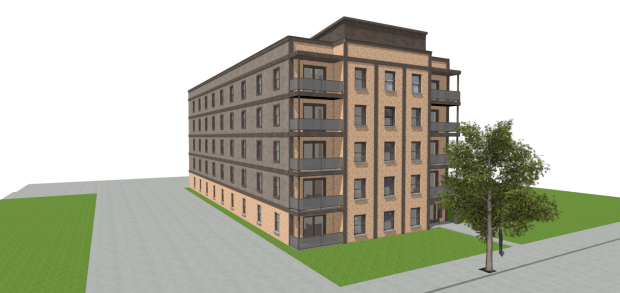
The Evanston City Council has approved the construction of a five-story, 30-unit apartment complex on Emerson Street, despite opposition from a nearby historic Black church. The decision to proceed with the project was made through a 5-1 vote by the aldermen on July 13. This approval allows for significant zoning variations to accommodate the development at 1103-1105 Emerson Street in the city’s 5th Ward.
Community Concerns
The proposal, submitted by PM Properties, LLC, has faced delays in the council due to concerns from Ebenezer A.M.E. Church, which is adjacent to the proposed site. The congregation of Ebenezer A.M.E., the oldest Black church in Evanston, worried that the new construction could damage the structural integrity and architectural heritage of their church. Resident Priscilla Giles voiced strong opposition, emphasizing the historical significance of the church and criticizing the placement of a new building so close to such an important landmark.
“It is a disgrace next to a historical landmark Black church over 100 years old,” Giles stated.
Project Details and Defenses
The apartment complex will replace two existing properties, offering three units classified as affordable housing, with rents set at 40% of the area’s median income. This translates to approximately $1,100 monthly for a two-bedroom unit. Alderman Bobby Burns expressed the necessity of affordable housing in the community, countering misconceptions about the project harming the church.
“We’re not tearing any historic buildings down,” Burns clarified. “Everything potentially impacting the church has been addressed in the good neighbor agreement.” This agreement involves the developer working with the city on external design details and ensuring no amplified sound systems are installed on the rooftop deck.
Preservation and Compliance Measures
PM Properties, LLC, must replace certain structural elements and submit documentation about the church’s property condition before permits are issued. Sound monitoring will be implemented for tenant noise, and a new privacy fence will be constructed around the church’s parking lot. The agreement is designed to be enforceable, connected to the project’s permits and certificates of occupancy.
Despite these measures, Pastor Deborah Y. Scott voiced skepticism about the city’s enforcement capabilities. She expressed concerns about the congregation’s learning curve in dealing with such developments and a lack of assured support from the council.
“My church members still have concerns. They don’t feel confident that the city will enforce the good neighbor agreement,” Scott noted.
Burns acknowledged these concerns, emphasizing trust in the outlined agreements. “Everything is in there, and I’ve made sure of that,” Burns assured.
Future Steps and Approval
The project was approved to move forward, contingent on adherence to the good neighbor agreement, with no confirmed construction start date discussed at the council meeting. The lone dissent came from Alderman Clare Kelly, who expressed worry about the impact on the church and neighborhood aesthetics.
“The massing diminishes the church’s presence,” Kelly argued, highlighting the historical significance of the Black neighborhood.