
The Challenge of Emergency Shelter in Phoenix
Austin Davis, a 26-year-old poet and advocate, has become an unexpected resource for families facing homelessness in the Phoenix area. Despite official channels like the 211 helpline, many families find themselves waiting months for housing assistance. In desperation, they turn to Davis, whose phone continues to be inundated with requests for help.
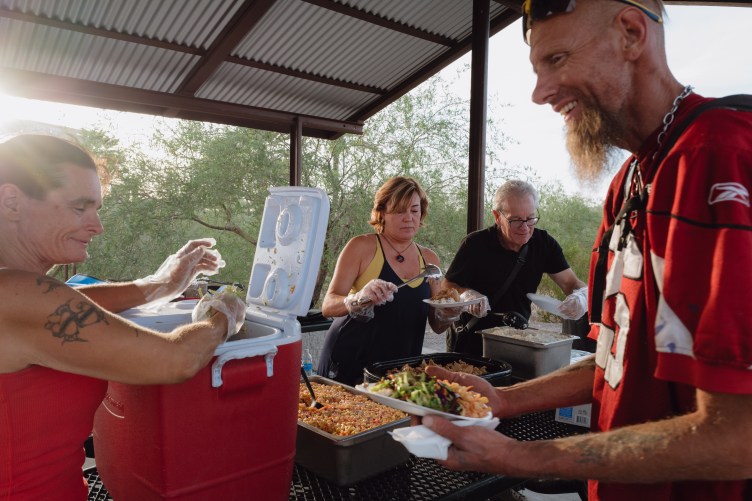
Parents who have lost jobs, been evicted, or fled domestic violence often converge on Davis at “The Hill,” a location in Tempe’s Moeur Park, seeking relief. His nonprofit, AZ Hugs, provides daily meals to people without homes, and he regularly pays for hotel stays when shelters are full.
Systems That Fail Families
Davis’ experiences highlight failings in the official structures designed to assist homeless families in Maricopa County. ProPublica reports indicate that efforts to seek help through government and nonprofit organizations often result in frustration and hopelessness. The personal stories of families, coupled with an overwhelmed system, paint a bleak picture of an ineffective support network.
Citations and Legal Challenges
Authorities in Tempe have cited Davis multiple times for organizing events without permits. Though he reached an agreement to plead guilty to one violation, Davis and others filed a lawsuit against the city, claiming violations of free speech. This legal pressure pushed the city to revise its permit regulations, prompting Davis to drop the suit.
Efforts for Change
Despite limited resources, Davis strives to draw attention to the homelessness crisis affecting families in Maricopa County. He initiated an online petition urging Arizona Governor Katie Hobbs to declare a state of emergency. This, he argues, could release additional resources for emergency shelters. However, the governor’s office maintains that such declarations are reserved for natural disasters and outlines current measures to aid housing instability with millions in funding for affordable housing and emergency shelters.
The Reality of Family Homelessness
Data shows that family homelessness in Maricopa County is at its peak since 2015, with 2,103 people identified in homeless families. Yet, these numbers likely underrepresent the actual situation, as counts occur on a single night and might miss families hiding from view. With approaches based both inside and outside the system, shelters and nonprofits try to address the needs, but more comprehensive solutions are necessary.
Davis’ nightly social media campaigns for funding often raise significant amounts, allowing him to secure hotel accommodations for families. Recently, AZ Hugs began offering overnight shelter space at a church in Mesa, providing short-term refuge for at least six families each night.
The Bigger Picture
Davis acknowledges the broader crisis and recognizes his efforts as temporary solutions to a persistent problem. While some families find temporary relief in the spaces he’s helped create, a more substantial, collaborative effort involving local and state authorities and nonprofits is crucial for long-term change. Without such concerted action, emotions of frustration and disservice remain, as families continue to face the peril of homelessness.