
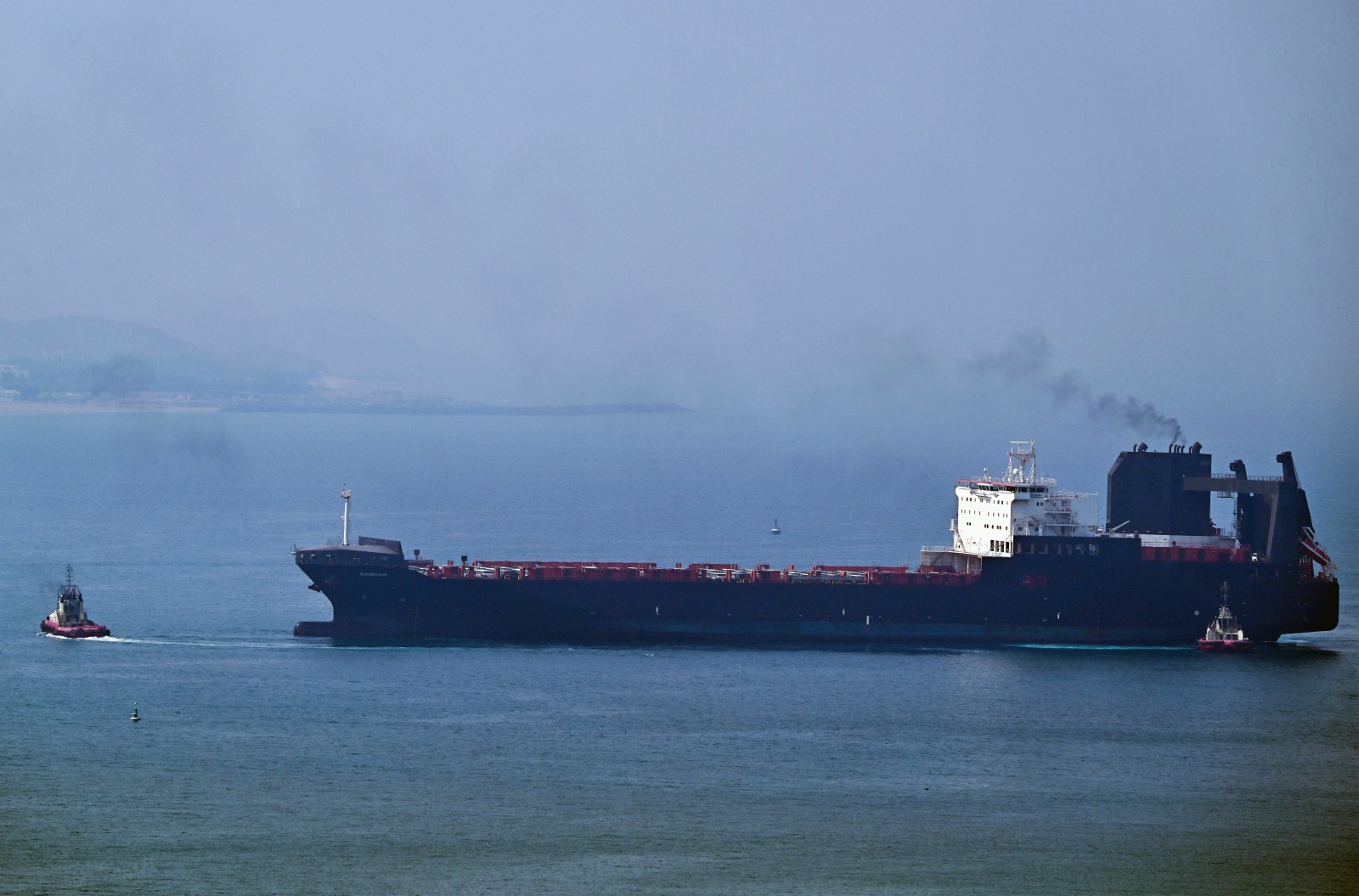
The U.S. military has initiated strikes that aim to diminish Iran’s capacity to target commercial vessels in the Strait of Hormuz. This move has prompted Gulf states to explore alternatives for oil export. Previously, one-fifth of the globe’s hydrocarbons passed through this critical channel; however, recent disruptions have led oil producers to consider new transportation methods. Tamsin Hunt, a strategic intelligence analyst at S-RM, explained in a Newsweek interview how major operators are establishing overland routes to ease traffic and Gulf countries are investing in long-term solutions like pipeline and port developments.
Bypassing the Strait of Hormuz
The International Maritime Organization (IMO) has deemed the Strait of Hormuz unsafe for merchant ships. This follows their recent rescue operation of stranded seafarers in the Persian Gulf. The dangers are prompting countries such as the United Arab Emirates (UAE) to reduce reliance on traditional ports. According to reports, the UAE plans to develop a new port and container terminal on its east coast, aiming to bypass Hormuz. Furthermore, DP World plans to expand harbor facilities in Fujairah, serving as both immediate relief and a future strategy. Andy Lipow, of Lipow Oil Associates, highlighted how the UAE uses tankers to transport crude to safer waters outside Hormuz, for subsequent delivery to Asia.
Saudi Arabia’s Pipeline Strategy
Hapag-Lloyd’s Leon Schulz shared that their operations remain unaffected by tensions as alternative routes already bypass Hormuz. They use various ports, including Salalah and Jeddah, and rely on land bridges and third-party services to maintain regional connectivity. Despite these efforts, the complexity and reduced efficiency result in longer transit times and capacity limitations compared to direct passage through Hormuz. Saudi Arabia redirects around four million barrels daily through its east-west pipeline to Yanbu, where tankers face threats from Iranian-backed Houthis near the Bab el-Mandeb Strait. Consequently, the strait remains a primary route, and current pipelines fall short in compensating for stranded crude oil and liquefied natural gas. Other Gulf nations like Kuwait, Iraq, and Qatar also remain largely exposed to Hormuz-related disruptions.
Long-Term Solutions to the Hormuz Crisis
Transitioning away from reliance on the Strait of Hormuz involves extensive efforts that could last years. Iraq’s Oil Minister Bassem Mohammed Khudair announced a U.S.-endorsed plan to diversify export pathways, involving collaborations with TI Capital, Qatar’s UCC, and Chevron for various routes. Yörük Işık, a maritime consultant, noted this region-wide transition might span over a decade. He claimed Saudi Arabia would likely enhance Red Sea port facilities and improve domestic infrastructures, while the UAE focuses on transforming Fujairah into a modern port linked by rail and highway networks. Işık advises that shifting UAE’s entry from the Persian Gulf to the Sea of Oman makes Fujairah a promising property investment avenue, potentially outperforming Dubai.