
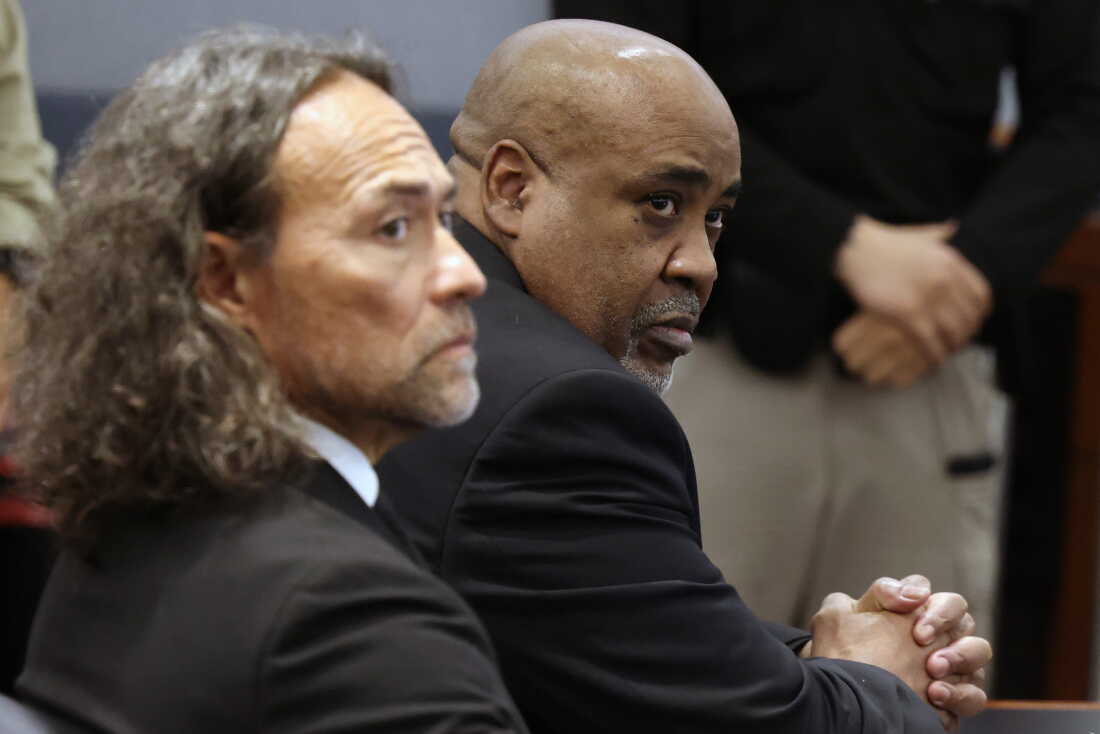
Duane “Keffe D” Davis was found guilty of orchestrating the 1996 murder of Tupac Shakur. The verdict was delivered by a jury on August 31, 2026, in Las Vegas, offering some closure to a case that has captivated hip-hop fans for a long time.
Davis, now 63, was convicted on one count of murder with a deadly weapon. He faces the possibility of a life sentence. The jury reached its decision in under three hours after the trial that lasted several weeks.
After the verdict, Shakur’s sister, Sekyiwa “Set” Shakur, expressed her emotions by hugging the prosecutors while Davis’ son hid his face. Chief Deputy District Attorney Binu Palal argued that Davis orchestrated the attack following an assault on his nephew.
Prosecutors presented Davis as a mastermind who had directed gunfire from a white Cadillac, a move they claimed was carried out by his gang. Despite not firing the weapon himself, Davis was depicted as a leading figure in the operation.
His defense attorney, Michael Sanft, challenged this portrayal, questioning the evidence of Davis calling the shots either before or after the incident. The courtroom saw 24 prosecution witnesses and three defense witnesses over nine days.
The prosecution indicated they would drop a gang enhancement charge due to logistical issues with witnesses. Shakur’s family plans to speak publicly after sentencing, scheduled for October.
The case has long held the attention of hip-hop fans and crime experts. Tupac Shakur, a major figure in the rap scene, was shot on September 7, 1996, and succumbed to his injuries six days later. Knight survived with injuries.
“He is responsible for the murder of Tupac Shakur,” Palal said. “Tell him you hear him. Find him guilty.”
For years, no charges were brought regarding Shakur’s death until Davis admitted his presence in the Cadillac and facilitating the shooting. He claimed it was retaliation for a prior assault on his nephew.
Davis is the only surviving individual among the four named in association with the Cadillac. Witnesses described a rivalry between Los Angeles gang factions, connected to Knight’s Death Row Records and Combs’ Bad Boy Records.
Sanft argued that no physical evidence tied Davis directly to the shooting. He stated Davis’ book and public statements were sensationalized for profit rather than truth.
The defense cited a lack of physical evidence such as phone records linking Davis to orchestrating the attack. “They have nothing in this case that says that man was here in Las Vegas on Sept. 7, 1996,” Sanft said.
Prosecutor Marc DiGiacomo responded by noting Davis kept a scrapbook of articles about Shakur, suggesting his obsession with the murder.
Palal featured Davis’ 2019 memoir “Compton Street Legend” and an interview promoting the book’s “real truth.” The prosecution maintained the memoir’s essential details were consistent despite disclaimers of altered facts.
Sanft read excerpts containing racial slurs, causing discomfort among observers. Throughout interviews, Davis admitted passing a gun to the back seat but did not identify the shooter.
Gang rivalries contributed to the case backdrop, providing context for the motivations behind the shooting. The rivalry between Mob Piru and Southside Compton Crips, linked to Death Row and Bad Boy Records, was central to the prosecution’s arguments.
The unsolved murder of the Notorious B.I.G., occurring six months after Shakur’s death, surfaced frequently during the trial. Davis was briefly suspected in that case but later dismissed.