
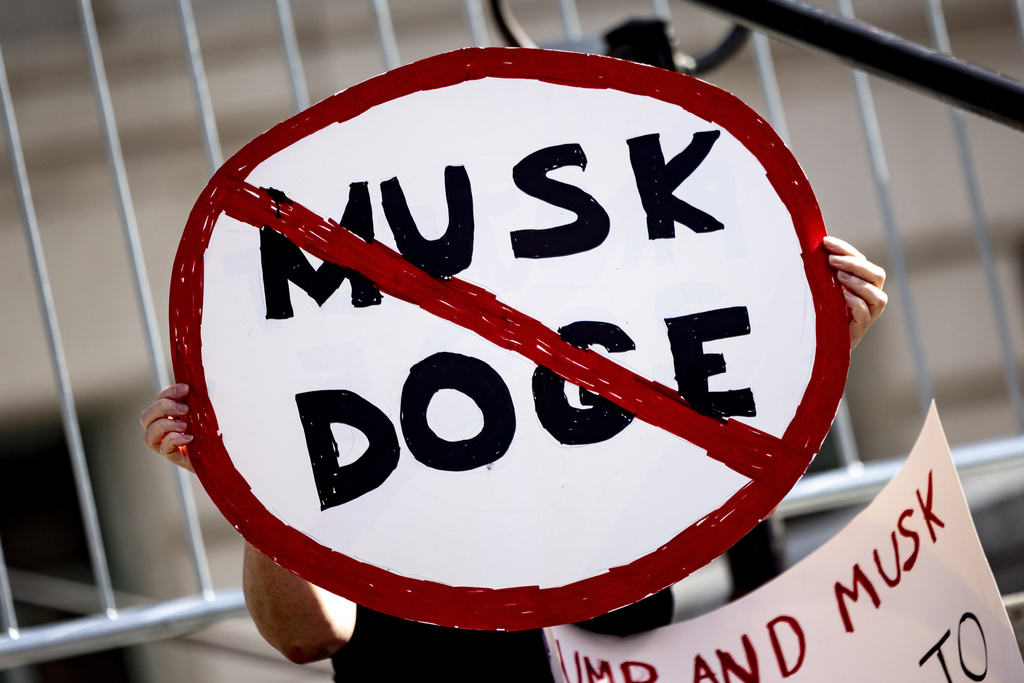
Protesters in Los Angeles Rally Against Policies
On February 17, 2025, a demonstrator held a sign during a rally in Los Angeles. The protest was against the policies of President Donald Trump and Elon Musk. This action reflected the frequent presence of their policies in the news, characterized by attacks on American political traditions.
Tactics of the Trump Administration
The Trump administration utilized strategies to destabilize the public and limit government accountability. Among these was the creation of the Department of Government Efficiency, known as DOGE. During Trump’s second term, DOGE aggressively targeted federal agencies aiming to eliminate fraud, waste, and abuse.
DOGE’s Aggressive Cuts to Federal Agencies
One expert described DOGE’s reductions as significant, deep, and arbitrary. The department acted without regard for laws designed to protect agency autonomy. Enabled by the President’s assertion of authority over executive branches, DOGE operated independently of congressional agreements.
Impact on the National Endowment for the Humanities
An example of DOGE’s actions included its treatment of the National Endowment for the Humanities (NEH). DOGE rescinded nearly all grants made by the NEH during the Biden administration. This led to the dismissal of two-thirds of NEH’s staff.
Judicial Response to DOGE’s Actions
On May 7, Judge Colleen McMahon of the Federal District Court in Manhattan severely criticized DOGE’s handling of NEH. Her ruling addressed DOGE’s viewpoint discrimination, noting its violation of the First Amendment. DOGE eliminated grants based on perceived ideological bias against the administration’s preferences.
Inexperience and Mismanagement within DOGE
Judge McMahon pointed out the inexperience of two young DOGE representatives tasked with overseeing NEH. Prior to their roles, they had little relevant experience. Relying on technology like ChatGPT for decisions, these representatives ignored statutory provisions that empowered the NEH chair with grant decisions. Their actions pressured NEH’s acting chair to conform to administration demands.
Legal Implications and DOGE’s Unconstitutional Practices
DOGE’s conduct amounted to unconstitutional lawmaking, overriding established legal procedures. McMahon’s decision underscores the judiciary’s role in preventing legal violations by the executive branch. Yet, the broader issue remains—the administration’s use of power to penalize dissent and undermine traditions.
Preserving the Memory of DOGE’s Actions
There is an ongoing need to remember DOGE’s actions and the judicial examination led by Judge McMahon. Such recollection serves as a counterbalance against attempts to erase factual history. Austin Sarat from Amherst College highlights the importance of this preservation.
© 2026 Nexstar Media Inc. All rights reserved. This material is not for publication, broadcast, rewriting, or redistribution.