
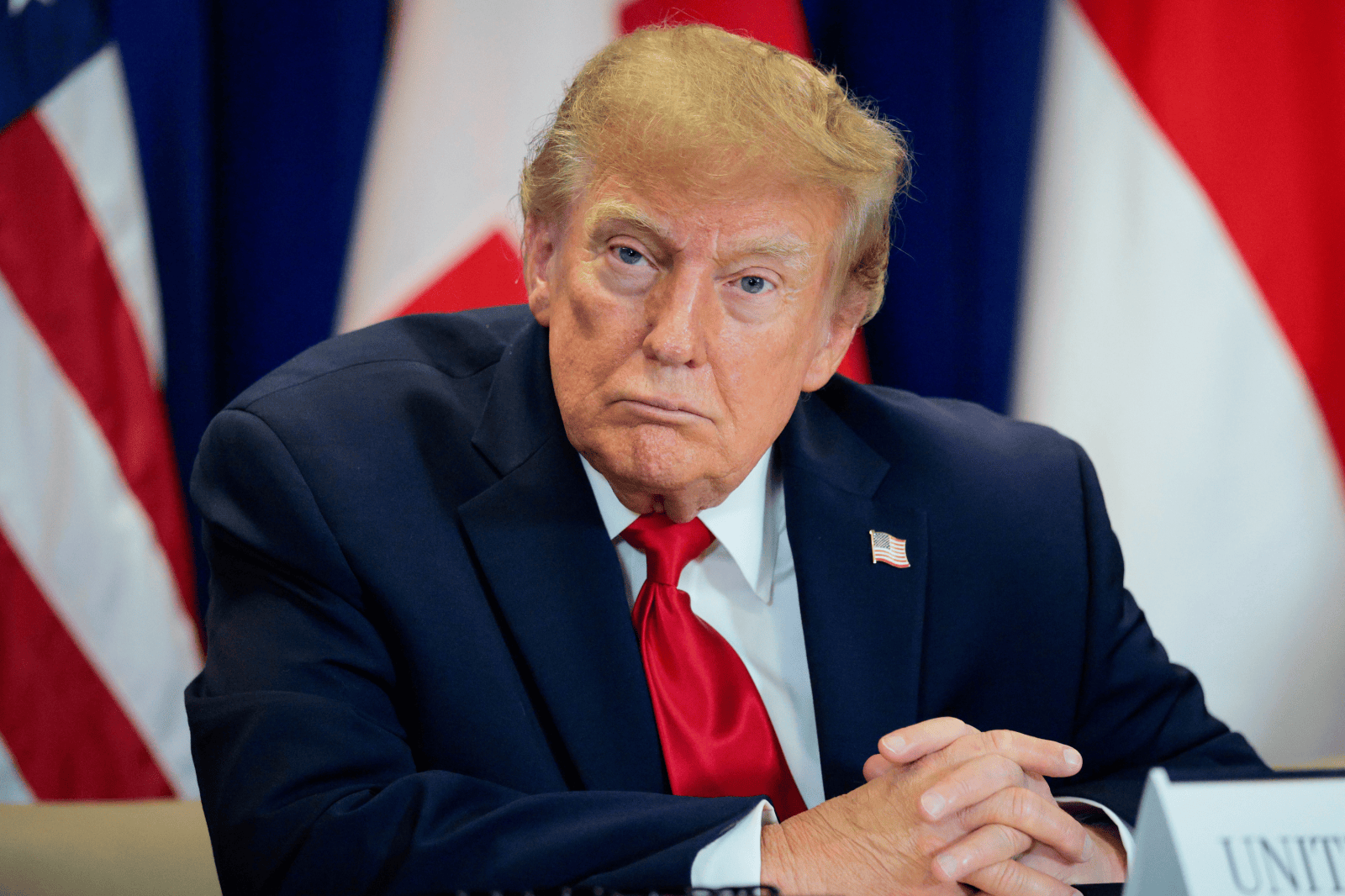
One month before November’s midterm elections, President Donald Trump has unfavorable approval ratings in 39 states, including all major battleground states, according to new polling data. The Civiqs polling tracker collected responses from 133,869 registered voters between January 20, 2025, and October 2, 2026. Newsweek’s analysis compared these figures with those from the beginning of Trump’s second term, calculating net approval as approval minus disapproval. Nationally, Trump’s approval rating is 34 percent, while his disapproval sits at 60 percent, resulting in a net approval rating of -26.
Key Battleground Figures
Every key battleground shows negative net approval. Georgia leads at -25, with Michigan and Nevada at -24, and Pennsylvania at -22. Kentucky has seen the largest decline, dropping 33 points from +23 to -10 since January 2025. Wyoming maintains Trump’s strongest positive rating at +18, followed by North Dakota at +15.
Younger voters, independents, and postgraduates are among the groups most opposed to Trump.
Implications for the Midterms
Presidential approval ratings are not direct forecasts for elections, but they set the tone for campaigns. With Congressional control at stake on November 3, Trump’s negative ratings could impact Republican voter turnout and campaign messaging in tight races.
Positive Ratings in Republican Territory
Trump is favored in ten states, with Wyoming at +18, North Dakota at +15, and West Virginia at +12. Idaho is at +8, Alabama at +6, and South Dakota at +5. Oklahoma stands at +4, Kansas at +3, and Utah at +2. Montana has no net change, with equal approval and disapproval.
Demographic Insights
National demographic data clarify the state-level map. Among 18 to 34-year-olds, 20 percent support Trump, while 73 percent disapprove, creating a 53-point gap. For 35 to 49-year-olds, approval is at 26 percent, with 66 percent disapproving.
Older voters are less negative, but Trump remains underwater. Among 50 to 64-year-olds, 44 percent approve and 51 percent disapprove; among those 65 and over, 44 percent approve, 52 percent disapprove. Independents disapprove by 65 percent to 27 percent, while Republicans show approval at 78 percent to 12 percent. Female voters disapprove by 65 percent to 29 percent, male voters show a 54-to-39 disapproval-approval split.
Educational attainment also shows disparity. Trump’s approval is 24 percent among postgraduates, 32 percent among college graduates, and 37 percent among non-graduates.
Black voters disapprove by 90 percent to 7 percent, Hispanic voters by 70 percent to 26 percent, and white voters by 52 percent to 41 percent.
State-Level Trends
Battleground states present challenges for Trump one month before the elections. His net ratings include: Arizona: -18, Florida: -16, Georgia: -25, Michigan: -24, Nevada: -24, North Carolina: -15, Ohio: -17, Pennsylvania: -22, Wisconsin: -18. Some states have dropped significantly since the start of Trump’s term.
Declines in Approval
Trump’s net approval has fallen in every state since January 2025. Major declines include Kentucky from +23 to -10, Wyoming from +47 to +18, Oklahoma from +31 to +4, Tennessee from +25 to -2, Texas from +6 to -21, Idaho from +34 to +8, Alaska from +9 to -6, Ohio from +8 to -17, Florida from +9 to -16, Montana from +25 to 0, and Nevada from 0 to -24.
Persistent Negative Ratings in Democratic States
Trump faces his weakest ratings in deep Democratic regions. Hawaii holds the lowest at -58, followed by Maryland at -52, and Vermont at -51. California and Massachusetts are both at -47, Connecticut at -46, Washington at -42, New York at -39, and both Oregon and Rhode Island at -38.
White House Response
The White House dismisses polling significance, referencing Trump’s 2024 election win as clear public support. Spokesperson Davis Ingle highlights the 80 million voters backing Trump and labels his agenda as ‘popular and commonsense.’ The administration remains focused on job creation, inflation reduction, and housing affordability, noting ‘historic progress.’