
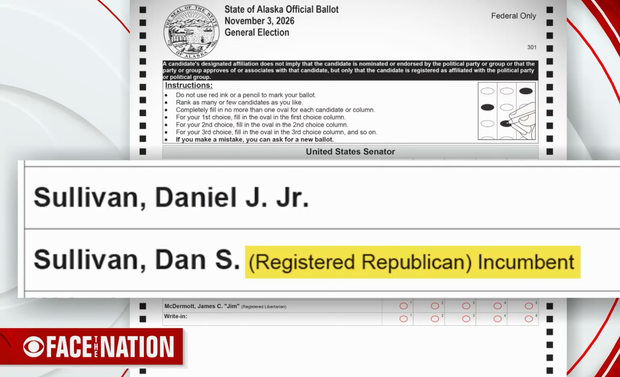
By October 25, 2026, Attorney General Todd Blanche announced the Justice Department’s intention to “put guardrails in place” to prevent potential voter confusion in the upcoming Alaska Senate election. Concerns have arisen over the presence of two candidates named Dan Sullivan on the ballot. The Department of Justice has filed a lawsuit to possibly challenge the election’s certification if confusion among voters is evident.
Ballot Confusion
The controversy stems from the appearance of Daniel J. Sullivan, a former teacher, running against incumbent Sen. Dan Sullivan and Democratic candidate Mary Peltola. With Alaska’s ranked-choice voting system, the existence of two Dan Sullivans adds complexity to the election.
Initially, election officials deemed Daniel J. Sullivan ineligible, citing deliberate attempts to confuse voters. However, his appeal led the Alaska Supreme Court to allow both candidates’ names to appear. The DOJ stresses that their lawsuit aims to ensure the election reflects voters’ true intent.
Justice Department’s Position
Todd Blanche clarified that the DOJ is not opposing certification outright. Instead, they seek to establish a system that will identify if confusion influenced the election results. This approach promotes maintaining ballots in a manner that allows for confusion analysis.
Blanche acknowledged that the current situation is uncertain as no election has occurred yet. The DOJ’s lawsuit aims to prepare for any potential confusion that could arise from voters selecting between the two similarly named candidates.
Reactions
The lawsuit was initiated 11 days before Election Day, sparking varied responses. Former President Trump, supporting the legal move, mentioned he had suggested the action. In contrast, GOP Senator Lisa Murkowski of Alaska criticized the Justice Department’s involvement, arguing the state has addressed voter confusion through ballot designations.
Meanwhile, concerns persist within the political spectrum. The lawsuit’s timing and potential implications for election integrity are points of contention among politicians and election authorities.