
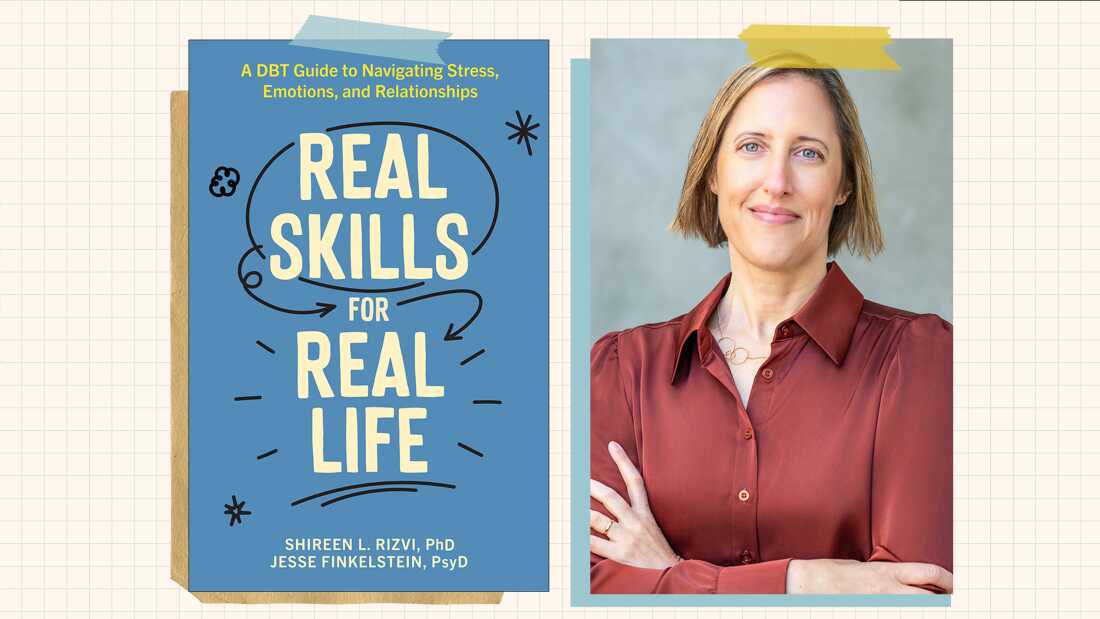
Shireen Rizvi serves as a professor of psychiatry and behavioral sciences and has co-authored the book Real Skills for Real Life: A DBT Guide to Navigating Stress, Emotions, and Relationships. This guide focuses on helping individuals manage their stress and emotions using strategies from dialectical behavior therapy (DBT).
Rizvi discusses how many of us handle distress in unproductive ways, such as lashing out or ignoring the problem. According to her, these reactions stem from a lack of skills to manage what seems overwhelming. She teaches acceptance and more effective responses to distress.
This book, co-written with clinical psychologist Jesse Finkelstein, includes illustrations and diagrams on DBT skills, such as conflict resolution and mindfulness practices. Originally developed by Marsha Linehan in the 1980s for borderline personality disorder, DBT has been shown to benefit many people facing diverse challenges.
TIP: Techniques for Immediate Distress Relief
Rizvi introduces a method called TIP, which stands for Temperature, Intense exercise, Paced breathing, and Paired muscle relaxation. These techniques help reduce intense emotional stress.
Temperature
Use cold water immersion to activate the dive reflex.
This naturally decreases heart and respiratory rates, aiding in calming down.
Ensure not to use this if you have a heart condition or are on beta blockers to avoid complications.
Intense Exercise
Engage in activities like running or jumping jacks for at least 30 seconds.
This paradoxically calms down the agitation as the heart rate later decreases.
Paced Breathing
Breathe in for four counts, out for six.
This helps transition away from hyperventilation to a more relaxed state.
Paired Muscle Relaxation
Clench and release muscles while associating with relaxation words.
Creating greater relaxation by tensing first.
Understanding Distress
Rizvi emphasizes that feelings of distress do not last indefinitely. A common misconception is that these emotions must be immediately resolved to prevent permanence. She reassures that all intense emotions are temporary.