
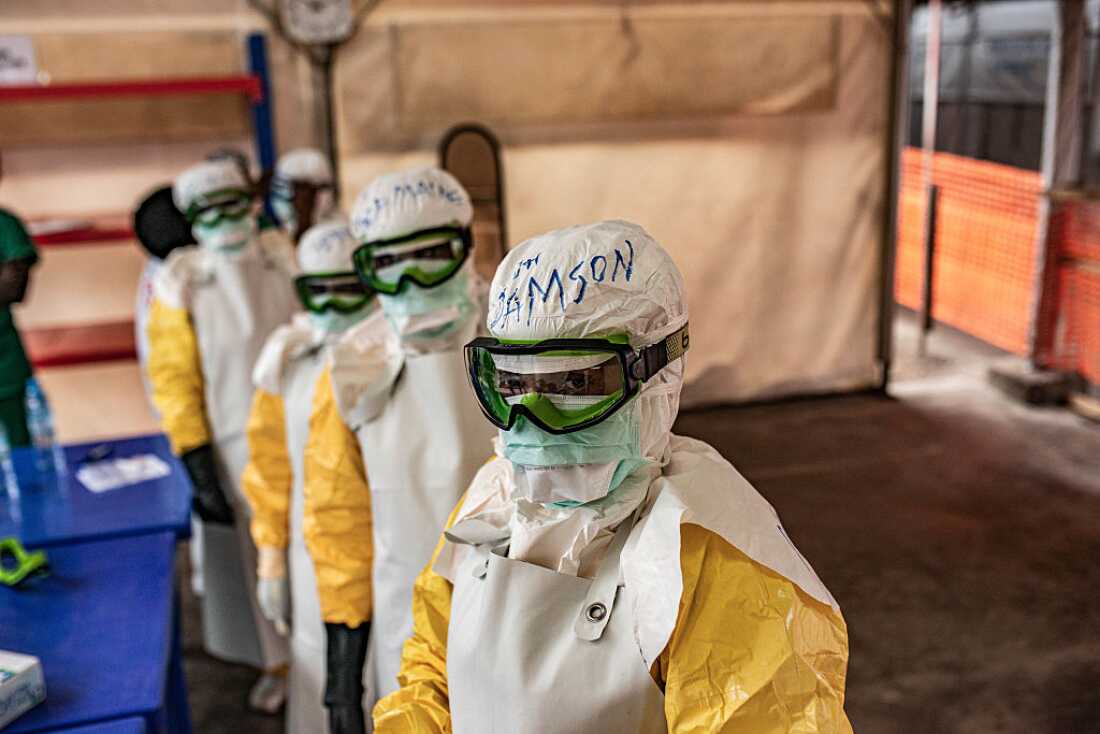
Health workers are taking protective measures at an Ebola treatment center in Monigi, Democratic Republic of Congo, as of June 2, 2026. According to projections by the U.S. Centers for Disease Control and Prevention (CDC), the ongoing Ebola outbreak in Africa could lead to 20,000 cases and over 4,000 deaths in the next three months.
The Democratic Republic of Congo and Uganda are working swiftly to contain the outbreak, which has led to the World Health Organization declaring an international health emergency. A series of reports from the CDC highlight the necessity for large-scale public health interventions to prevent a worst-case scenario.
“If only 20% of cases enter isolation within two days of symptoms emerging, the projections show more than 20,000 cases,” said Jason Asher from the CDC’s Center for Forecasting and Outbreak Analytics during a briefing.
In the next three months, 20,000 cases are possible unless the outbreak is curtailed, potentially surpassing the West African Ebola crisis of 2014-2016, which recorded around 28,000 cases. The CDC emphasizes the importance of isolating infected individuals to reduce the virus’s spread. If international efforts improve isolation rates to 70% within two days, the outbreak could be limited to fewer than 10,000 cases.
Jennifer Nuzzo from the Brown University School of Public Health has expressed concern over the outbreak’s dangerous trajectory. One of the new reports indicates that the risk to the U.S. is low. Despite the severity of Ebola, it does not spread as easily as COVID-19 or the flu. The U.S. can quickly identify and isolate cases.
Satish Pillai, the CDC’s Ebola response manager, reassured that the domestic risk in the U.S. remains low, citing no need for behavioral changes except for those traveling to the Democratic Republic of Congo or Uganda. He emphasized that it’s not too late to act, “Our goal is control, containment, and ending the outbreaks in DRC and Uganda. We are working every day towards that goal.”
Anthony Banbury, former U.N. Mission for Ebola Emergency Response leader, warned in The Washington Post that the crisis will worsen without a significant international response shift. He advocates for a coordinated global effort to reduce the growing number of cases.