
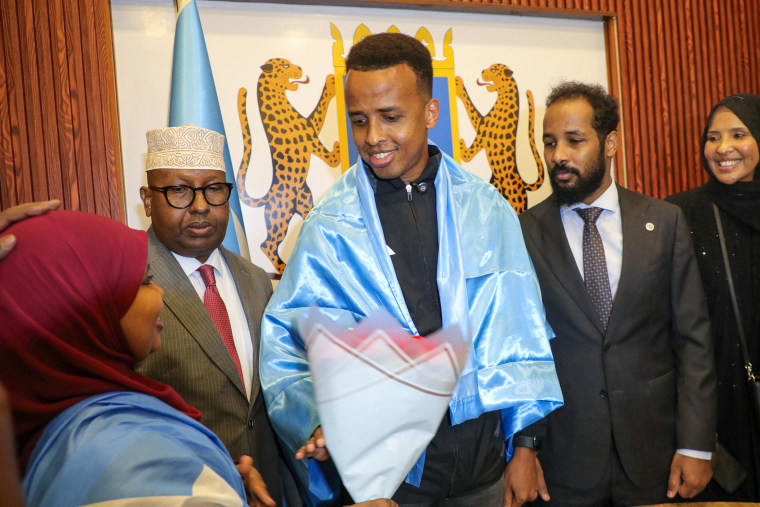
Somalia is not participating in the World Cup, but the scene at Mogadishu’s airport suggested otherwise. A large gathering of supporters, police, and journalists crowded around a plane at the terminal. They were there to greet Omar Artan, a Somali referee caught in a controversy involving U.S. immigration policies.
Artan, 34, was set to be the first Somali referee at the World Cup in the United States, Canada, and Mexico. However, upon landing in Miami, he was detained for 11 hours and then sent back to Somalia. He is not alone; 15 Iranian officials and Iraq’s official team photographer have faced similar issues at the U.S. border. An Iraqi player, Aymen Hussein, and others have reported invasive searches.
The U.S. government assured FIFA that all eligible attendees from around the world could enter. Yet travel bans imposed under President Trump are creating uncertainty. Other tournaments like Russia in 2018 and Qatar in 2022 had their own issues, but barring an accredited referee so publicly is new and has sparked criticism.
Former Secretary of State Hillary Clinton condemned the decision to bar officials. Ian Wright, a retired soccer player, also criticized the situation. Andrew Giuliani of the White House World Cup task force said Artan’s denial was for a good reason, citing ‘vetting concerns’ but offering no details. NBC News reported an administration official linked Artan to terror organizations, but provided no evidence.
Somalia stands by Artan. The Somali Sports Ministry and Football Federation expressed regret and support. They urged patience until all facts are established. U.S. Customs and Border Protection (CBP) mentioned additional inspections for some Iraqi officials, deeming one inadmissible. White House spokesman Davis Ingle emphasized safety and security for the tournament.
FIFA has yet to comment. Performative searches are unusual according to Jules Boykoff, a politics professor. Fans are hesitant to attend due to border controls and high costs. Ronan Evain from Football Supporters Europe said the situation conflicts with the spirit of the World Cup.
Artan remains optimistic despite the circumstances. Visa issues were anticipated after Trump’s re-election and travel ban policy resurgence. Teams from banned countries mostly received entry, but fans faced obstacles. Iran lost its ticket allocation and Ivory Coast decided not to send fans.
The U.S. claims the bans protect against unvetted entries, while Amnesty International calls them discriminatory. Past World Cups in Qatar and Russia waived visa requirements. In contrast, the U.S. has high fees and refusal rates, despite FIFA offering a ‘FIFA Pass’ for priority appointments.
Sarah Pierce from Third Way warns of a negative precedent set for future international events. She hopes backlash might encourage more inclusive policies in the future.