
China’s Military Advancements and Strategic Concerns
China is developing long-range missiles capable of reaching Australian territory, raising strategic concerns for Australia and the United States. The Lowy Institute report highlights China’s rapid military buildup, which has eroded U.S. military influence in the Indo-Pacific region. This development pressures neighboring countries to accommodate Beijing’s strategic preferences.
A potential conflict over Taiwan, supported by U.S. security guarantees yet claimed by China, remains a priority for China’s military, known as the People’s Liberation Army (PLA). However, China is expanding its ability to project military force over long distances, including locations within Australia, using a combination of missiles, aircraft, and naval ships.
Assessing PLA Branch Threats
The report evaluates potential threats from PLA branches, including rocket and cyber forces. Despite the need for caution, China’s military rise impacts Australia’s interests even if direct territorial threats remain limited.
The Chinese government responded by emphasizing its commitment to peaceful development and strengthening defense capabilities focused on national sovereignty, security, and development interests. According to a Chinese Foreign Ministry spokesperson, this military growth contributes to global peace.
Missile Capabilities and Potential Targeting
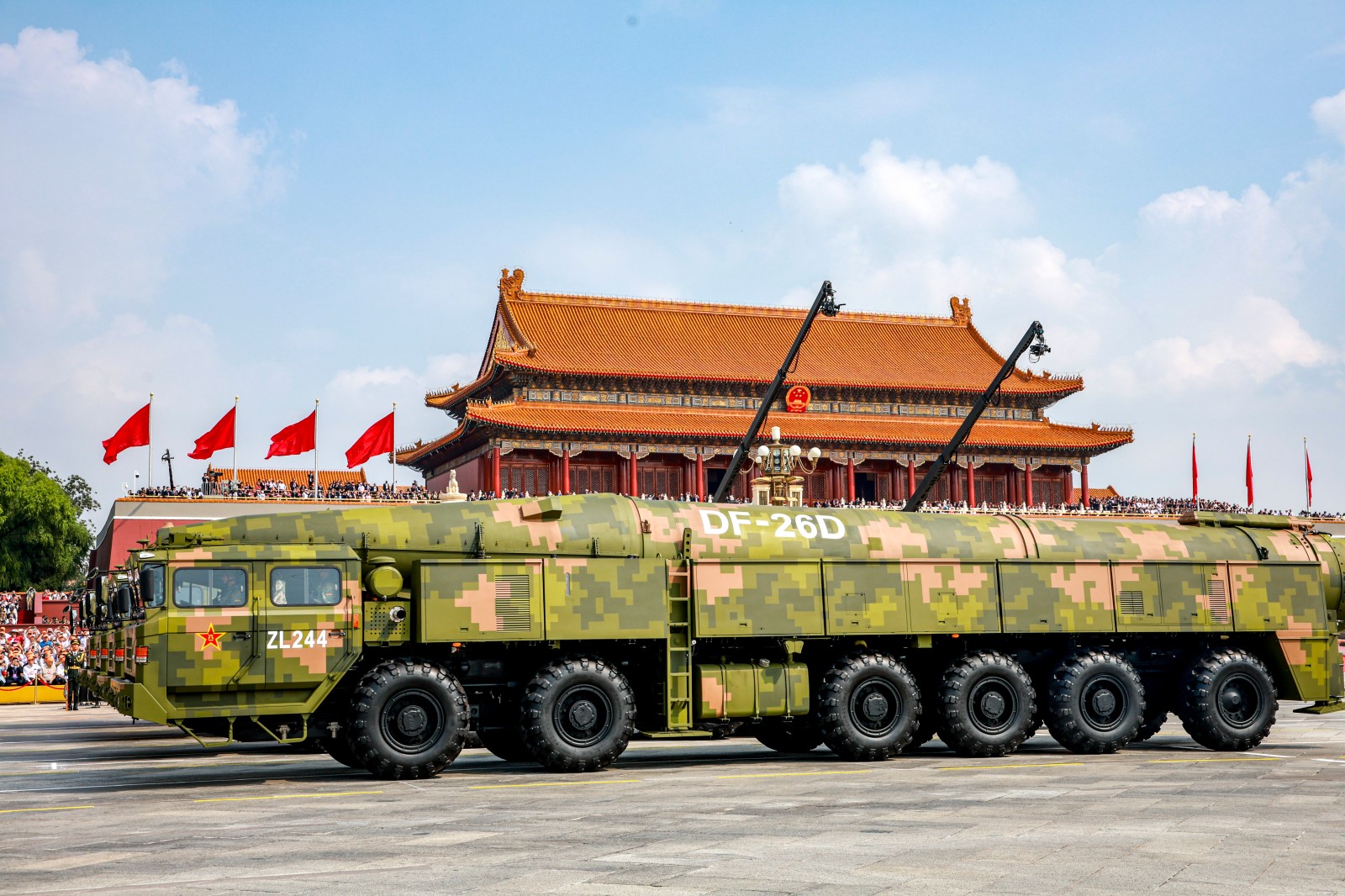
China possesses missiles capable of striking Australian territory from sea or air. The DF-26 intermediate-range ballistic missile can target northern Australia from China’s artificial bases in the South China Sea. The DF-27 missile, with a reach of up to 5,000 miles, can target all of Australia from the Chinese mainland.
During a regional conflict, China may choose targets based on strategic motives. These could include offshore oil facilities as a warning, public infrastructure to coerce government action, or government sites to undermine political leadership.
China’s Strategic Priorities and Defense Budget
The report does not delve deeply into China’s nuclear weapons, though it acknowledges the DF-31AG intercontinental ballistic missile could reach the U.S. Furthermore, China’s nuclear warhead stockpile might triple by 2035, with modernization supported by a defense budget possibly reaching $540.7 billion—double the disclosed amount.
Maritime and Economic Threats
Australia’s maritime trade routes and subsea cables are vulnerable to military disruption, according to the Lowy report. In 2024, 99% of Australia’s trade volume, valued at $460 billion, relied on seaports. Key imports included oil, gas, fuel, construction materials, and chemicals.
Potential disruptions include quarantines, force demonstrations such as ship sinking, distant blockades, or close port blockades. In March 2025, a Chinese naval flotilla conducted live drills near Australia, signaling a trend of increased military presence.
Australia’s Defense Response and Regional Implications
Australia has responded by increasing defense spending and aligning more closely with the United States. This includes acquiring nuclear-powered submarines through the AUKUS pact and hosting U.S. forces, possibly intensifying regional security concerns.
Understanding China’s Military Intentions
Australian Defense Minister Richard Marles described China’s military buildup as the largest since World War II. The U.S. has expressed concerns about China’s ambitions, noting reluctance to engage in arms control talks.
Senior U.S. officials believe China’s leader, Xi Jinping, has instructed the PLA to be ready to seize Taiwan by 2027, although no imminent invasion appears likely. China’s spokesperson criticized the Lowy report for assuming a hegemonic approach, labeling it a miscalculation.
The Lowy authors did not speculate extensively on China’s potential motives, as intentions can rapidly change. Strategic planning should focus on capabilities regardless of motives, providing a clear framework for responding to possible threats.