
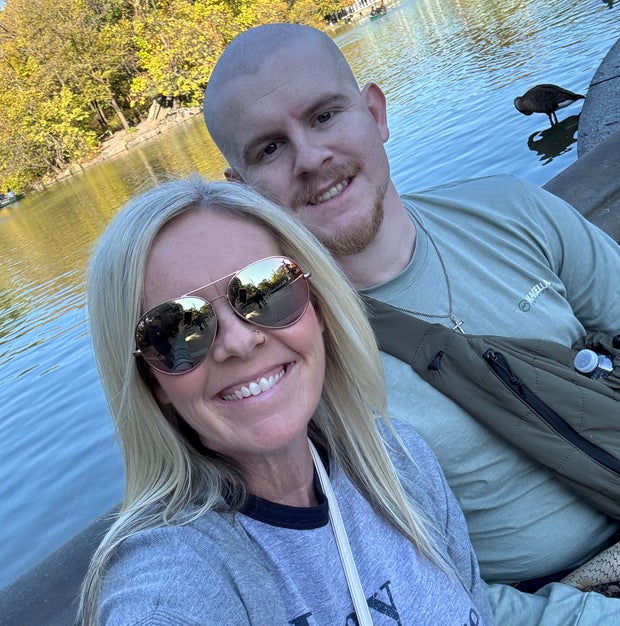
Eighteen months after his initial diagnosis, the treatment for 21-year-old Mason Henderson’s rare brain tumor was struggling. Neither chemotherapy nor a clinical trial in New York City provided relief. The tumor, which had even spread to his spinal fluid, was so rare that it was only named by the World Health Organization in 2021.
After exhausting several options, his doctors decided to try Lynparza, a drug not typically used for his condition. However, his insurance refused coverage due to lack of guidelines for his rare cancer type. This left Mason’s family in a challenging position, as the drug would cost approximately $8,700 per month without insurance.
They have no guidelines for his cancer. They’re discriminating against him because his cancer is so rare.
Every year, rare cancers account for about a quarter of all cancer diagnoses in the U.S. These conditions often lack targeted treatments as identified by standard expert and FDA guidelines. Often, insurance coverage lags behind what genomic testing suggests is necessary.
Despite lacking large-scale evidence, Mason’s neuro-oncologists believed Lynparza could be effective in combination with chemotherapy. But insurance and pharmaceutical companies denied the request for the drug. When his pharmacy benefit manager, Liviniti, refused coverage, Mason’s family was left to bear the financial burden.
Before his cancer diagnosis, Mason was a healthy and active individual. He had been a lively participant in sports and social activities at Evadale High School and aspired to become a police officer. His abrupt health issues began in 2024 when a seizure revealed a large tumor in his brain. Surgery and subsequent treatments still failed to halt the cancer’s progression.
The option of a clinical trial led to a grueling radiation regimen, yet the cancer persisted. Lynparza was seen as a promising possibility, but the red tape and procedural hurdles made access prohibitive.
Despite the FDA’s approval of Lynparza for ovarian cancer in 2014, it was not sanctioned for brain cancers like Mason’s. His family made numerous appeals, but both the county and an independent reviewer supported the denial of coverage.
Mrs. Lowe took to social media to voice her frustration over the insurance denials. This effort eventually led to AstraZeneca’s assistance program providing the medication, albeit belatedly.
Only several treatment options exist for brain cancers like Henderson’s. Their rarity and complexity make pharmaceutical investment and testing risky. However, the increasing use of genome sequencing is slowly improving targeted treatment strategies.
Despite Lynparza being used off-label to treat various tumors due to genetic insights, Henderson’s case highlighted the systemic challenges faced by those with rare cancers. Ultimately, Mason’s story is part of a larger conversation about the need for healthcare systems to adapt to advancements in genomic medicine.
Mason Henderson passed away after taking the drug for nearly two months. His family remains outspoken about the need for faster actionable healthcare to give rare cancer patients a fighting chance.