
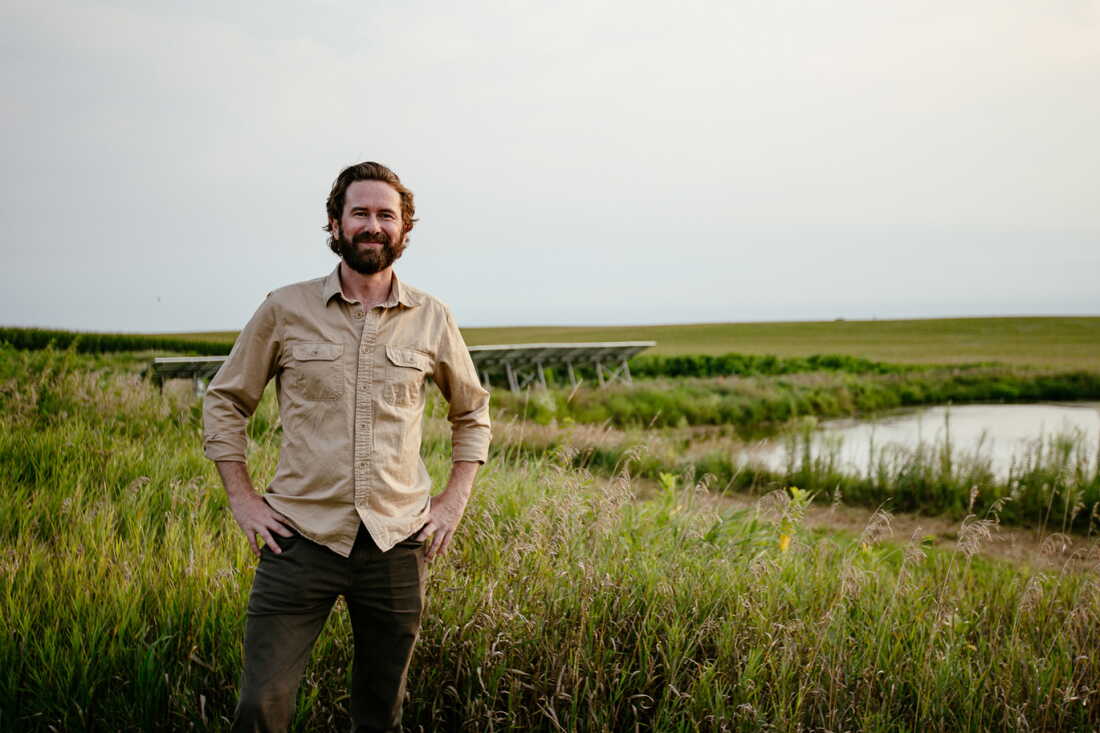
Growing Specialty Mushrooms: The Faaborg Family’s Journey
In the heart of central Iowa, Tanner Faaborg stands proudly at his family’s farm. They have shifted their focus from raising hogs to cultivating specialty mushrooms, transforming their operation into 1100 Farm. Inside a dimly lit building, Tyler Faaborg steps into a ‘fruiting room,’ observing fog enveloping shelves of burgeoning mushrooms. He notes the lion’s mane fungi are almost ready for harvest, soon to turn from pinkish to white.
The Faaborg family produces and sells these mushrooms as tinctures, coffee blends, and flavored salt. Their farm’s name, 1100 Farm, pays homage to the number of hogs previously housed in each barn. Recently, they’ve transitioned from livestock to mushrooms, aided by The Transfarmation Project, initiated by Mercy for Animals.
The Transfarmation Project’s Role
Katherine Jernigan, project director, emphasizes their mission to assist industrial animal farmers in embracing sustainable practices. This encompasses cultivating mushrooms, diverse vegetables, and embracing agroecology methods. By repurposing existing infrastructure, such as pig, poultry, and dairy barns, they provide open-source blueprints for farmers eager to change.
In Iowa, Transfarmation has established a demonstration hub at the Faaborgs’ farm. The family’s retrofitted space allows for increased mushroom production following a successful pilot project. The initiative aims to make farming shifts more accessible and transparent, charting costs, labor hours, and product margins.
Transition and Challenges
Rand Faaborg reflects on their early farming days, recalling raising market hogs for supplementary income. After encountering losses and adopting contract feeding methods, they expanded into a large CAFO. Over time, they faced challenges balancing physical demands and diminishing profits, exacerbated by the CAFO proliferation.
With an eye on sustainability, the Faaborgs decided to exit the hog business. Tanner Faaborg, inspired by climate change mitigation, offered a vision of repurposing farm infrastructure for healthier cultivation methods that benefit the planet and communities.
Creating a Sustainable Model
Though the transition wasn’t seamless, the rewards are clear. A manure pit transformed into a freshwater pond, funded partly by a USDA grant, now teems with wildlife. Native grasses and flowers were planted to support pollinators, and hundreds of trees added to improve water quality.
Future plans include converting grain silos into visitor accommodation and expanding their orchard. Tanner Faaborg envisions 1100 Farm as a model for sustainable farming, encouraging others by enduring and sharing their journey.