
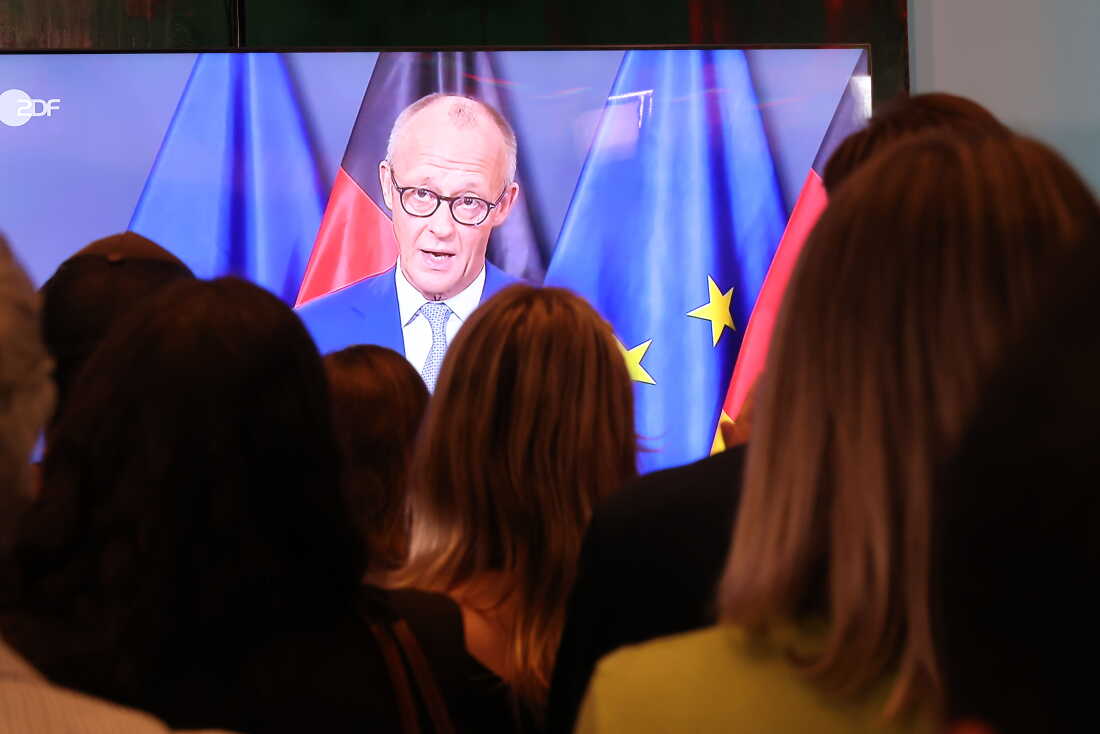
The Christian Democratic Union (CDU), led by German Chancellor Friedrich Merz, confronted unexpected election outcomes on September 20, 2026. Instead of heading to New York for the United Nations General Assembly, Merz stayed in Berlin at the CDU headquarters as results from state elections in Mecklenburg-Western Pomerania and Berlin revealed substantial losses.
Exit polls highlighted that the CDU suffered its worst results since World War II. In Mecklenburg-Western Pomerania, the far-right Alternative for Germany (AfD) significantly increased its share, securing 38.2% of votes. This trend echoed in Berlin, where the AfD gathered 16.3% of votes. Meanwhile, the far-left Die Linke led the Berlin election with 25.7%, outpacing the CDU.
The CDU’s Mecklenburg-Western Pomerania results were particularly shocking. With only 4.9% of the vote, the CDU failed to pass the parliamentary entry threshold. Despite this setback and similar results two weeks earlier in Saxony-Anhalt, Merz dismissed resignation rumors, insisting he would advance his federal agenda on tax and welfare reforms. He described these measures as essential against rising authoritarianism.
During this turbulent political period, Merz’s leadership faced questions. Alice Weidel of the AfD criticized Merz, suggesting his persistence benefited her party. In Mecklenburg-Western Pomerania, the AfD surpassed the CDU’s coalition partner, the Social Democrats (SPD), but faced challenges forming a government due to coalition dynamics. Incumbent SPD governor Manuela Schwesig, finishing second with 35%, is expected to secure necessary alliances to maintain her role.
In Berlin, Die Linke’s triumph marked its strongest election performance with 25.7% of the vote. Elif Eralp, party leader, emphasized making Berlin affordable, drawing parallels with New York’s Mayor Zohran Mamdani. Her declared policies include capping rents and taking back apartments from large corporate real estate, though these proposals may spark contentious coalition talks.
Germany’s electoral system blends winner-take-all and proportional representation, requiring parties to form partnerships to obtain parliamentary dominance. Eralp must collaborate with at least two other parties to become Berlin’s mayor. Although Merz’s CDU co-governs federally with the SPD, he struggles to maintain coalition agreement.
Sudha David-Wilp from the German Marshall Fund remarked on Merz’s tenacity, acknowledging the hurdles in ousting a chancellor in Germany. Amid a fragmented political environment fostering coalition instability, mainstream parties face the AfD, poised for upcoming federal elections.