
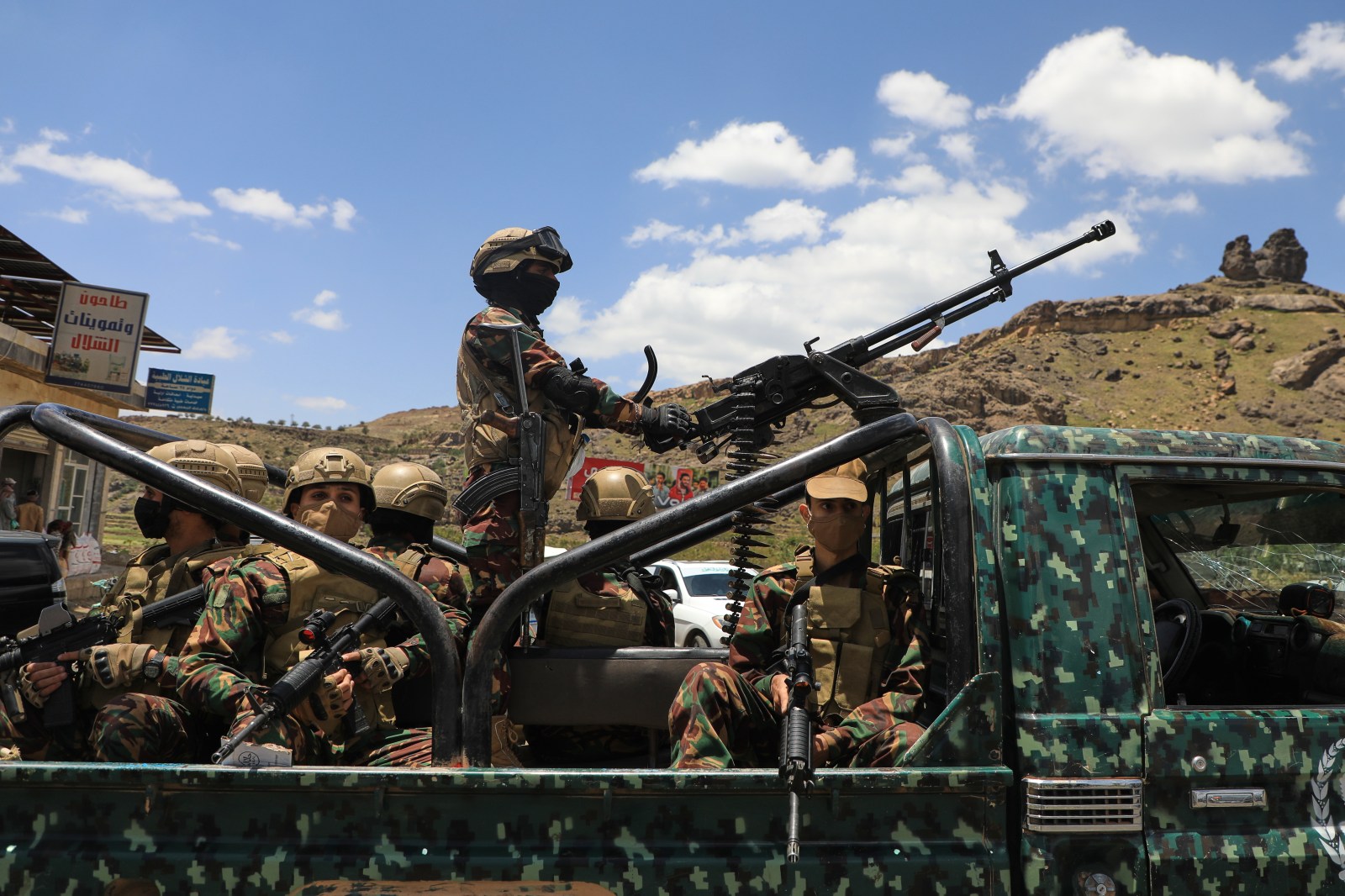
Iran-aligned group Ansar Allah, also known as the Houthis, has intensified its attacks on Saudi Arabia. Their lightning offensives against rival forces have placed a strategic energy trade chokepoint under the Axis of Resistance’s control. With previous disruptions to international shipping, Ansar Allah now holds sway over Bab el-Mandeb, a critical route to the Suez Canal. This is further complicated by Iranian and U.S. blockades of the Strait of Hormuz.
Such developments add pressure on Saudi Arabia, which faces damage from another suspected Iranian strike in Iraq affecting its East-West pipeline. U.S. consumers are likely to encounter increased fuel costs as the ongoing U.S.-Israeli conflict with Iran continues to destabilize oil markets.
The situation presents Washington and Riyadh with difficult choices. A full-scale invasion to support Yemen’s government, though considerable, is fraught with risks. Air power has not proven effective in holding territory in Yemen. A former U.S. State Department official, Annelle Sheline, suggests any ground offensive might mirror struggles seen in Iraq and Afghanistan.
“Neither country is eager to send their forces to die en masse and instead prefer to rely on superior air power, which has proven repeatedly inadequate,” Sheline said.
Historical Context and Comparisons
History shows challenges in Yemen are not new. Saudi Arabia’s intervention in 2015 after Ansar Allah’s capture of Sanaa did not fully displace insurgent control. A UN-mediated ceasefire in 2022 preserved existing lines until recent escalations.
Egypt, led by President Gamal Abdel Nasser in the 1960s, faced similar pitfalls when aiding a revolt against a Saudi-supported kingdom. More than 10,000 Egyptian soldiers died in Yemen. Nasser compared the ordeal to the Vietnam War, which had its own costly engagements for the U.S.
“Certainly the Saudi-backed Yemeni government has parallels to the U.S.-backed government of South Vietnam,” Sheline said.
Analysts draw connections to Afghanistan as well. The collapse of the U.S.-backed government amid the Taliban’s advance highlights limitations faced by foreign powers against entrenched adversaries.
Future Implications
Costs of inaction remain high for Saudi Arabia. Thus far, it has relied on airstrikes without significant progress. Reports suggest President Trump denied a request for air support from Crown Prince Mohammed bin Salman. Trump argued that Ansar Allah expressed a preference not to engage with the U.S. and expressed confidence in controlling the Strait of Hormuz.
Saudi analyst Salman Al-Ansari posits that a comprehensive war might be inevitable.
“The Yemeni government, with Saudi support, may have no option but to launch an all-out war against the Houthis on multiple fronts,” Al-Ansari told Newsweek.
Tanker activity remains low due to fears of Iranian aggression. If Ansar Allah disrupts Bab el-Mandeb, global trade would suffer, affecting Saudi economic initiatives like Vision 2030. Al-Ansari stresses that a unified international response may be necessary.
The group itself indicates readiness for escalation. An Ansar Allah member suggested preparedness for decisive victories, undermining comparisons to Vietnam.
“We are ready and prepared to achieve progress and decisive victory on any front,” the source said.
Saudi Arabia’s Strategic Dilemmas
Crown Prince Mohammed’s decisions will have lasting repercussions. He seeks to avoid extensive conflict, but cannot ignore growing territorial control by the Houthis. Yemeni writer Abdulnaser Almuwadea sees potential scenarios for Saudi Arabia’s response, such as enhancing support in the Marib region.
The U.S may offer indirect assistance through airstrikes, intelligence-sharing, and tactical support. Though this method has mixed results, forthcoming arms sales like the F-35 fighter jets offer alternative forms of aid.
Saudi Arabia itself might consider reinforcing blockades against Ansar Allah territories. This carries risks of retaliation, which could further destabilize regions like Aden.
Diplomatic options include granting Ansar Allah partial recognition, cutting aid to rival factions, and financial incentives to cease hostilities. Yet Almuwadea deems this path unlikely without exhausting other strategies.
Offerings of legitimacy might yield quicker conflict resolution, as both Almuwadea and Sheline suggest. Trump appears inclined toward negotiation rather than renewed warfare.
“The quickest way to get Saudi oil through the Bab el-Mandeb would be for the Saudis to lift the blockade on the Houthis’ territory,” Sheline noted.