
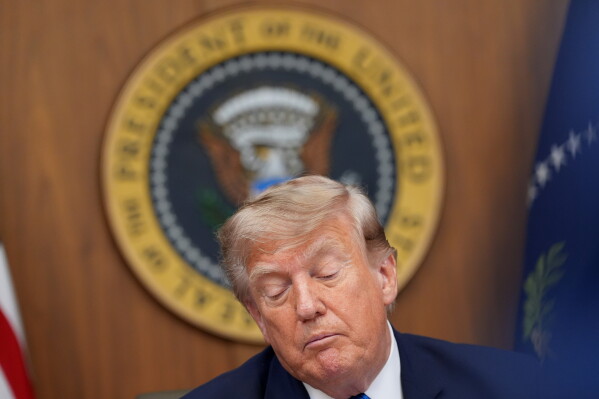
The situation in the Middle East remains tense as recent developments unfold. On Friday, the White House communicated that President Donald Trump is contemplating new strikes on Iran. This follows attempts to urge Tehran to reopen the Strait of Hormuz and adhere to a previously failed truce agreement from last month.
U.S. and Iran Dynamics
The Revolutionary Guard of Iran targeted two tankers in the Strait of Hormuz, an area crucial for international oil and gas shipments. Despite the lack of overnight U.S. strikes, Kuwait intercepted drones, confirming heightened tensions. Iran’s actions have aimed at a Kuwaiti air base, offering retaliation after U.S. operations the previous day.
In a meeting with reporters, President Trump declared ongoing U.S. military actions aimed at compelling Iran to reconsider its position. He emphasized the United States’ determination to ‘win’ against Iran.
Kuwait’s Response
Kuwait’s Defense Ministry reported drones within its airspace, targeting military facilities and causing damage. The ministry withheld details on the number of intercepted drones. Iranian media reported retaliatory strikes linked to U.S. actions, affecting tankers near the Strait of Hormuz.
Developments in Gaza
In Gaza, a significant agreement could change the ground reality. Hamas announced plans to disarm under a deal stated by Trump, which also requires Israeli military withdrawal and a cessation of strikes. However, Hamas conditions the move on the establishment of a Palestinian state, a point disputed by the current Israeli administration.
The implementation of this agreement remains critical. Despite recent Israeli airstrikes, the United Nations Secretary-General Antonio Guterres called the deal promising amidst regional unrest.
Regional Defense and Trade Concerns
In other news, Saudi Arabia banned together 14 countries into a new defense alliance. Its aim is to ensure maritime security and secure trade routes in the Red Sea. Yet, Houthi rebels threaten this initiative due to tensions with Saudi Arabia.
The announcement drew varied reactions. Oman and the UAE refrained from supporting the initiative, whereas countries like Turkey and Pakistan aligned with Saudi Arabia.
Additional Tensions in Lebanon
In Lebanon, Israeli forces targeted underground tunnels alleged to be used by Hezbollah near the historic Beaufort Castle. President Joseph Aoun criticized these actions as negotiations continue in Rome to discuss possible Israeli military withdrawal.
The developments highlight the complex and volatile dynamics in the Middle East as regional and global powers navigate ongoing tensions.