
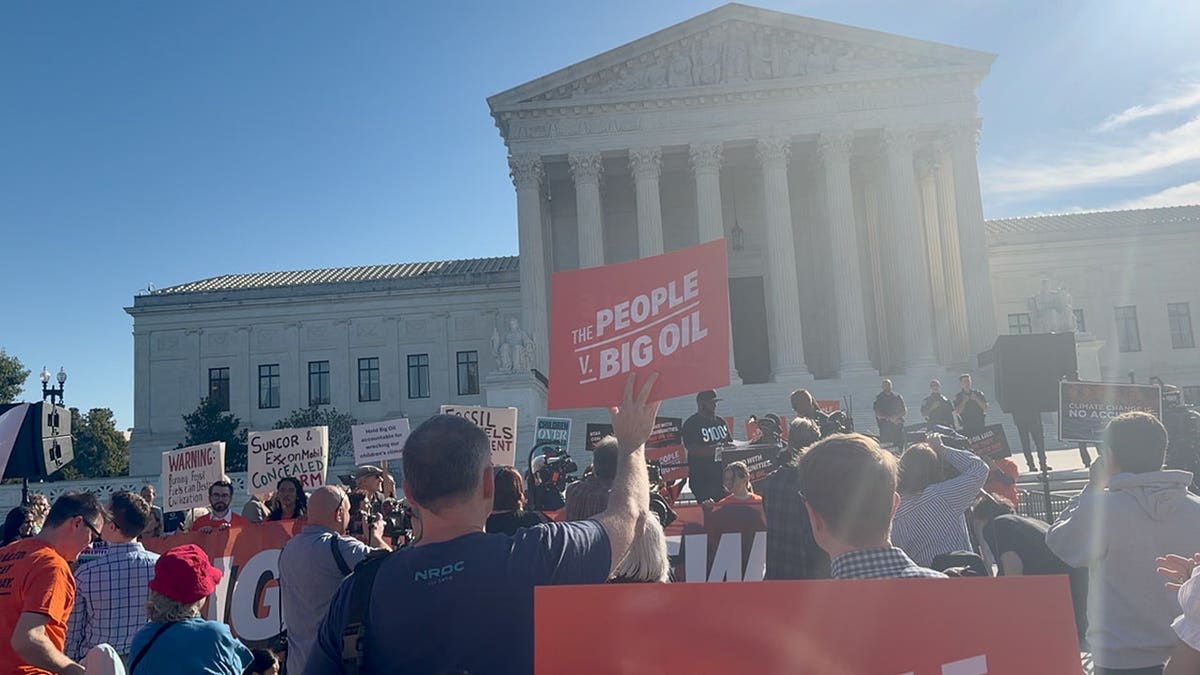
A Supreme Court case on climate change lawsuits could have considerable implications for oil companies, potentially leading to their financial downfall. As energy policy experts warn, this could result in higher gas prices for Americans. If the justices allow cities and states to seek huge damages against fossil fuel companies, the financial impact might be severe.
These discussions occurred during recent arguments in Suncor v. Boulder, where it is debated if federal law restricts cities and states from suing oil companies under state law for climate damage related to emissions crossing state lines.
Justice Clarence Thomas questioned Boulder’s attorney, Kevin Russell, on the potential for similar lawsuits extending beyond oil companies to other large businesses. Russell acknowledged this possibility under state tort law, which might impose limits.
Justice Brett Kavanaugh raised concerns about the financial effects of such widespread litigation, suggesting it could bankrupt defendants and lead to similar claims against various manufacturers and businesses.
In 2018, Boulder, Colorado filed a lawsuit against ExxonMobil and Suncor Energy, accusing them of knowingly contributing to climate change and misleading the public about fossil fuels’ dangers. Many similar lawsuits are currently pending across the U.S.
Evidence in Boulder’s lawsuit includes a 1977 ExxonMobil memo indicating fossil fuels contribute significantly to CO2 emissions. David Bookbinder, previously counsel for Boulder, described these lawsuits as an indirect carbon tax effort.
Boulder maintains that its case does not aim to regulate national climate policy. Instead, it argues for Colorado’s right to hold companies accountable under state law for in-state climate-related harms.
O.H. Skinner, executive director of the Alliance for Consumers, sees these lawsuits as efforts to achieve through the courts what hasn’t succeeded in Congress. He argues that it functions as a backdoor carbon tax attempt.
A ruling in Boulder’s favor could lead to numerous similar lawsuits in many jurisdictions and significantly increase consumer costs, as Isaac warns. There are over 90,000 government entities in the U.S. alone that could sue energy companies.
The potential scope of liability is considerable, extending beyond oil producers to include businesses in the energy supply chain, such as gas stations and automakers. Skinner notes the difficulty in defining who does or does not contribute to climate change, as it spans a wide range of activities.
Isaac distinguishes this case from tobacco or opioid lawsuits, emphasizing the global nature of greenhouse gas emissions that cross borders, complicating accountability for climate damage.
ExxonMobil and Suncor argue that emissions are a global issue and federal law should govern these disputes, not state law. Meanwhile, some states, like Utah, have barred such state tort lawsuits.
Utah Attorney General Derek Brown warns that if Colorado wins, gas prices across the country could increase, arguing that such decisions should be made by Congress.